Economics & Politics

We will spend a week on one question: how can economic and political life be understood and co-created so that it serves people and the earth – and not the other way round? We meet at a moment Gerald Häfner describes as a break in civilisation. International law is losing its force, wealth is concentrating, democracies are polarising, and war is again treated as a normal tool of politics. Instead of despairing, we want to look at what can be done: through better institutions, through the way we meet each other, and through concrete initiatives you can join or start yourself.
What we will explore
We will move through a few connected fields of questions. This is a frame, not a script – your questions will shape where we go deeper.
How do societies change? How do social institutions arise, and how can they be transformed while we still depend on them? The Art of consciousness-based system change. Short texts, for example by Friedrich Schiller and Otto Scharmer, will help us look at this.
What is the economy for? Is it driven by self-interest – or is it, at heart, people working for each other? Why are companies bought and sold like goods, and what changes when they belong to themselves? Depending on your interests, we may also look at land, money, basic income or new forms of regulation.
What keeps democracy alive? What can we learn from direct democracy, citizens' assemblies or the round tables of 1989? How can “I” and “we” come together in freedom – and where should politics end? Thinkers such as Denis de Rougemont, Hannah Arendt and Rudolf Steiner offer different answers.
How is peace made? What drives unrest, and what keeps peace? We look at the separation of religion, nation and state, the idea of a threefold social order, and international law as humanity learning from war – and at the difference between the logic of war and the logic of peace.
How do I get active? How does an idea become a law – through campaigns, alliances and lobbying? And where do you want to act?
How we will work
Mornings mix short inputs, shared reading of short texts, small-group work and open conversation. You may, for example, take on a role – employee, supplier, investor, government – and explore what a steward-owned company would change for you.
Gerald and Armin bring their own practice: writing laws across party lines, campaigning for referendums, building companies and funds.

Gerald Häfner
Gerald Häfner is a German politician who served as an Member of the European Parliament for Alliance ’90/The Greens between 2009 and 2014. He has had three separate spells as a member of the Bundestag between 1987 and 2002. In 1980 he was one of the founding members of the Greens. Gerald has a deep connection to anthroposophy and currently …
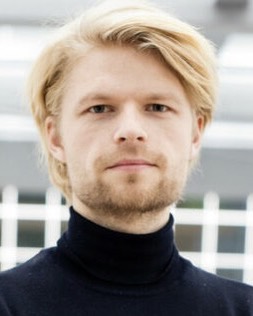
Armin Steuernagel
Armin Steuernagel is co-founder of the Purpose Group, president of the Purpose Foundation, managing partner at Purpose Evergreen Capital, and executive board member of the Foundation for Steward-Ownership. He studied Philosophy, Politics, and Economics at Witten/Herdecke University and the Columbia University in New York. Armin is an alumnus of the Club of Rome’s young leaders think tank (tt30) and co-founder …