Dear friends of YIP,
Welcome to YIP18’s December recap!
The month of December has been a landing, rooting, and learning one.
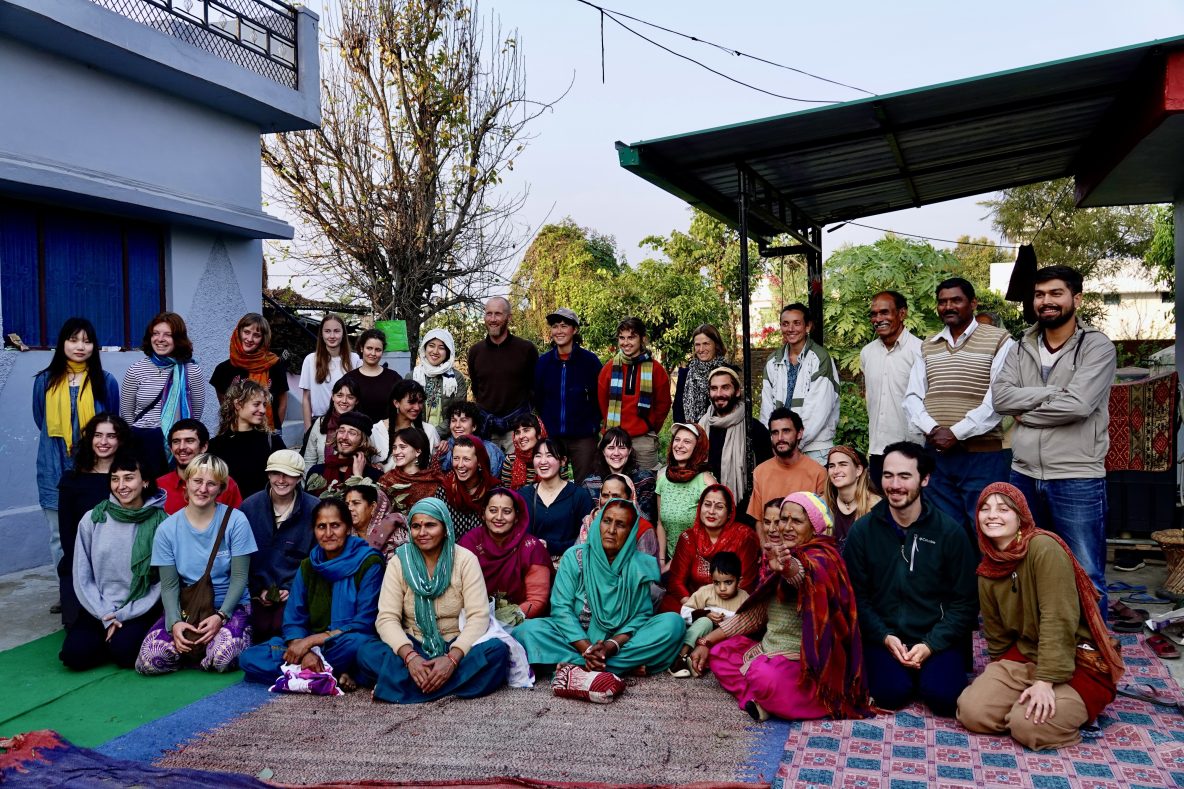
Slowly getting more familiar with the land, the community, routines, and weather. We have deepened our understanding in one of the most important topics of nowadays: our Mother Earth and the connection to our health as well as our role to be responsible stewards of the land.
Last month, we focused our learning on the beginning of life, the seed. This month, we turned our attention to the surrounding, the ecosystems that support and enrich the life of the seed. Followed by getting to know the seed as a vital source of food, health and nutrition – learning to cook local Indian dishes that support a balanced and nutritious diet from the skilled Navdanya Chefs.
Who would choose to thrive in an environment where everything is uniform, without chance for any heterogeneity to exist, when you could choose to live in a habitat that is abundant in diversity, with vibrant scents, colours, animals, and much more?
The group explored the significance of creating a prosperous land where the food we consume will nourish not only our bodies but also the earth and the community.
With this, we have ended our month with the wonderful and inspiring content that Navdanya had organised for us. Next month, we will start bringing contributors from different places in the world while still being part of the communal routines in Navdanya.
It is a pleasure to update you with many of the activities and learnings that happen at YIP. We thank you all for your continued support, and look forward to sharing more with you in 2026!
We wish you a wonderful holiday and a joyful start to the new year.
With love,
Irene.
In this newsletter you will find:
- Second Soil Week: Drawing and words by Milena Beisman
- Ecosystem Week: Drawing and words by Lilliahna Rogers
- Health and Food Week Written by Naoko Kato
- Wrap up Week Written by Gabriel Golding
- Alumni Update: Playing in Times of Uncertainty by Elfine Radwanski
- Upcoming Event: Initiative Forum 2026
SECOND WEEK SOIL
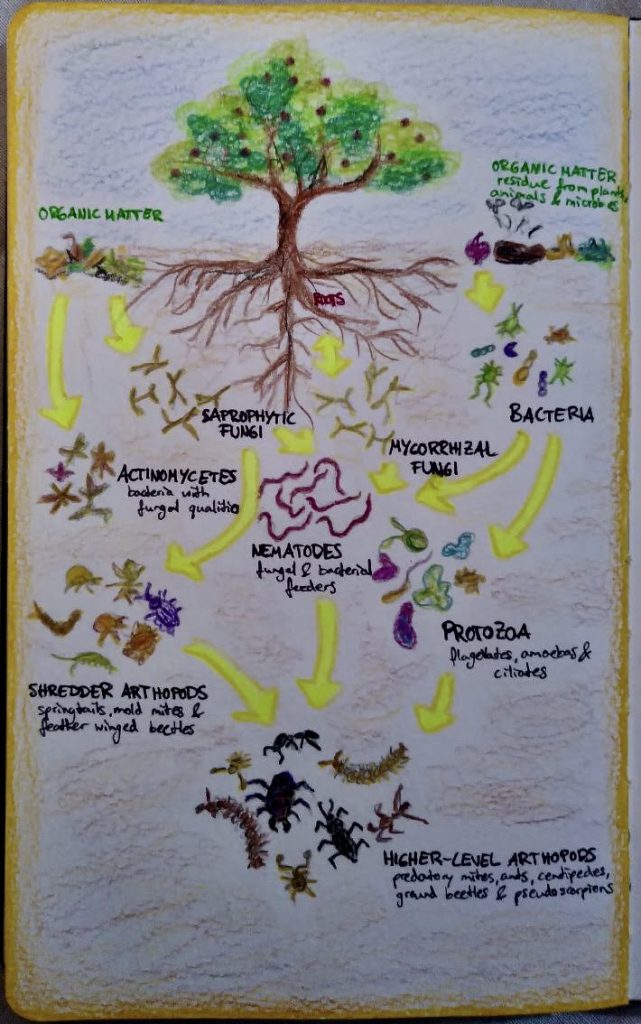
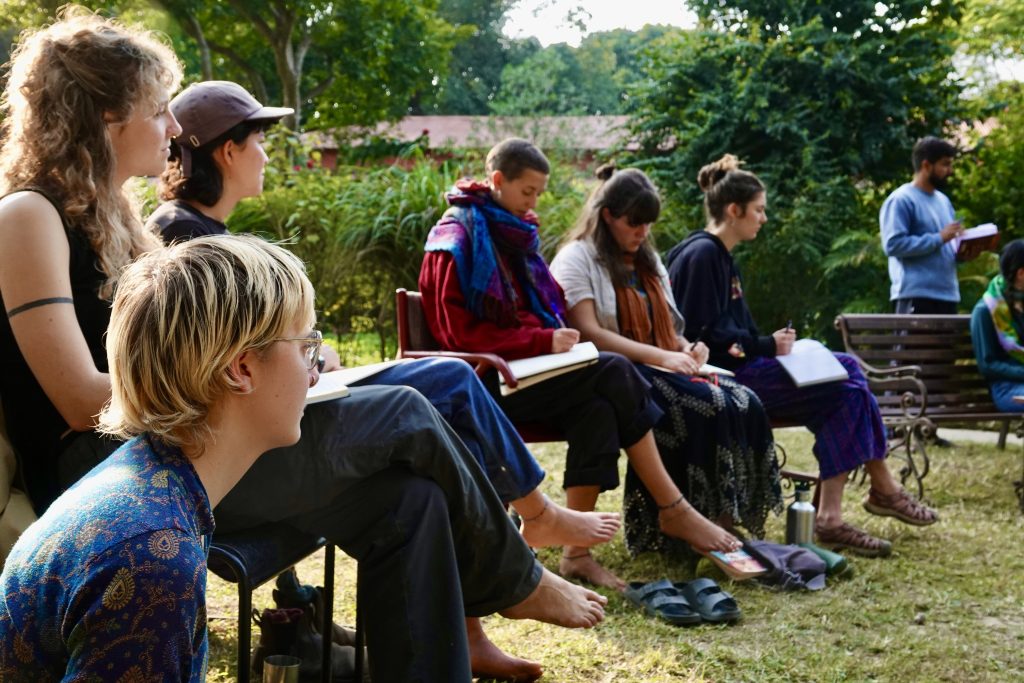
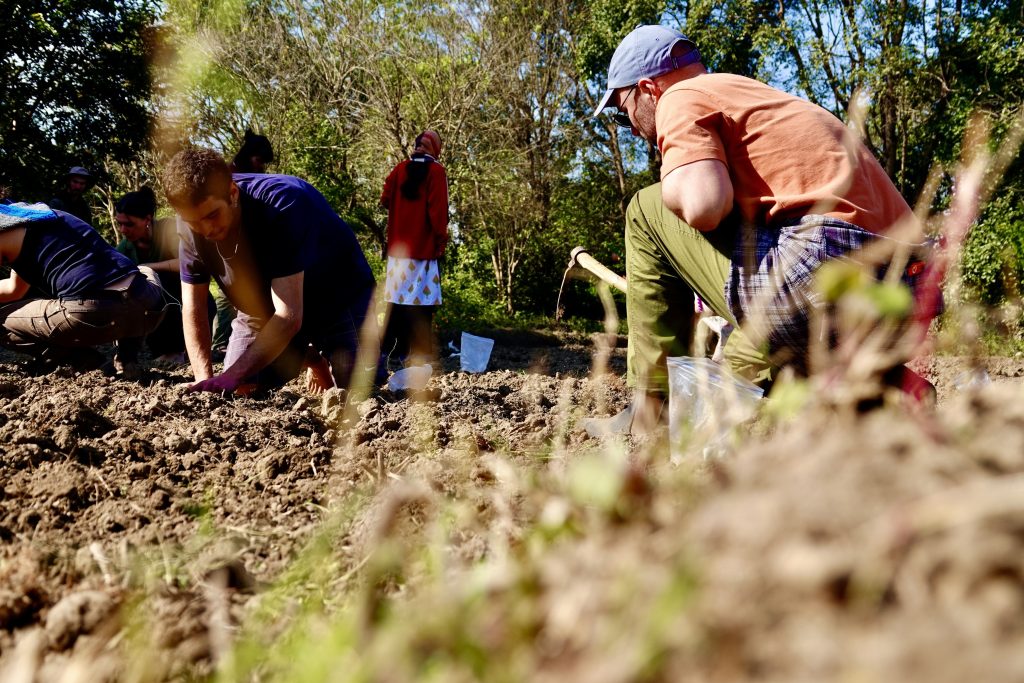
During the soil week in Navdanya, we looked at the composition of soil. We focused on the question, “What components are important for healthy soil?” We discovered that truly fertile and healthy soil is incredibly rare on our planet. Due to soil sealing and exploitative agriculture, we are losing several football fields worth of healthy soil every day! Human exploitation of nature causes landslides and devastation. The use of chemicals and heavy agricultural machinery makes life impossible for essential macro- and micro-organisms in the soil.
What role do living organisms play in the soil?
Bacteria and insects are essential for decomposing organic material. They release nutrients for plants, which in turn provide food for life in the soil. Plants, form the basis of life for animals and humans. Our health is therefore directly linked to the health of plants and soil organisms. When we exploit the soil, we exploit our own health.
In sustainable agriculture, compost, crop rotation and green manure are used to actively promote soil life and fertility.
This week, we made several compost mixtures and watched a very inspiring documentary.
Written by Milena Beisman
ECOSYSTEM WEEK
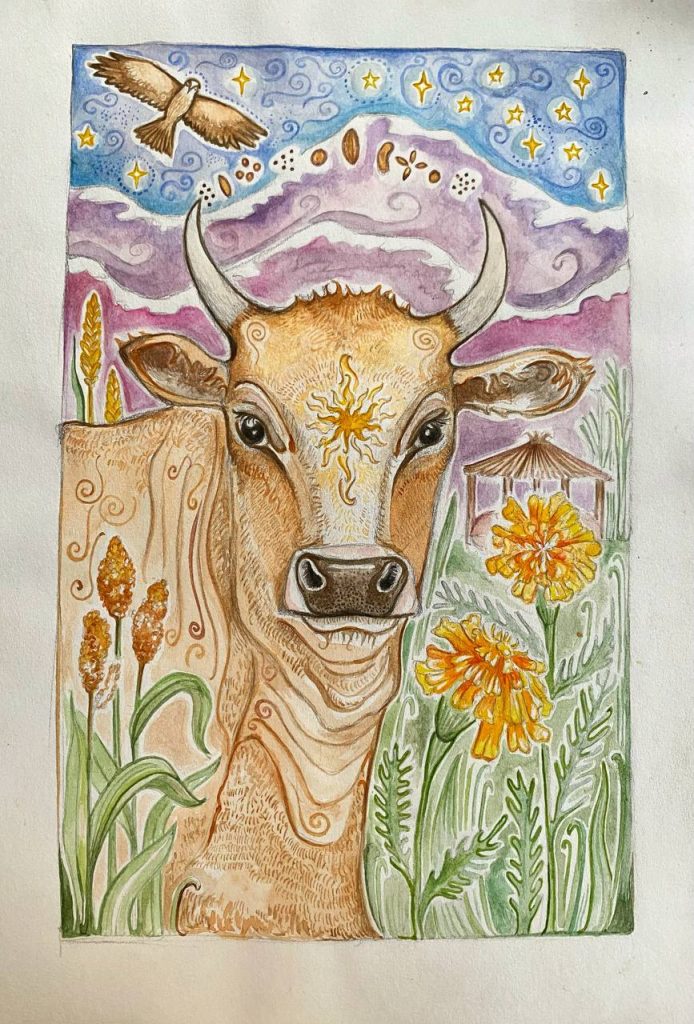
As they breathe out
We breathe in
Sweet reciprocity
A realization of reliance
Seed, soil, stone, stem, blossom
Sun, dew, storm, dirt, silver rain
do you see the web?
the weaving, winding threads
all tangled in the loom of the world
How is it that we’ve come to forget
our part in the process of living
our inevitable return to the earth that feeds us
How can we remember
this truth?

By Lilliahna Rogers
HEALTH AND FOOD WEEK
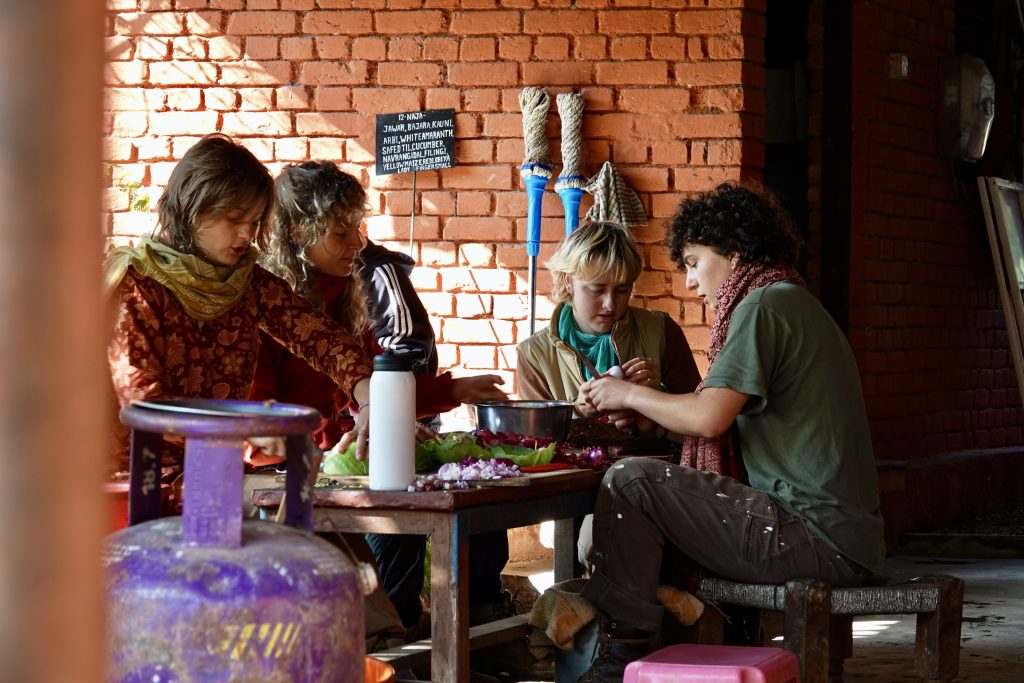
We were first introduced to a cooking demonstration of Aloo Tikki and Ragi Halwa, which are traditional Indian foods. While we were preparing the ingredients, Bhavna shared her experience with diabetes and how she improved it by eating more millets and refraining from refined sugar. This reminded me, as we were cutting the garlic leaves and coriander, that we are what we eat and that traditional food making welcomes you to see more interconnectedness of the plants living around us and our healthy guts.
This was brought up again in the talk by Dr. RS Rawat. He shared about medical plants and Ayurveda – “Ayur” meaning “life” and “Veda” meaning “science.” He shared about his visit to 332 villages in India, where he discovered that each household used 6-7 common weeds for their healing properties. The people knew exactly where these weeds were growing and this knowledge was passed down from grandmothers to young girls generationally. And this was also reminded by Dr. Vandana Shiva, commenting on the River song we sung for her and her sister. She told us that Indian medicine, similar to Chinese medicine, focuses on the flow of the body.
Dr. Mira Shiva, in her speech, emphasised that mainstream medicine concentrates on the cure of illnesses which makes lots of profit for the big businesses, but not on the prevention nor the promotion of good habits. This ends up promoting and tolerating the increase of diseases that are related to living habits.
This week taught me how important it is to know and integrate the knowledge to live healthily not just physically but also culturally and economically. I want to continue learning the knowledge of our grandmothers and the traditions that not only keep us healthy, but that help us learn about the integrity and interconnectedness of our body to the nutritious nature surrounding us.
Written by Naoko Kato
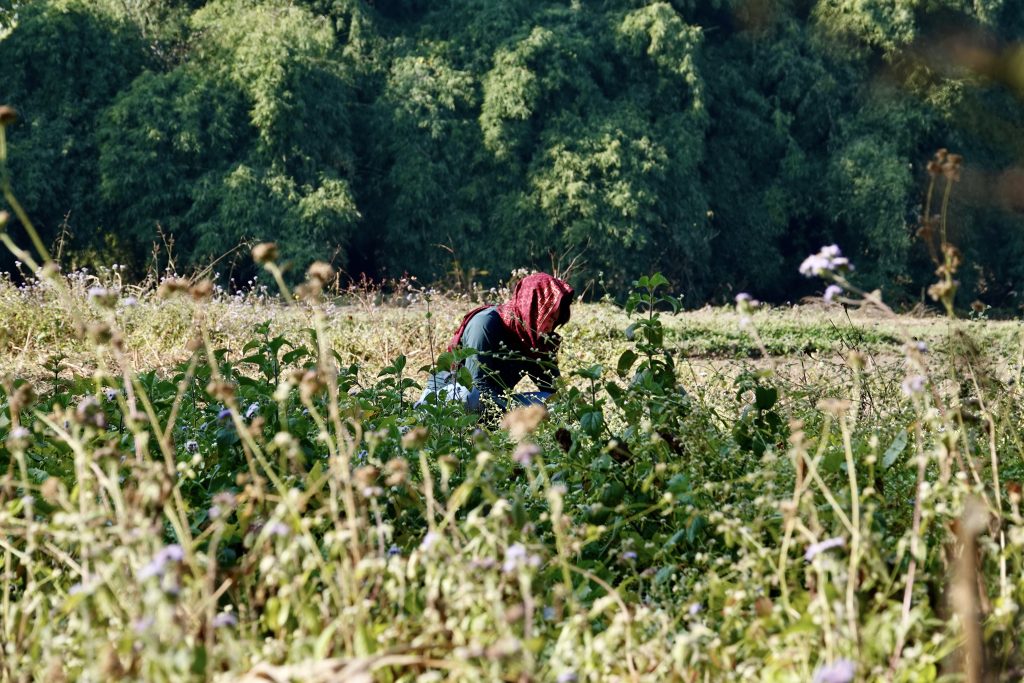
FARM PRESENTATION
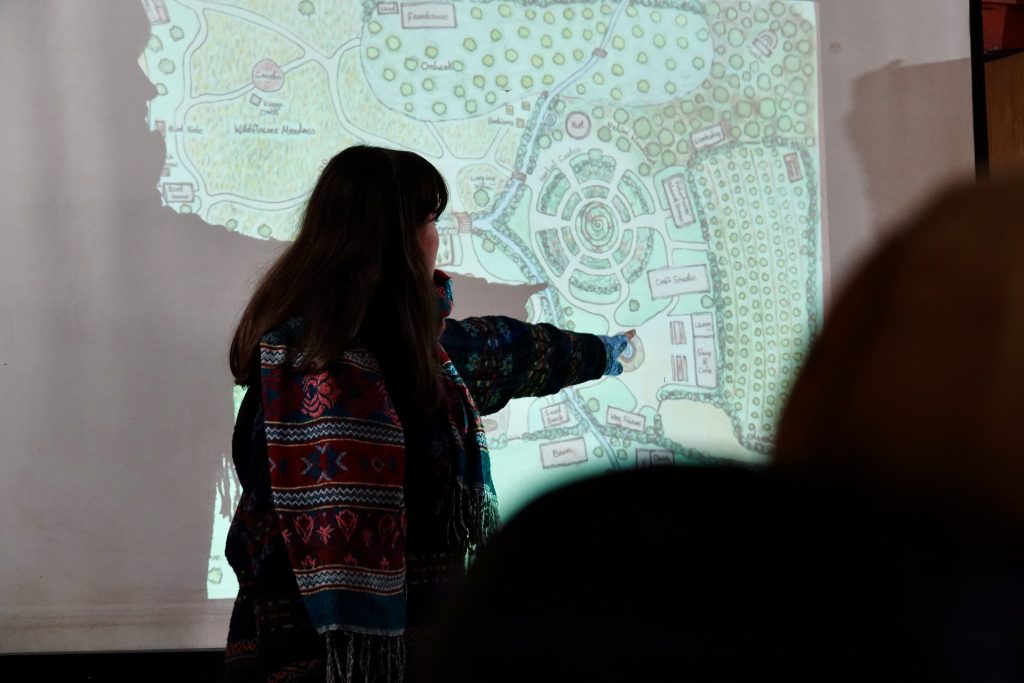
The four week Navdanya curriculum culminated with farm presentations. Each participant, individually or in duos, imagined, researched and designed their dream farm, incorporating their learnings from Navdanya. The text below is what YIP18 participant Rowan shared as part of her presentation.
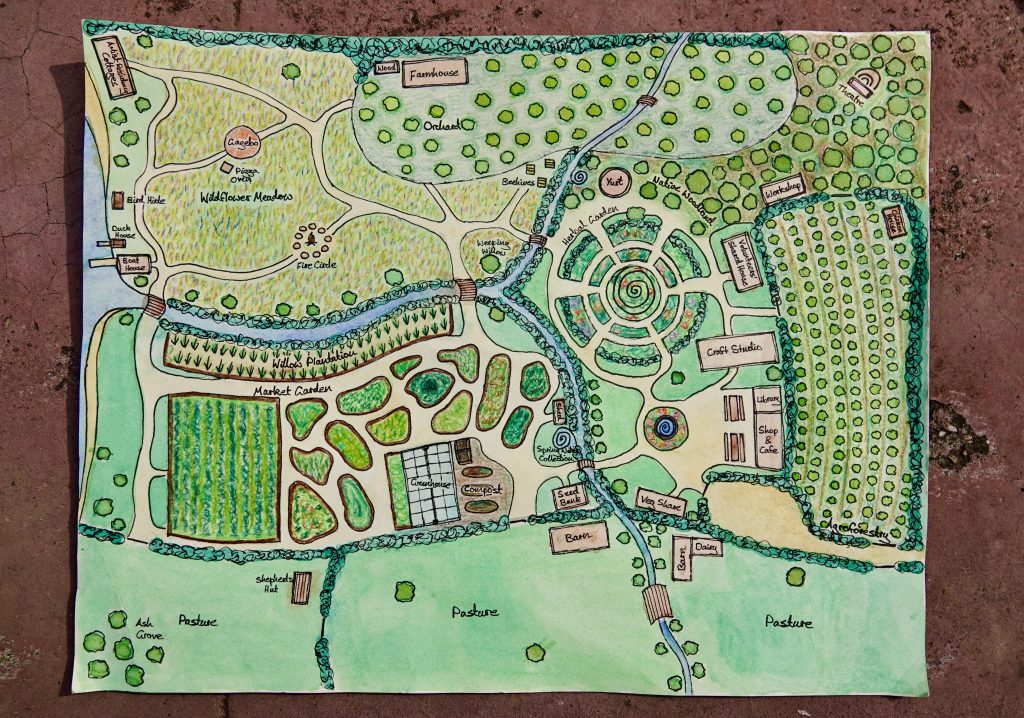
This Land I Call Home
This land I call home. From it I have grown and to it I bow down in gratitude, my body I willingly give back in thanks. My limbs are entwined with the roots of Oak and Ash, of Yew and Apple, of Willow, Cherry, and Buckthorn.
My feet held steady by the ground beneath me, I fold back into the enduring embrace of the soil. I feel the tiny particles of life against the curve of my spine, my fingers and toes seeking the buried stories and secrets as they dig deeper into the earth, deeper into the wisdom.
I look up. I see the stars – silent angels watching, listening from afar – dancing across the night in wonder and lightness.
There is a peace here amongst the simple complexities and vast interconnectedness, a breath, a sigh of a relief from amidst the rich greenness and abundant joy and regeneration that is life.
I walk out into the morning, a soft dew clinging to grassblades and petals, and a gentle mist hanging low over the valley. The air is cool and crisp, and filled with a joyful song of Thrush, Wren, and Robin, welcoming in the day.
The breeze rustles the branches of the orchard trees as I walk beneath their boughs, across the stream, under the embrace of Apple, Pear, and Walnut. At their feet lie strawberries and gooseberries, dandelions and nasturtiums, garlic and clover – nutrient distributers and attractors of birds to keep the pests at bay.
I follow the trees into the Woodland, where the undergrowth and fungi thrive and a thick blanket of moss carpets the glades and dells. I pass the workshop in which many gates, tables, and spoons have been formed or repaired over the years, and find myself at the Woodland Theatre, the dappled morning light creating a mandala on the stage between the shadows of the leaves above.
I make my way down into the Agroforestry plot; oats, wheat, barley, potatoes, growing amongst the trees and goats and chickens roaming the land, all the while turning the soil and fertilising it.
I cross the track into the first pasture, pass sheep and cows grazing on lush green grasses, and the barn and dairy where we collect milk and make cheese. The animals are rotated through the three pastures over the year to allow the land to rest and regrow and limit soil erosion.
Making my way through the second and into the third pasture, I walk past the shepherd’s hut, by the Ash Grove, and down into the market garden. I wander by the Three Sisters, an Indigenous American method of companion planting with sweetcorn, beans, and squash.
Winding through the raised beds of vegetables – leeks, courgettes, carrots, beetroot, parsnips, tomatoes, leafy greens – the air is rich and sweet with the growing abundance. We use a zero dig method in the beds, provided natural weed suppression, enhanced water retention, improved soil health, very limited compaction (as there is no footfall on the beds), and the waste of some plants become resources for others, also creating a rich and increased of humus and decomposing organic matter.
I pass the compost area, the spring water collection point, and the seed bank, circle round the fountain by the shop and cafe where we sell our own and other locally grown and made food and produce, together with local crafts. The craft studio nearby is where crafters and artists can come together and work in connection with others and the land, and also lead workshops.
I wander through the herb garden of thyme, rosemary, mint, dill, basil, parsley, and many more. Back across the stream and through the Wildflower Meadow, I pass the beehives and the great Weeping Willow dipping her leaves at the river’s edge. Across on the other side of the river, below the Market Garden, rows of Willow grow for weaving baskets and sculptures, soaking up the nutrients from the moist soil at the bottom of the valley.
I walk down beside the Bird Hide at the lake’s edge and gaze out across the waters, the sun slightly higher in the sky than when I set out, anticipating the long day ahead of hard but purposeful work with hands in soil, a full heart, rooted in this land I call home.
Written by Rowan McLellan
THE FIRST MONTH IN INDIA
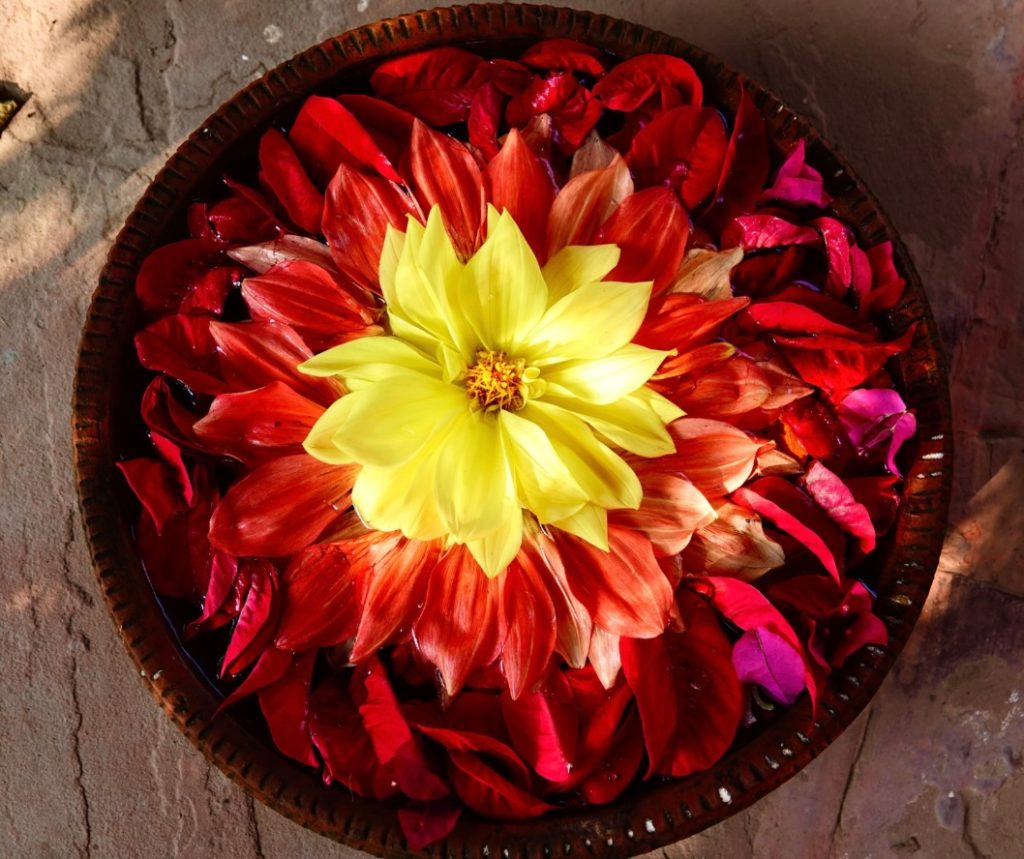
Coming from the dark and icy calm of Sweden we were welcomed to India with shouts and honks and a thick blanket of smog. We knew we would be entering another world but nothing could prepare our western sanitised way of being for this colourful chaos.
Navdanya is a beacon of light tucked away behind dusty, littered streets. Seeing how much natural care and beauty can be cultivated by human hands is inspiring. To know that there are people in this alarmingly damaging world who have the strength and knowledge to fight through the greed has brought motivation and warmth to my heart.
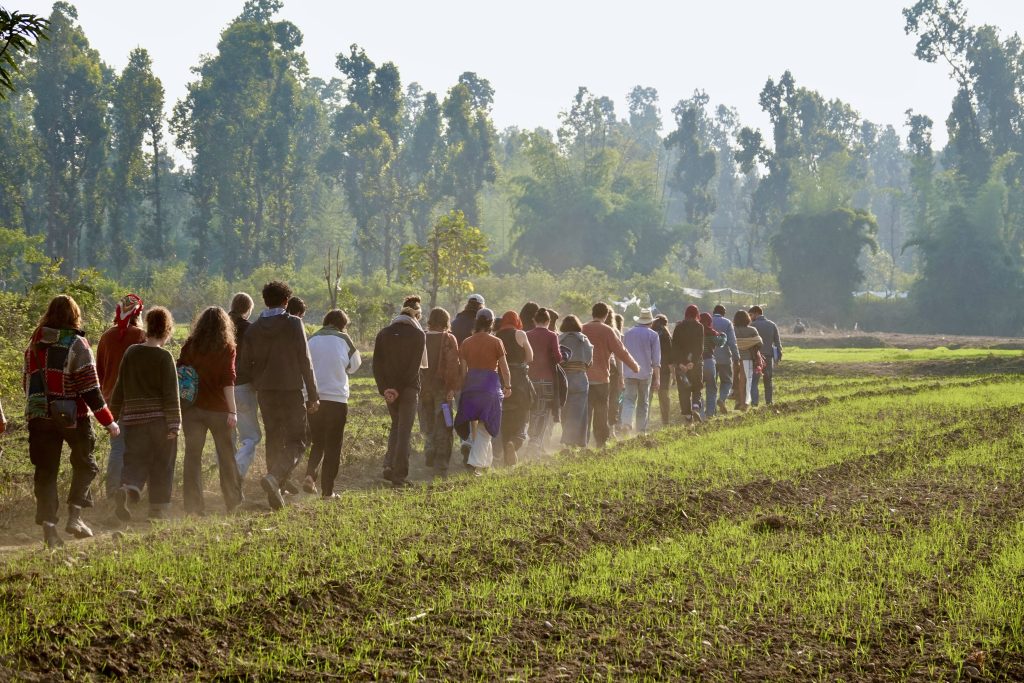
As the sun warmed our skin we learnt of the cycles of life – of ecosystems and food and soil: vast ecosystems swimming through the soil, feeding from the soil and weaving the invaluable webs that sustain us. Learning from the wisdom of the Navdanya team and Dr Vandana Shiva I feel grateful beyond words. Her words are like gold dust. The Navdanya philosophy is one of humans and nature being not separate but one living organism who rely on each other for sustenance. To regain swaraj – sovereignty – we must be stewards for the land that provides us with so much: food, breath, water, love. It seems that all of us have a new appreciation for food and where it comes from. Now that I know the evils of industrial, chemical, GMO agriculture, I respect the organic and sustainable world to a much greater degree.
Here at Navdanya we’ve had to get used to another way of life. A way of cold but cosy mud huts, of weeding among the great bulls pulling poles through the rich doon valley earth, of beating the seeds of rice out of straw then eating rice and dahl again and again and again (in different variations). Connecting what we eat to the source has brought an invaluable love and gratitude to every meal and everything that goes into every meal: those who work, unwavering, season after season, through harsh sun, cold mornings and merciless monsoons.
It’s beautiful; living in the flows of night and day, hot and cold, work and rest. Everything is experienced at a slightly deeper level somehow. I’ve loved it here, although I’ve had my ups and downs every moment has felt valuable.
Written by Gabriel Golding
ALUMINI PROJECT:
Playing in Times of Uncertainty
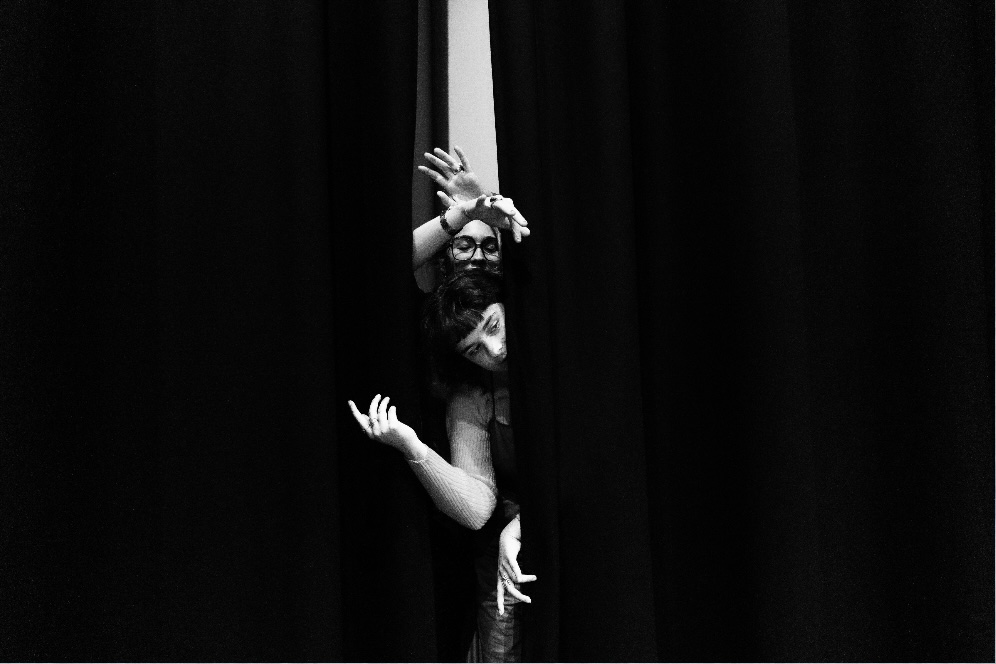
Hi there! I’m Elfine, a YIP12 alumna.
At the moment, I work as a theater teacher and director, and I spend a lot of time moving on phyiscal dance floors and through ideas. I’m especially drawn to physical theater, everyday gestures, and all the things we don’t always put into words. I think my work lives somewhere between theater, dance, and visual art. I like exploring how bodies relate to space, to each other, and to those inner landscapes we carry around with us.
Like many of us, I’m a creative creature trying to find a way through a world where ideas and reality don’t always line up. It’s not always easy, but I’ve learned that making, exploring, and staying curious isn’t really a choice. It’s just how I move through the world.
How is YIP living on in you?
I find it difficult to put my finger on it, but I can say that my time at YIP was really a year that changed everything… YIP encouraged me to go for the things I really wanted to pursue in this world. I also think that YIP inspired me to look at values and ways of living together, even ways of collaborating on initiatives. I think once you’ve experienced what working together can look like, it’s hard to go back into a world where people and nature are not at the core of every decision. So, I still live in the tension between the way things have always been done and how we could be living and working together. This definitely feeds my way of working, I try to inspire imagination more than direct it, but I wouldn’t say I’ve mastered this yet.
What is a project you are currently working on?
At the moment, I’m juggling multiple projects: teaching theatre, developing and leading workshops, and directing and creating performances. To be honest, most of the projects I’m working on are a direct response to my own feelings of powerlessness faced with these massive societal changes and challenges we’re facing. I feel the urgency to reconnect with myself, with others, and with nature in a world that seems to be spinning out of control. I want to be prepared for the future, but I don’t know how. I want to give good advice to the children and the young people I teach, but I don’t know what to tell them. Everything feels so uncertain these days, and none of us seem to have the tools to prepare for the changes that are coming.
To navigate this, (and to stay sane :)) I’m developing my own movement theatre workshops where I try to inspire people to play with reality, to dance with their fears, to comfort their inner dragons and reimagine the future because, in theatre anything is possible and it’s all just part of the game…
Some of the projects I’m developing:
- One of my main projects is called “Too Many Cooks” icw Danspunt. It’s an absurd kitchen choreography inspired by the saying “too many cooks spoil the broth. It starts very precisely and synchronized but eventually spirals into a recipe for disaster. In this performance, I want to explore the relentless pursuit of perfection, the pressure of crumbling societal systems and how we are often forced to fit into them, the breakdown of old paradigms that contribute to a certain loss of humanity.
- I’m also designing a few physical theater workshops: “The Eye of the Storm” the theme is the inevitable societal economic storm heading our way and our need to find our way back to the Eye (what makes us human) inside these chaotic changes. “Reclaiming Space for Play” Is another workshop I’ll be giving at Wisper, it’ s aimed at rebuilding yourself after metaphorical storms throughout our lives, asking the question “how can we be our own shelter?”
- Together with two friends we co-founded “Plic-Ploc Collective” an artistic collective that focuses on building paradises. We co-create and give theater workshops that engage and challenge young people to imagine the future if anything were possible. We travel together and give these workshops in different organizations like Oxfam, Jup, and Victoria Deluxe…
Previous creations:
“Tip of the Tongue” – Inspired by each performer’s memory of being at a loss for words.
Has YIP in any way inspired or contributed to enabling your initiative?
YIP has definitely been a big influence in shaping my life and my approach to everything. It inspired my idealism and hunger for utopia’s and it’s a constant reminder of how much we can do together.. When we take time to really listen to each other, we often discover that we just have different ways of working towards the same goal.
I think after Yip I had that sense that I had nothing to lose… Instead of looking down on the things I did effortlessly, I decided to embrace my crazy creative tendencies. After Yip, I finally applied to theater directing school, which was a really bold and beautiful challenge, like a really good pair of shoes that I could grow into.
But YIP also fed my inner rebel. I think it encourages you to find your unique way to be in this world and to challenge norms, to find ways to take action and give back without compromising yourself.
Within my projects, I try to encourage resilience, flexibility, creativity but mostly playfulness because I want people to be able to dance with the current uncertainty of our lives. I really think we need to fight for that space and time; to be able to be unapologetically silly, to play together, to not always be productive or in control and to allow ourselves to fail gloriously, to embrace intense emotions and laugh at ourselves.
I think that is the true power of theater, connecting people to each other, to their bodies and their imagination in the most unexpected ways. Yip was a very important jumping board to embody these values and bring them forth into the world in my own way.
I’m very curious how everyone else is playing with uncertainty these days…
If you feel called to, feel free to reach out to me here.
UPCOMING EVENT:
Initiative Forum April 2026
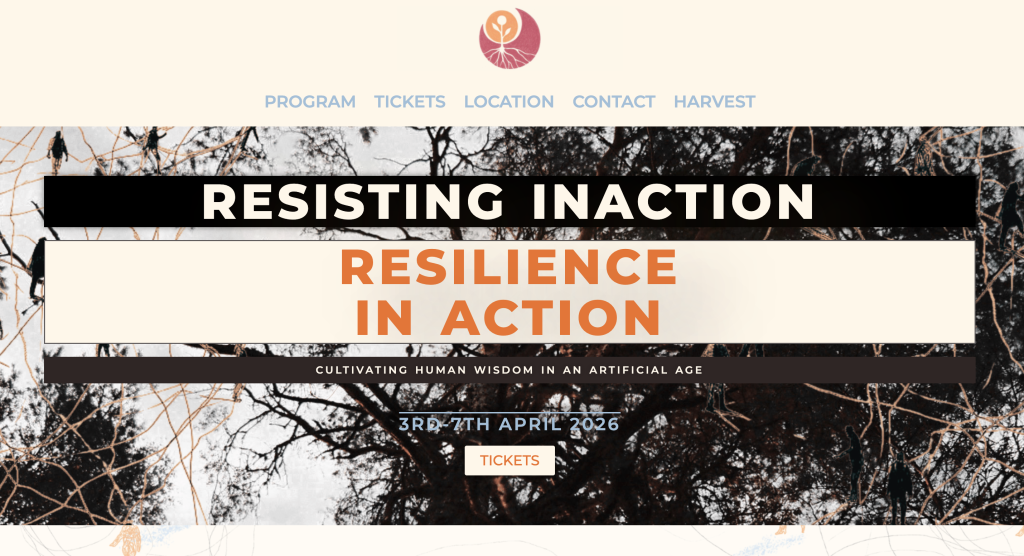
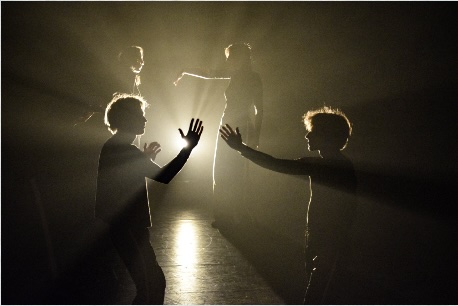
In the springtime of 2026, YIP18, together with a group of YIP alumni welcomes you to initiative forum on the theme of – Resisting Inaction, Resilience in Action: Cultivating Human Wisdom in an Artificial Age.
As technology and artificial intelligence increasingly enters into our lives, we see a crisis of the human will. Despite seeing the global challenges that are calling for our participation, we feel there is a tendency towards apathy and overwhelm. How can we resist this inaction, and grow in our resilience to respond to the challenges, both as an individual and as a collective? How can we consciously cultivate human wisdom in this increasingly artificial age and meet these changes with awareness?
If these questions are alive in you, we invite you to join us in exploring these themes together!
The forum will include lectures, interactive discussions, open spaces, workshops and cultural activities.
For more information visit: https://initiativeforum.yip.se/
We hope to see you there!
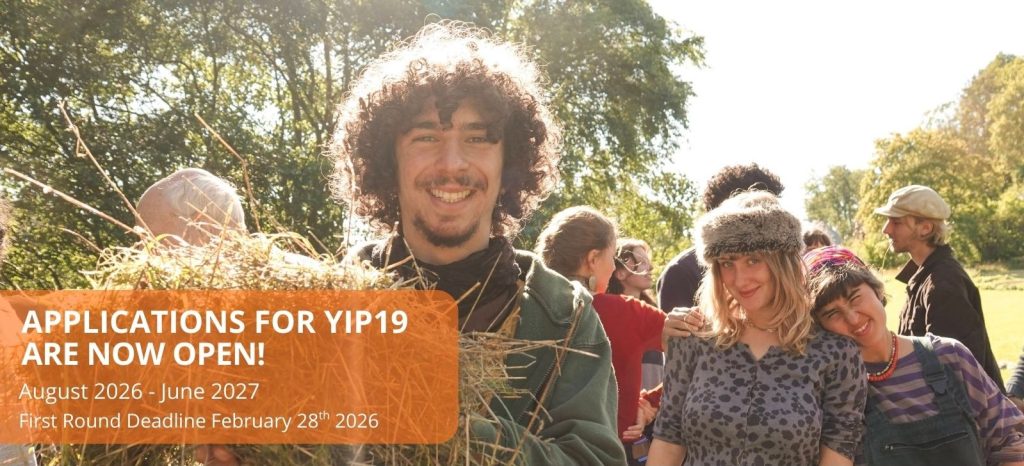
APPLY FOR YIP19!
Newsletter made by Irene Fernández