Settling into Rhythms and Intentions
Dear friends of YIP,
Welcome to YIP18’s April recap!
After the Initiative Forum, the Yippies settled back into the regular schedule, and began the course of Enabling Life, led by contributors Allan and Sue. It was a new pace of sitting down and quieting into the realm of theory, deep observation, and connection to the natural world – a stark contrast from all the rush and adrenaline that came with organizing the Initiative Forum and returning from India. Through dialogic, artistic and nature based methodologies, the Yippies were awakened to the unfolding nature of life and the responsibility each of us hold in expanding the world through taking a moment longer to observe.
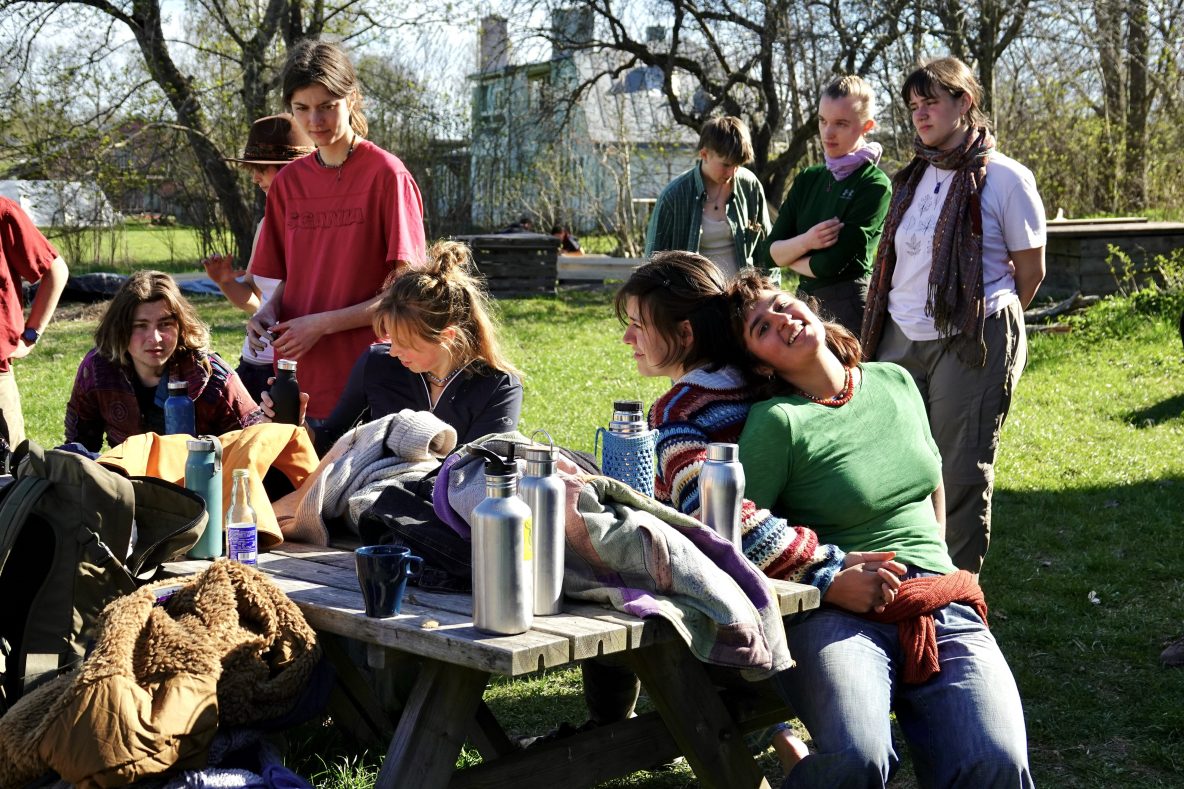
From building this connection to the natural world, we moved into the Self Designed Curriculum – a week planned and organized by the Yippies themselves. It is now the phase in the curriculum when the participants transition into the organisers. For this week, the Yippies decided to invite Brigid Lefevre – an experienced gardener and avid fermenter now based in Portugal. She brought us into the gardens and kitchens, inspiring a deeper appreciation towards food and its preparation. Throughout the course, she provided so much insight into food systems, food history, and how we can create a healthy relationship with our body through different ways of processing food. The Yippies learned different techniques in fermentation, and at the end of the course they prepared a lively Viking Feast!
This celebration and coming together gave the Yippies a good transition into kickstarting their Personal Initiatives, as they entered into their third and final week with our dear contributor and YIP2 alumnus, Brenno Kaschner Russo. This was a week of grounding, and lively exchange. Together with Brenno, they worked with different structures to support their Personal Initiative projects, and setting intentions and plans for the next three weeks.
As we leave April behind, we enter into the Personal Initiative weeks. It is a special time in the curriculum full of inspiration! A time when each individual can focus on a particular question, topic, or theme they would like to explore. It is within these weeks where we see what is alive in them, what their passions are, and what questions they are holding about the world we live in. Culminating into a week of presentations, they open up about parts of their biography, and reveal to the community all the work that they have putting in through their time at YIP. We hope you will join us in witnessing the Yippies in their sharing, whether it be through Zoom, in person, or in the next newsletter – in which we delve into the Personal Initiative month.
May the embers of inspiration be alive in you!
Warmth and sunshine,
Bella.
In this newsletter you will find:
- Enabling Life: Holistic Thinking by Lilliahna Rogers
- Self Designed Curriculum by Freya Knierim
- Self Designed Curriculum with Brigid Lefevre by Ruby Botica
- Impressions of the Vikings Feast by Lilliahna Rogers
- Returning to the Garden with Aleksa
- Week 1 by Yasmine Engqvist Shannon
- Week 2 by Rafael Fuller
- Personal Initiative Kickstart Week with Brenno Kaschner Russo by Ida Paasen
- Leaving the Campus: the Collective Wisdom Camp – Personal Initiative
by Alice (Atlas) Falkeström - Spring Creatives Sessions:
- Felting by Ruby Botica
- Art Therapy by Maria
- Woodwork by Quinn Rahmann
- Stonework by Maria
- Philosophy of Freedom – YIP18 Community Initiative by Harrison Tan
- Invitation: Personal Initiative Presentations
- Alumni Update: by Samuel Mirkin
- SAVE THE DATE! The 20 Years of YIP Gathering
- A message from our gardener by Aleksandra Domanska
Enabling Life: Holistic Thinking
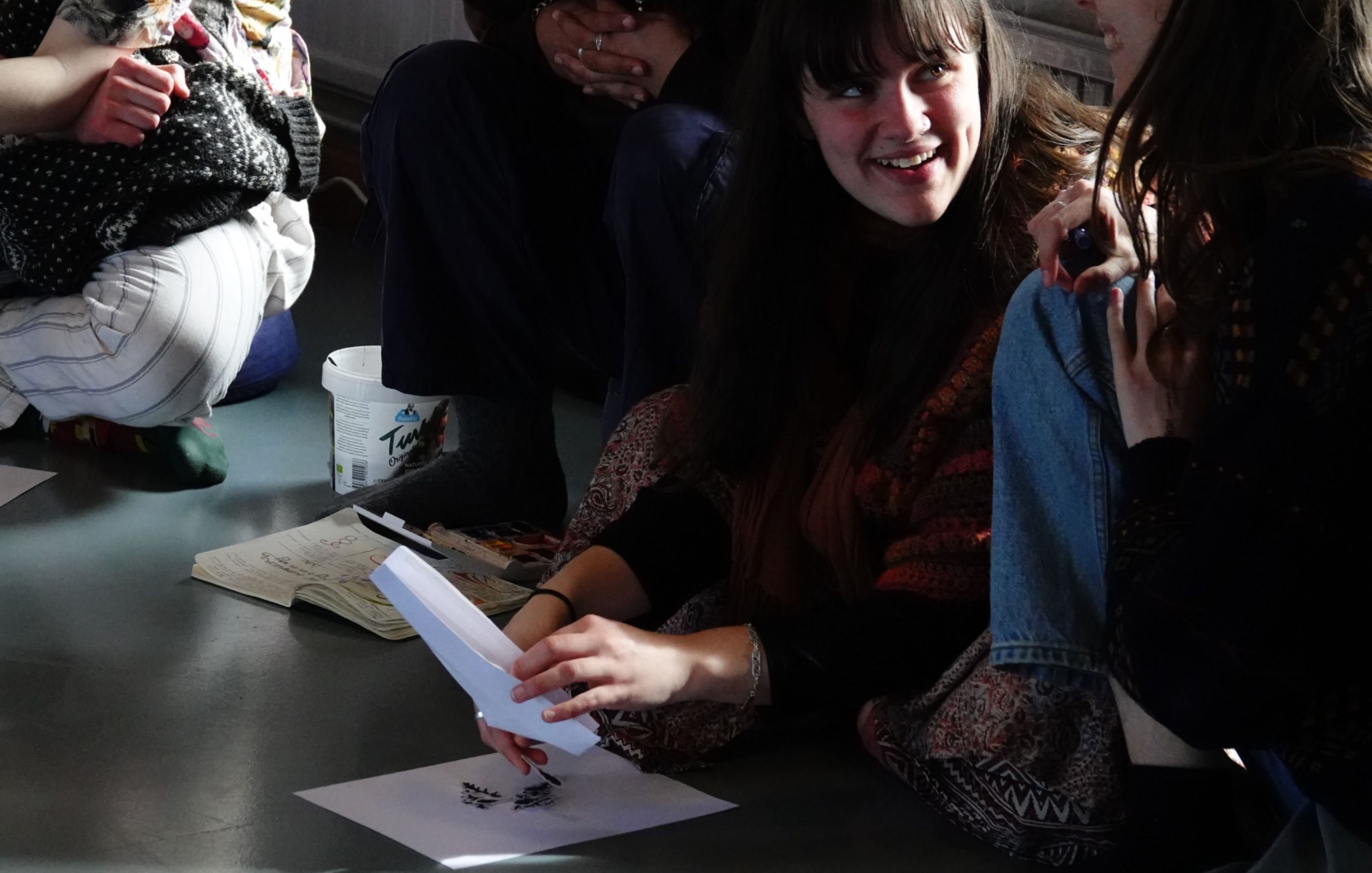
In a world intent on confining everything to a fixed form to fit within our time’s dominant paradigm of materialism, it is rare to find conversations focused on process and changeability. This past week with Allan and Sue facilitated many of these rare conversations. Together we stepped out of our tunnels of separateness and into the web which forms our dancing world.
We observed the long-awaited arrival of spring through flowers and the emerging greenness all around, and observed decay along-side growth to piece together an understanding of true life as a process of constant movement between these polarities.
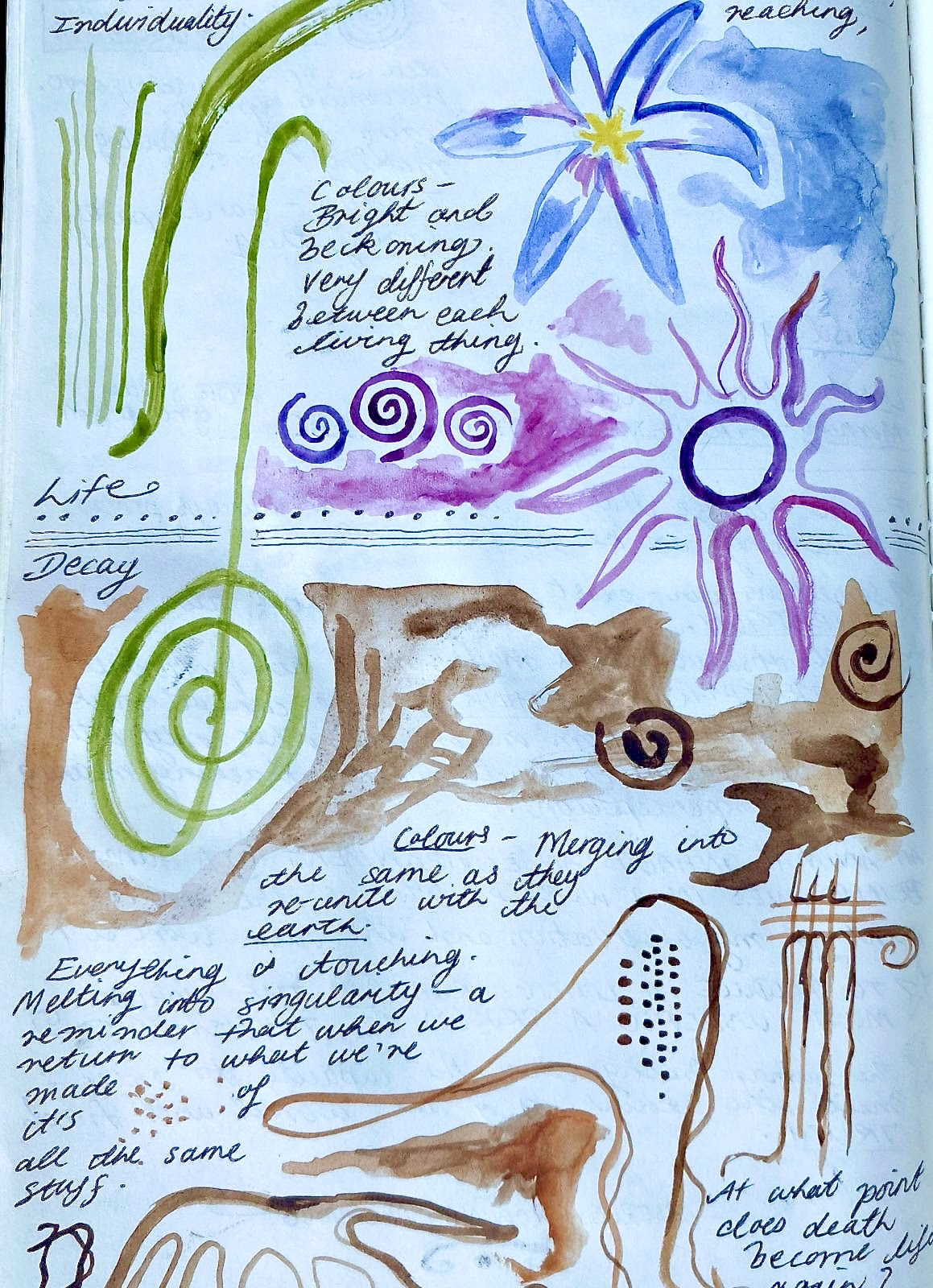
The blanket of brown, crumbling leaves is fading away as the sleepy winter land awakens around us. What most of us would see as a new flower, has deeper truths hiding just beyond our perception; the flower is simply one form of the infinite process of life which takes place always and endlessly. The leaves in their delicate decomposition are as full of life as the flowers in their blossoming. Becoming awake to this is imperative in building a sustainable relationship with our own lives- we must learn to let go in order to be clear vessels for life’s forces to move through. We must learn to hospice that which no longer serves life in order to welcome regenerative ways of being. This is true as individuals, as societies, and as a world. What systems must we turn into compost to feed a thriving future?
This week we welcomed the infinite. It was both inspiring and incomprehensible. I am left with an awe for life’s persistence and many, many open-ended questions.
We explored relationship through Goethean observation, learning to witness the other as they are, without our pre-conceived ideas, assumptions and expectations. The way that we receive the other shapes the way they reveal themself- in leaving behind our own projections, we enable them to be as they are. The same goes for the world; it exists in our perception, therefore the way we see it is the way we allow it to be.
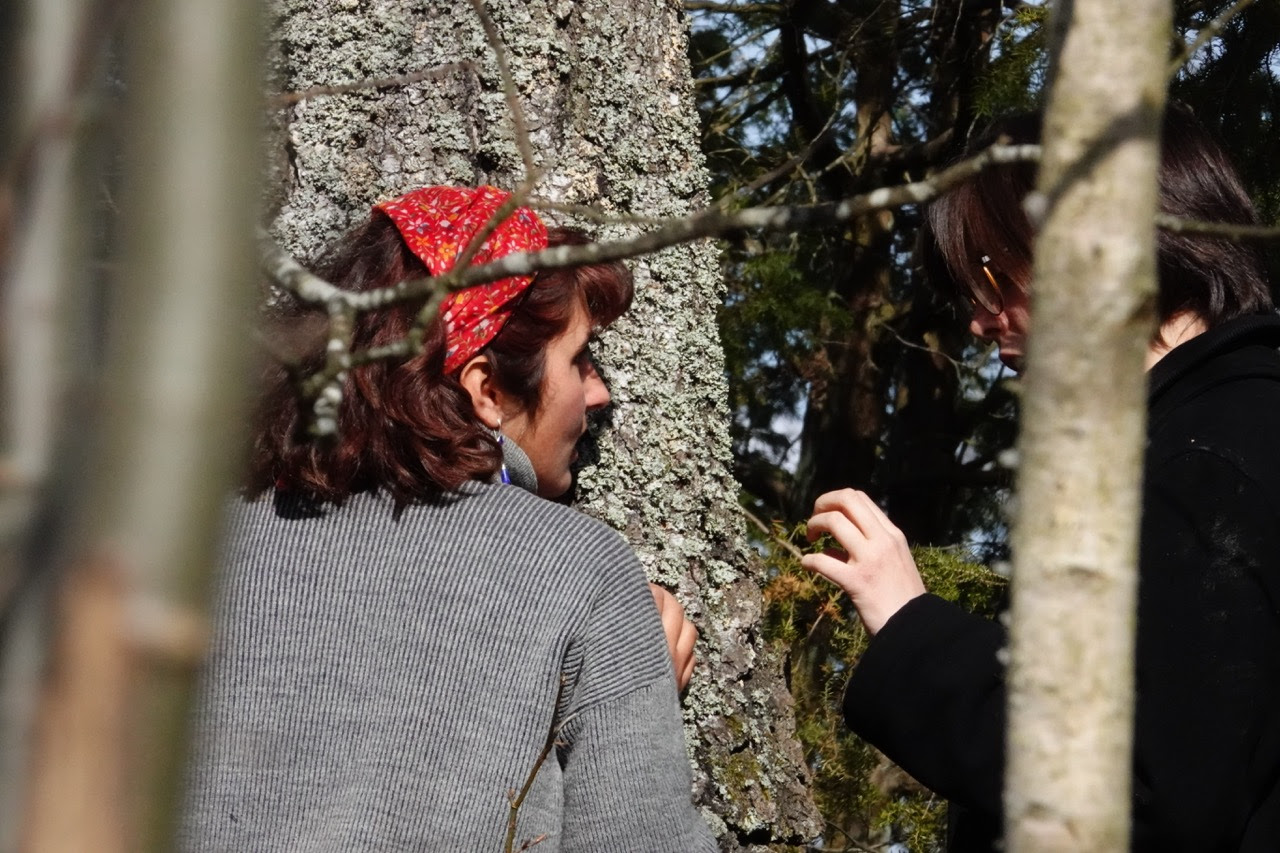
I will take these insights from Allan and Sue during our week of ‘Enabling Life’ with me into the world. Already I have begun to notice intricacies that would usually fall through the sieve of my perception. The colours of the many faces I meet feel more vibrant- more alive. The spring blooms hold more than beauty and a promise of warmer days, they hold the invisible truth of life’s constant dance in an ongoing process of becoming.
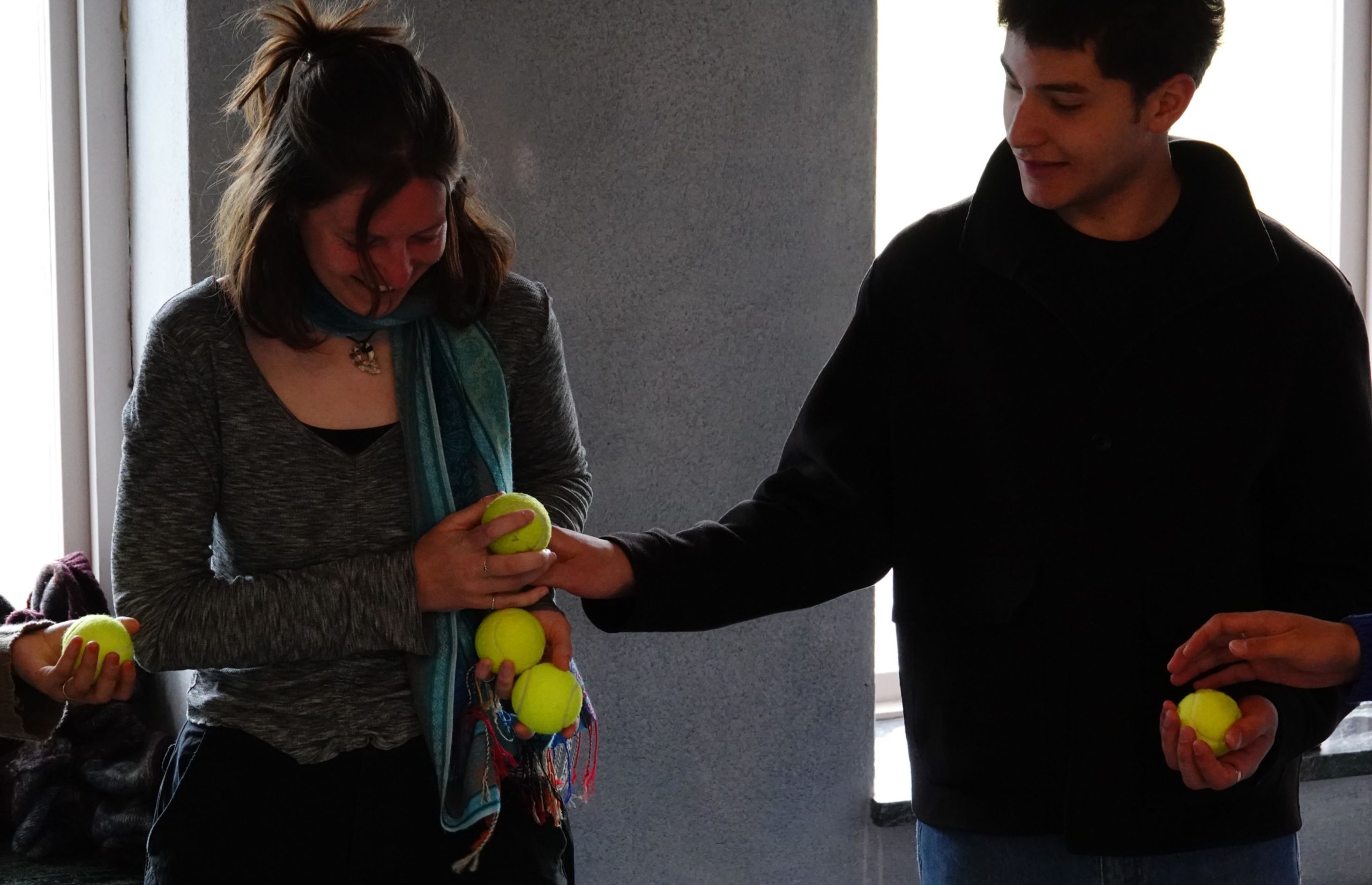
Who are you, friend
Beneath the shroud of my ideas?
Writing by Lilliahna Rogers
The Self Designed Curriculum
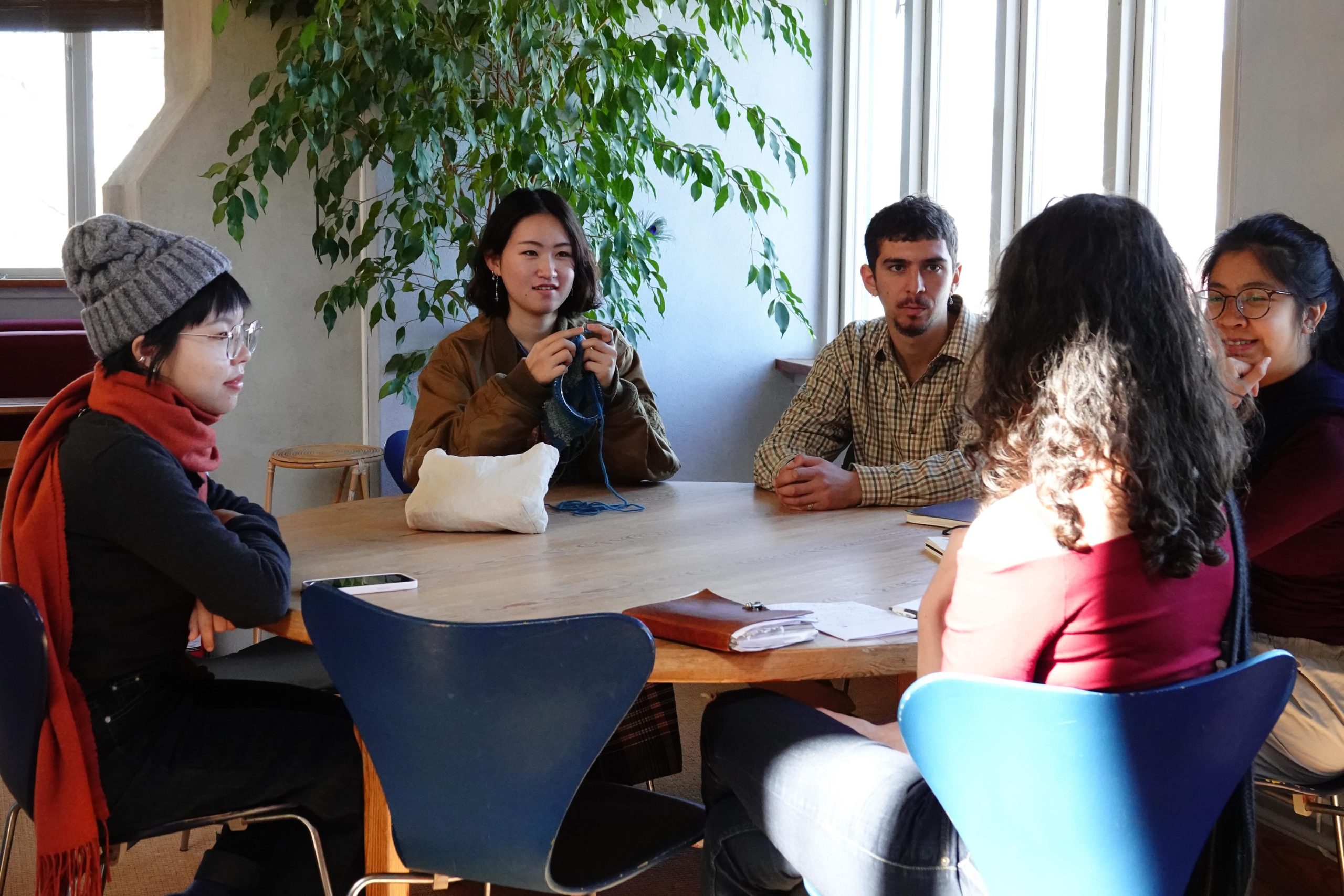
The Self-Designed Curriculum (SDC) offers us Yippies the unique opportunity to design and shape an entire week of the YIP curriculum ourselves. It is a chance to create our own course content and take our learning into our own hands.
From the beginning of the program, I have been part of exciting conversations about what our SDC could look like: a week of skill-sharing, adventures in smaller groups, a week with a guest contributor we would like to learn from, or a week dedicated to serving the local community? Our ideas and wishes were diverse and limitless.
A few months ago, while we were still in India, the team reminded us of this opportunity. Although we couldn’t yet fully imagine what it would look like to be back in Sweden, we began exploring what our group as a whole wished for that was not included in our current year’s curriculum.
With 33 people holding various ideas, wishes, and dreams, it wasn’t easy to find a single theme and topic that we, as a collective, wanted to choose for our self-designed week. However, after several conversations, it became clear that we wanted to invite a guest contributor using the budget provided by YIP.
Among many interests, we share the interest in food, cooking, and health and while these topics are present in many courses and in our daily life at YIP, we felt a specific week dedicated to them was missing.
As someone who personally loves food and cooking also in the context of health, I was happy to hear that my fellow Yippies also wanted a week focused on these exact topics. Having met Brigid LeFevre at a conference a few years ago and knowing that she had cared for the garden that is now the YIP garden, I felt she would be a perfect fit to invite as a contributor.
After a phone call with Brigid, it was clear to me that she would be ideal for our SDC. However, a vote was held first, as others had also contacted potential contributors. Following an evening of short presentations about the possible guests and topics we could cover in our self designed week, a little complicated voting process, and some back-and-forth discussion, it was decided that Brigid would be the contributor for our SDC week.
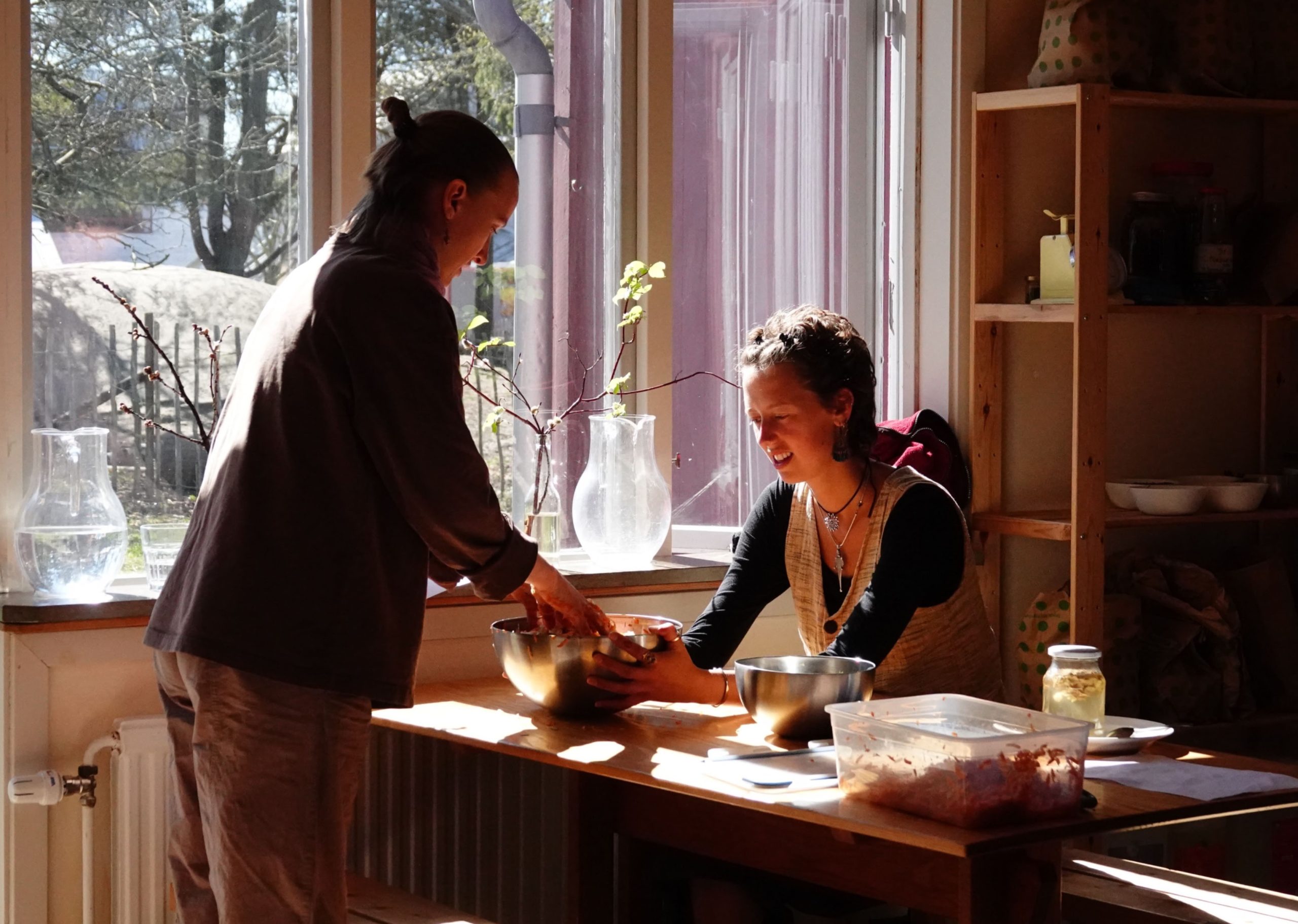
Through several conversations with fellow Yippies and Brigid, we were able to outline how we imagined the week and what Brigid could and wanted to bring to the table.
Being in India and focusing on our internships had caused us to momentarily lose track of the SDC planning. When we returned to Sweden, I was surprised to find that there was still a lot to organize, and the SDC was already so close. Fortunately, we had formed a committee in India with those interested in shaping the week. After a few more phone calls with Brigid, running various errands, dividing tasks, and organizing the schedule, Brigid finally arrived, and the week began.
For me, it was very special to be taught for a week by someone I had wanted to learn from and was able to invite to the YIP community. Collaborating with Brigid to plan and design the week, and eventually hosting her, provided me with many learning experiences and valuable insights into how to organize a week of teaching.
Writing by Freya Knierim
Food in Context: History, Culture & Practice
with Brigid LeFevre
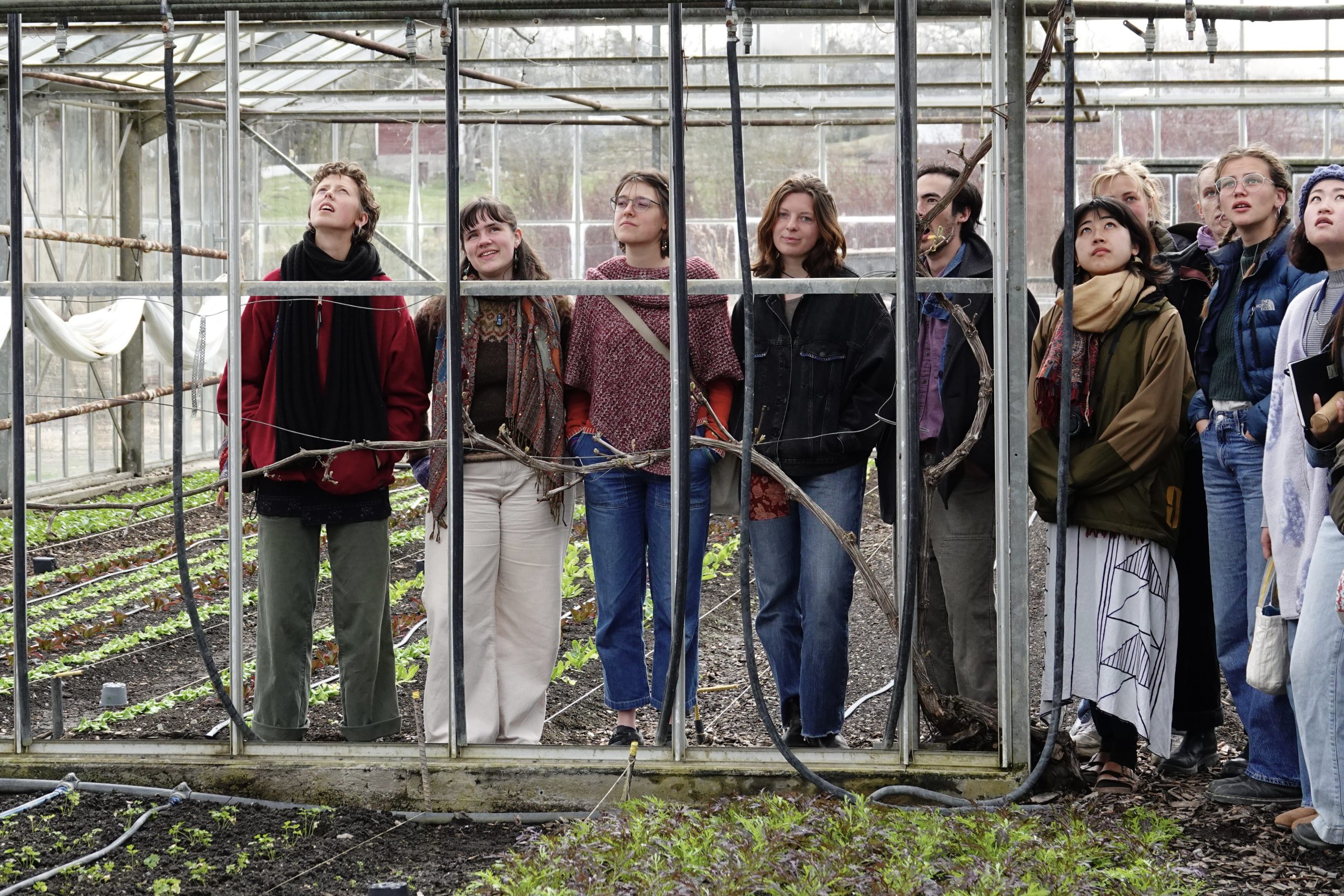
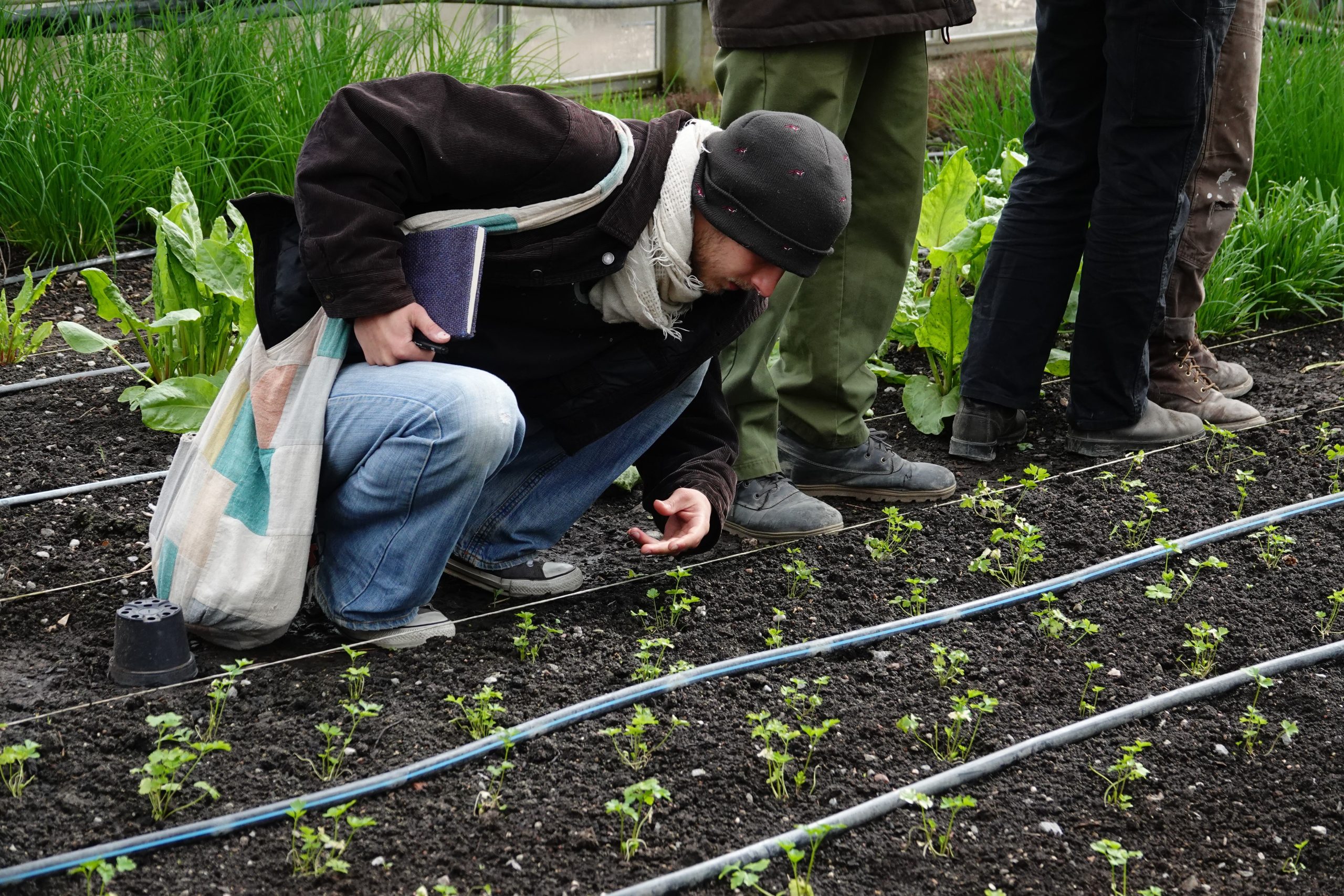
The Self Designed Curriculum was wonderfully food and ferment focused. Brigid wove together threads of dialogue and theory based learning with practical hands-on learning. In our morning sessions we explored food history and gut health and we spent our afternoons massaging cabbage and carrots into kimchi and kraut, forming sourdough into delicious bread and foraging for forgotten flavours. The more theoretical sessions with Brigid were rich. She is so knowledgeable. In her presentation on food history, I learnt about the important role food has played in culture and society and how humans’ relationship with food has shifted over time. Yet throughout time, food has always been so central to our lives. This exploration of history brought us into the present, where we looked at the strange distance created by the globalised food system and our need for convenience. Realising the importance of our relationship with food, we were guided to share in small groups about our personal food histories. What struck me was the joy a lot of us had around food, and I felt my privilege with this too. I felt grateful for food being central to celebration and togetherness in my life. Through exploring our own individual food histories, we went on to create recipes in our groups for a feast we prepared on Friday, bringing our love for food in our pasts into the present.
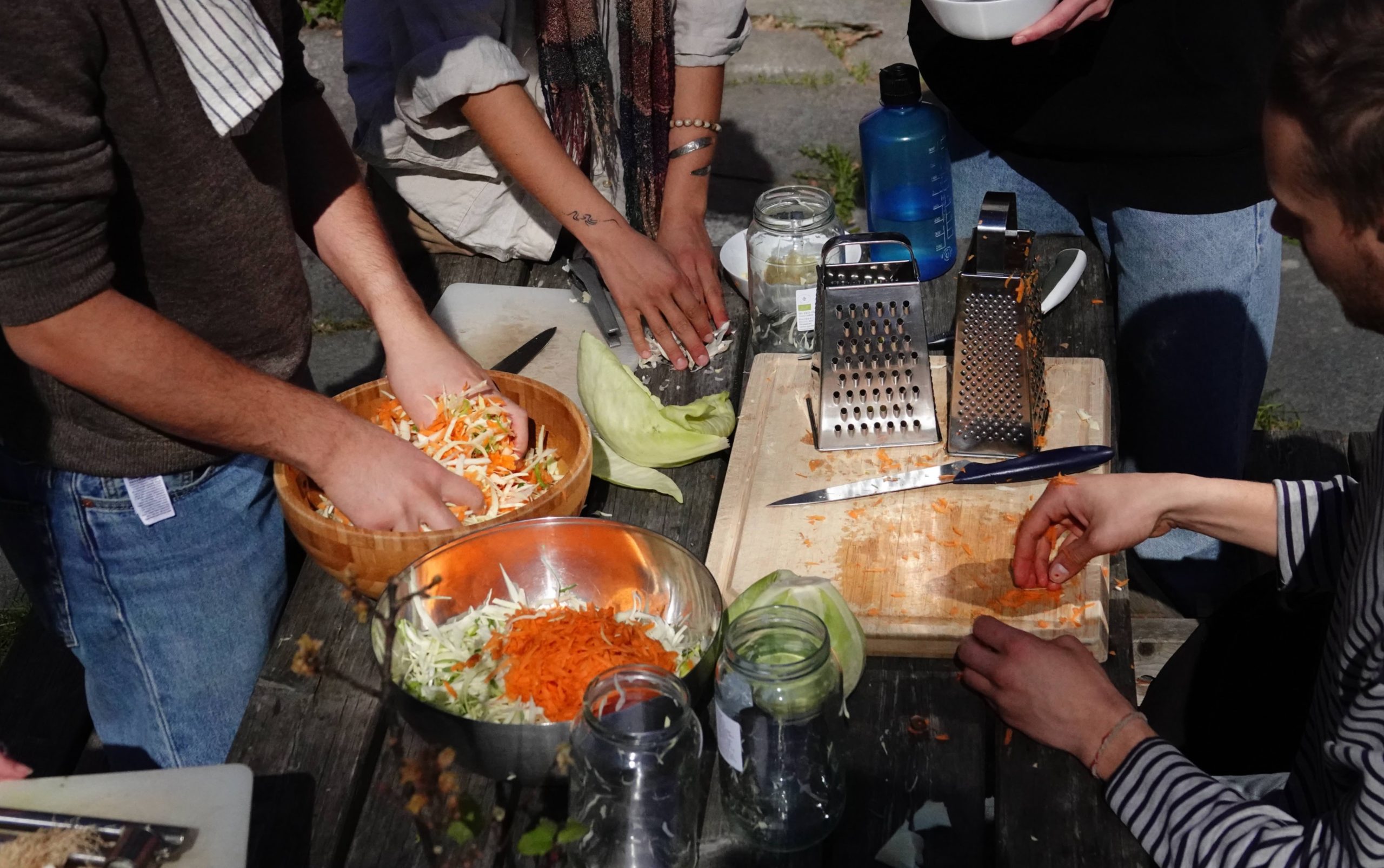
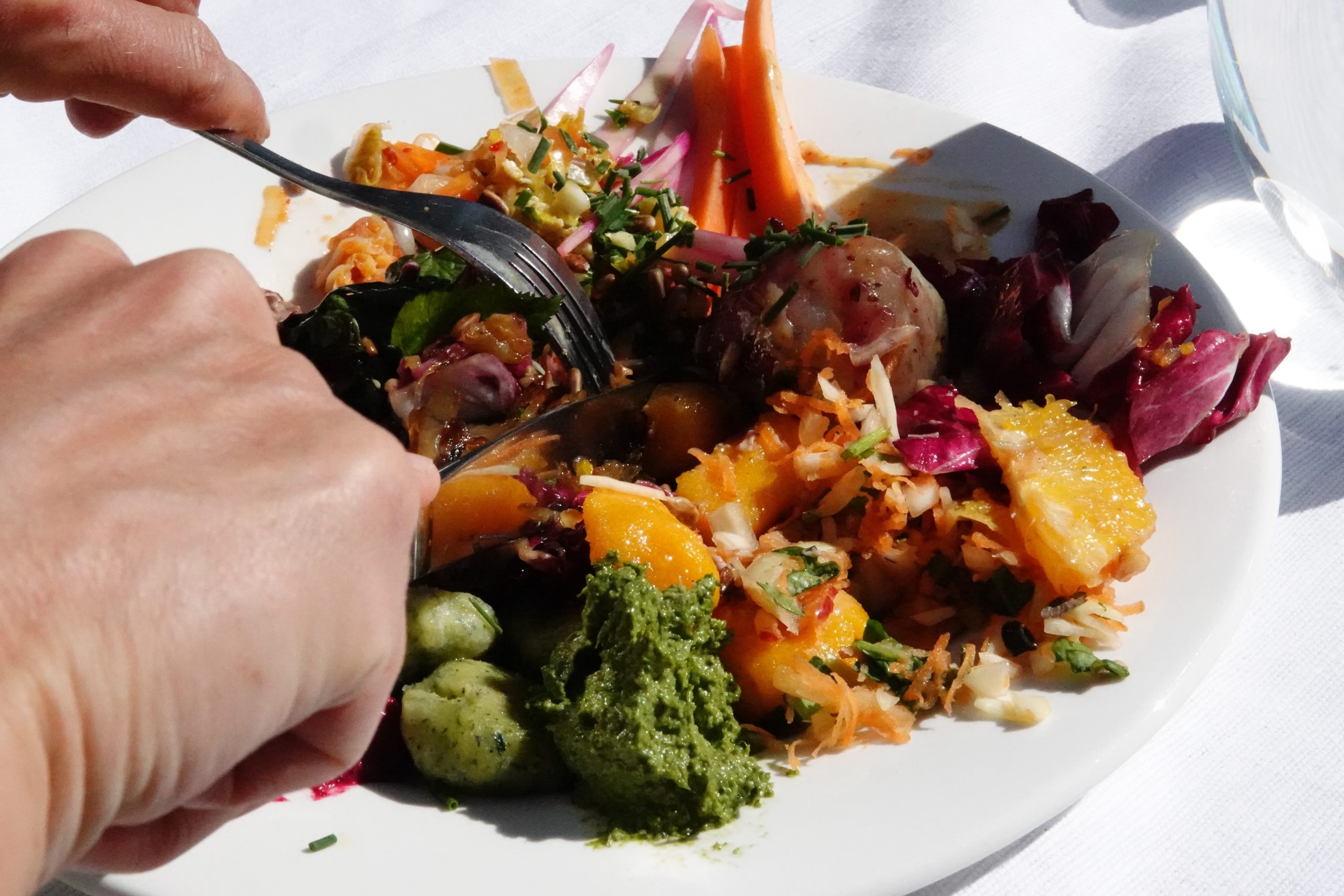
For me, our self designed course week with Brigid evoked a feeling of belonging. The memory of this week that will stay with me is our feast on the last day. Sharing food with community with sun soaked skin and a mouth full of foraged and fabulous flavours brought a deep sense of home into me. When we relate to it closely, through eating locally and healthily, food can ground us in our bodies, connect us to land and connect us to community. Where I see a lostness and a yearning for belonging in the world, I believe food can begin to heal.
Writing by Ruby Botica
The Viking Feast
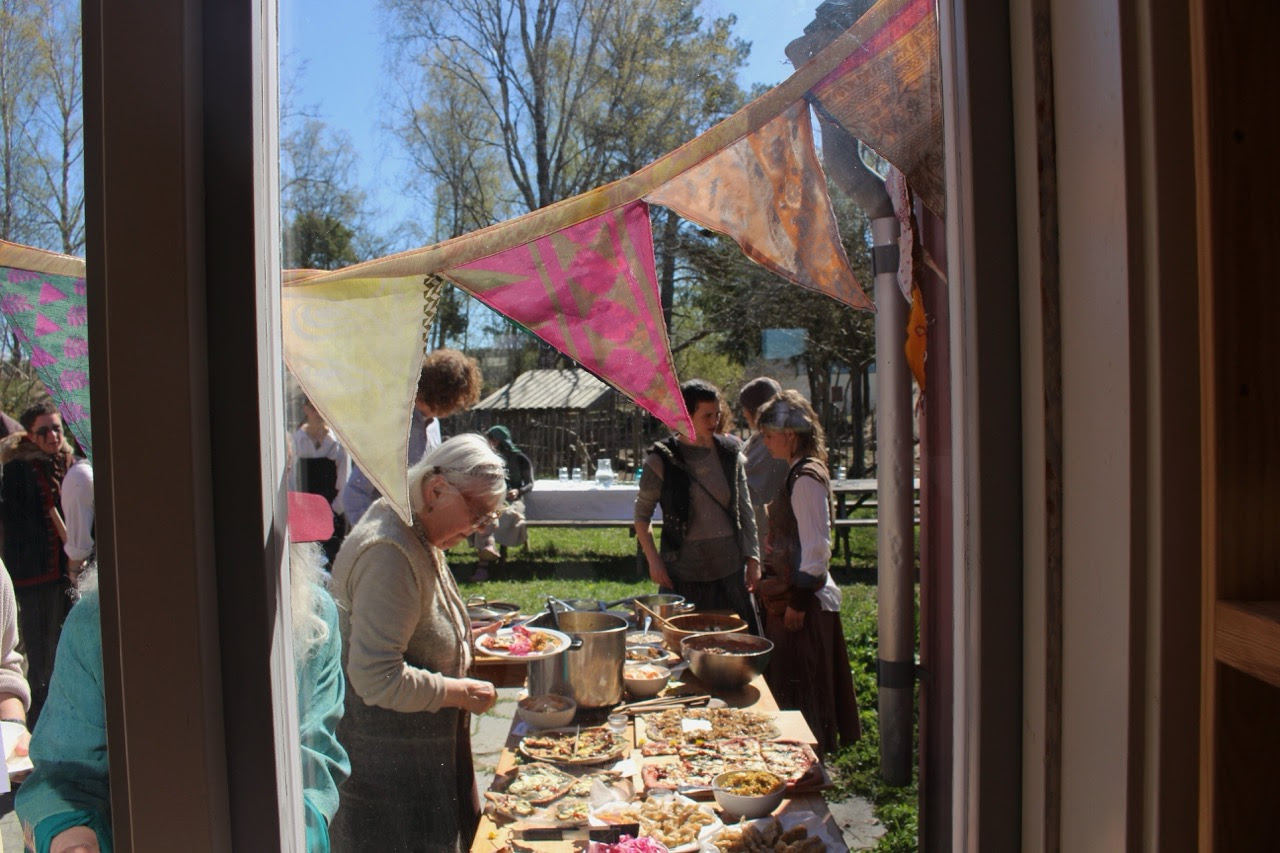
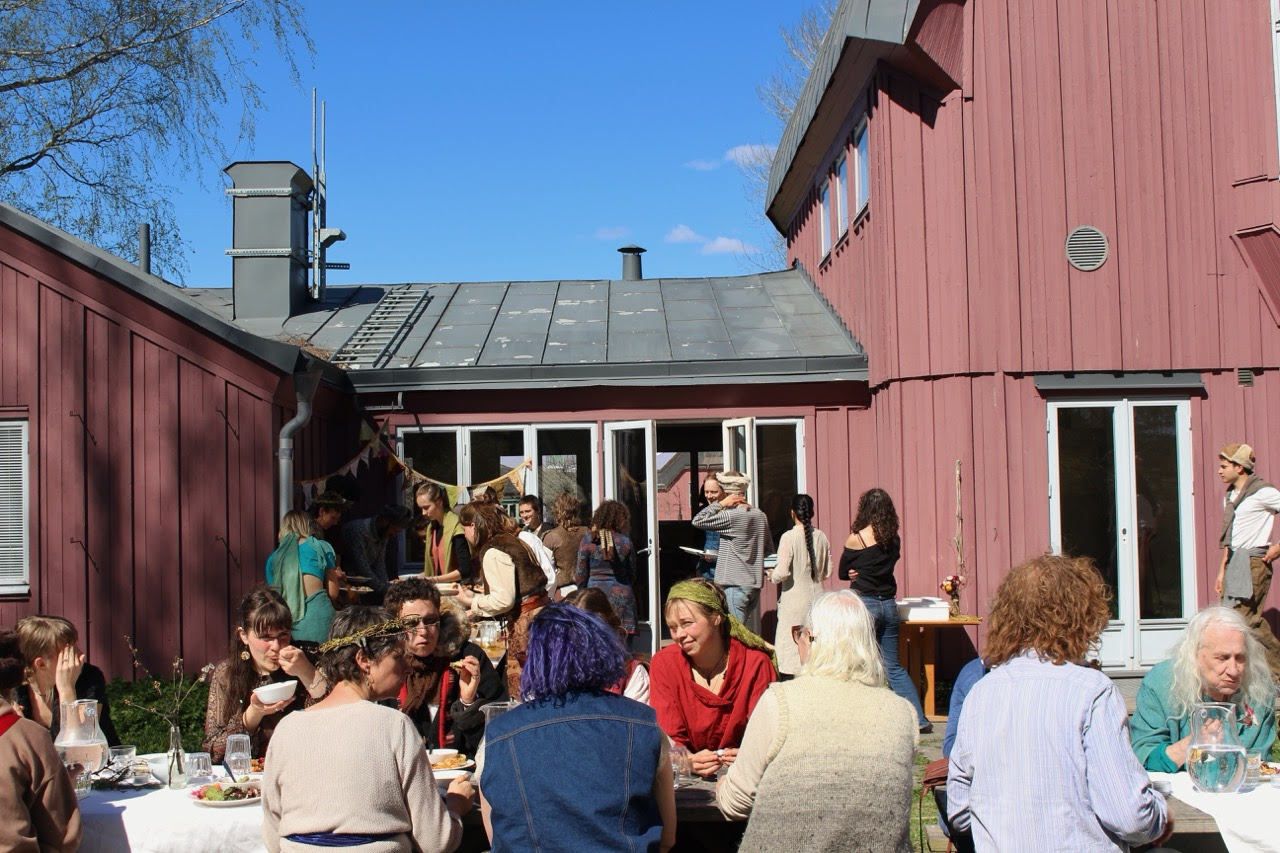
In the golden light of another sweet spring noon, a feast was held in the garden of Almandinen to celebrate the closing of our Self Designed curriculum week, the coming of a new season, and the history of this place we call home. Vikings arrived in their masses, young and old, and all dressed in makeshift costumes thrown together amidst a morning of meal preparation. The tables were overflowing with a colorful array of dishes, from soups to dumplings to spreads and foraged salads. Purple, green, yellow, red- together we devoured the rainbow in the company of our wider community. There were blessings and stories and skits, rambling conversation and lots of belly laughs. All around us the little white clovers and sunlike dandelions decorated the grassy banquet floor. Each of our soulfully prepared dishes complimented the other, weaving together our own histories and the history of Nordic food culture to cultivate community and honour the land that feeds us.
Writing by Lilliahna Rogers
Returning to the Garden
Week 1
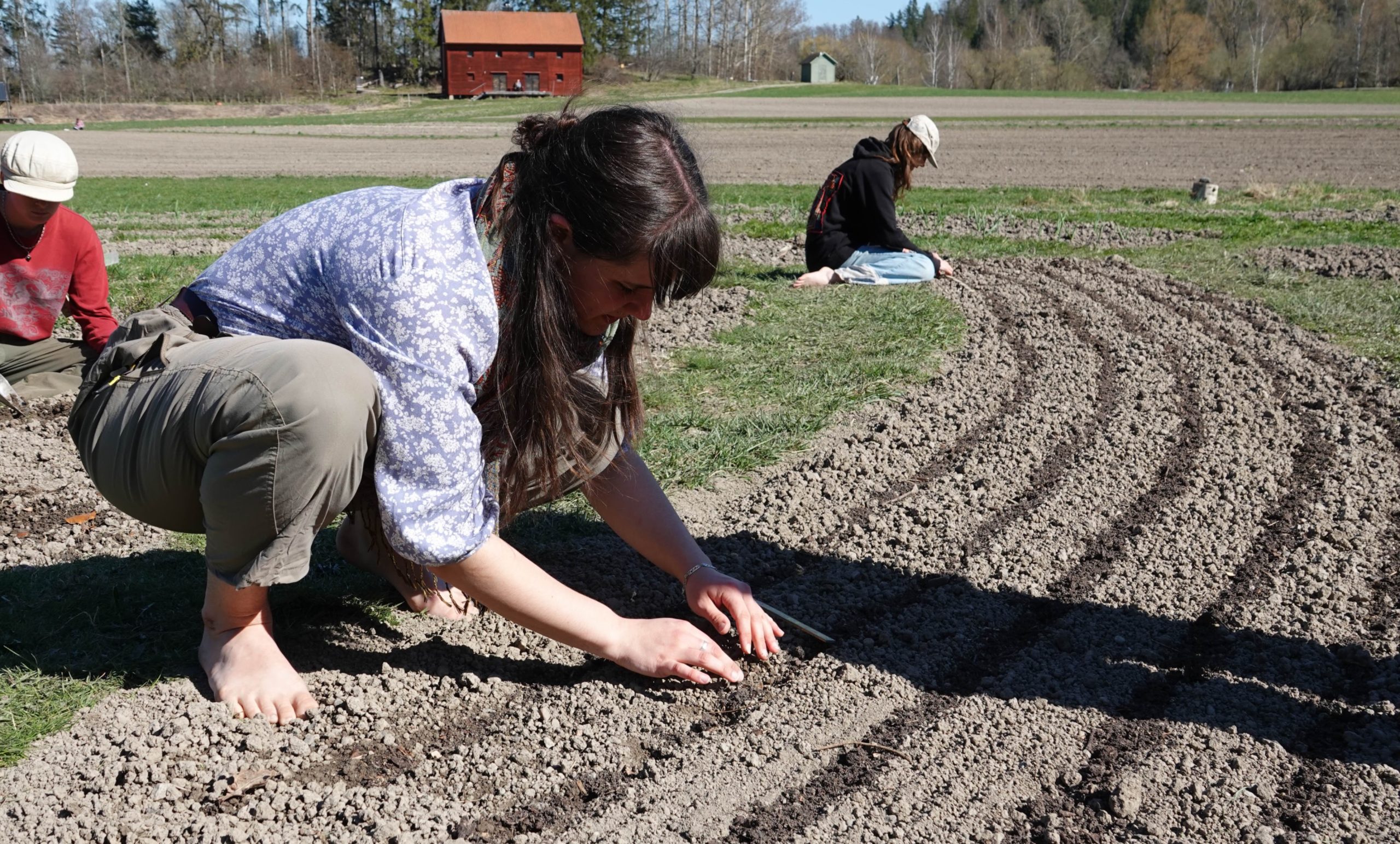
Being in the garden in spring, watching life slowly return, felt just right. It was fascinating to see this change, there is a contrast remembering the garden in summer full of fruits and flowers, but this month gives us the sense that things are opening up again. Spending time outside in the garden feels refreshing and like the perfect way to connect with Sweden again, after spending a long time in India.
The experience of the garden combined with Brigid’s course felt like a very hands on approach to learning, it was very presencing as our attention was pulled into the garden scanning and foraging, it was engaging to learn about all the different plants and their unique qualities and felt well paced, calming and insightful.
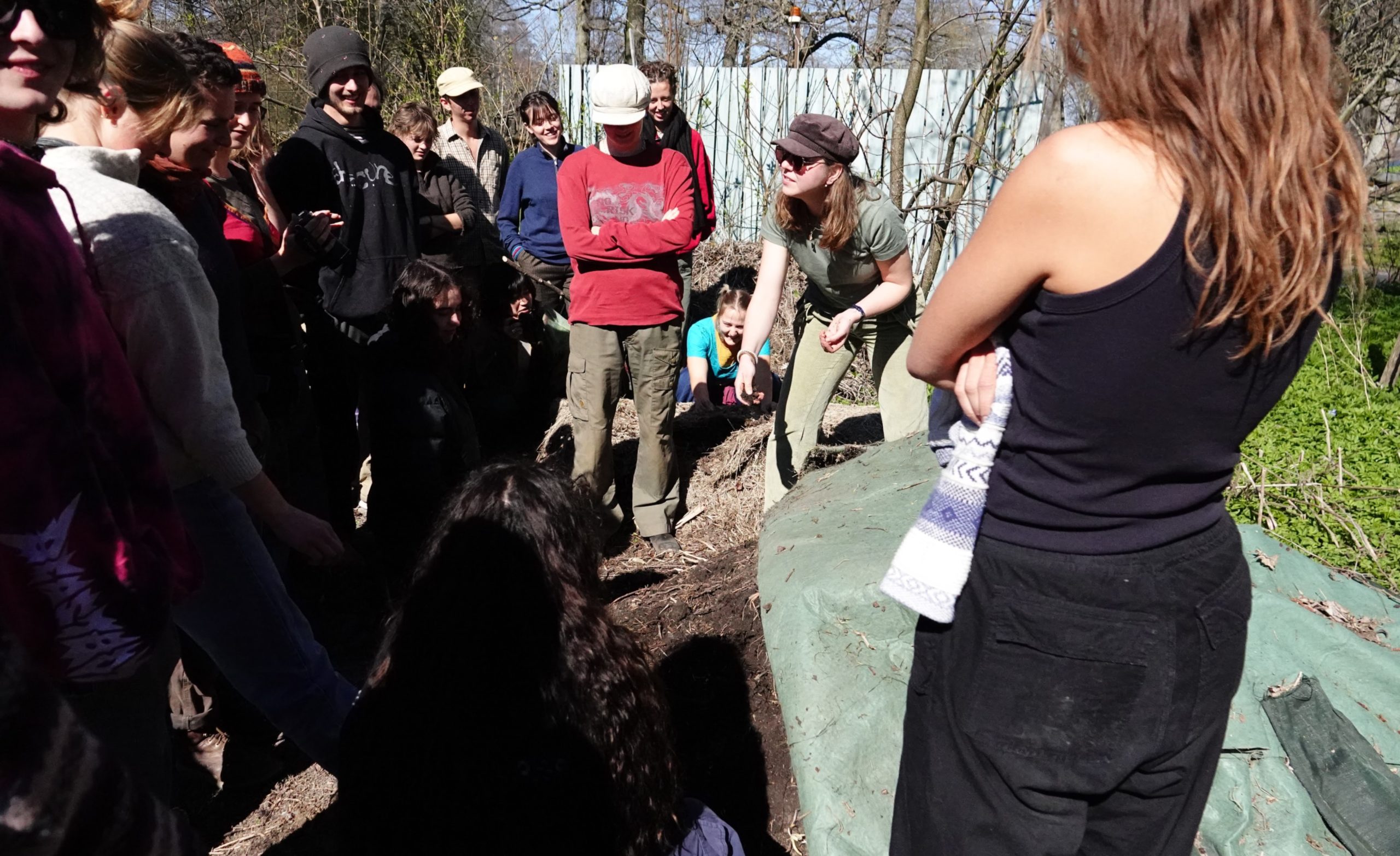
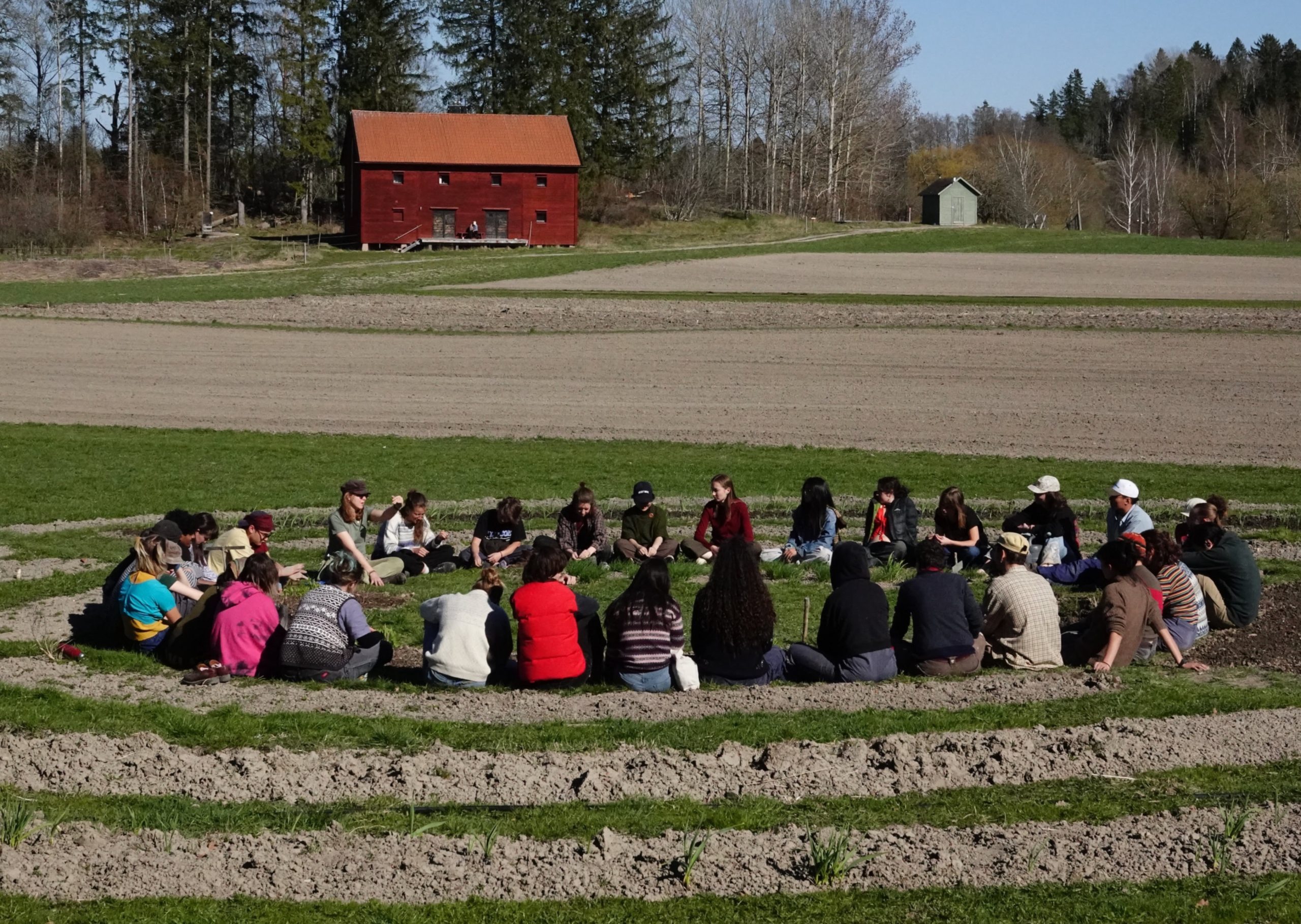
I see in the garden old leaves, beds that need tending to for seeds to be sewn. We are preparing the garden for new life as warmer months are approaching, removing what is no longer needed and noticing what is slowly emerging. Relating this to ourselves, it can be seen as a releasing of what was once necessary, letting go and preparing ourselves for what is to come.
I look forward to watching life return to the garden. At first the changes are small but you then begin to notice more, also to spend time outside, tending to the plants. It always leaves me feeling refreshed and energised, as well as more calm and grounded. Being in the garden helps me to feel more connected to myself and the natural world.
Writing by Yasmine Engqvist Shannon
Week 2
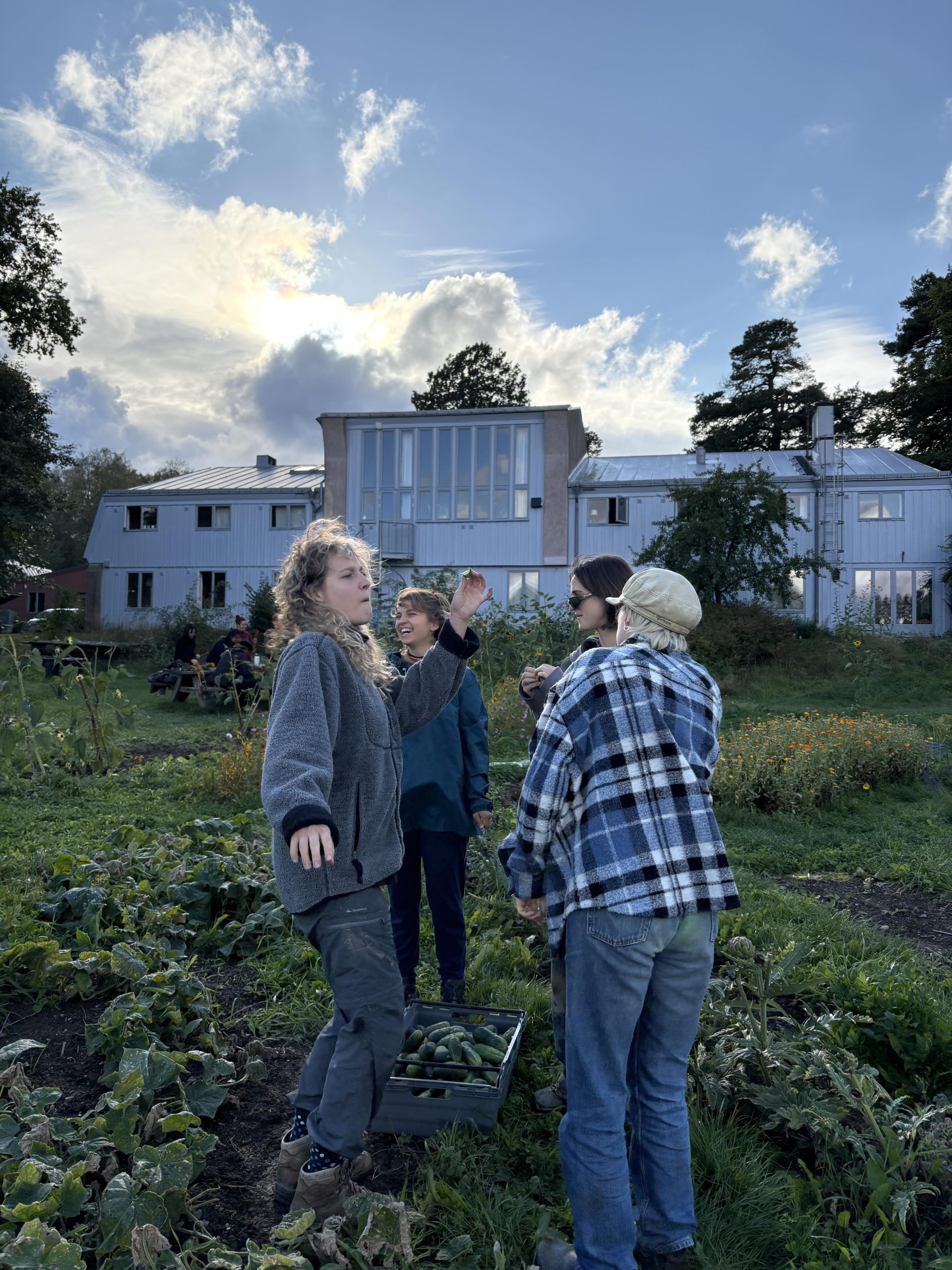
The garden is looking much more organised and it is nice to see some structure coming back. When we came back from India, the beds were completely bare and it looked very two dimensional.
I have spent some time tending to the rhubarb plants which I’m excited to take care of and see ripen over the next month. Being in the gardening group last week meant a grounding start to the mornings with fresh air, bird song, and hands in the soil.
Last Wednesday the lettuce plants went in, which has made a big difference to how the garden looks. We built a tent around them with some mesh, and we’re hoping they’ll be ready in a few weeks. It’s always fun to be out in the garden chatting, laughing and singing, especially when the weather is so nice as it has been recently.
Looking back at pictures from when I first arrived at YIP, the garden was so full of life and it was so great to harvest all the fruits of YIP 17’s labour. We hope that this year’s garden will greet the YIP19 participants with lots of beans! We’ve been planting them as a protein source for the meals as well as for their nitrate fixing qualities.
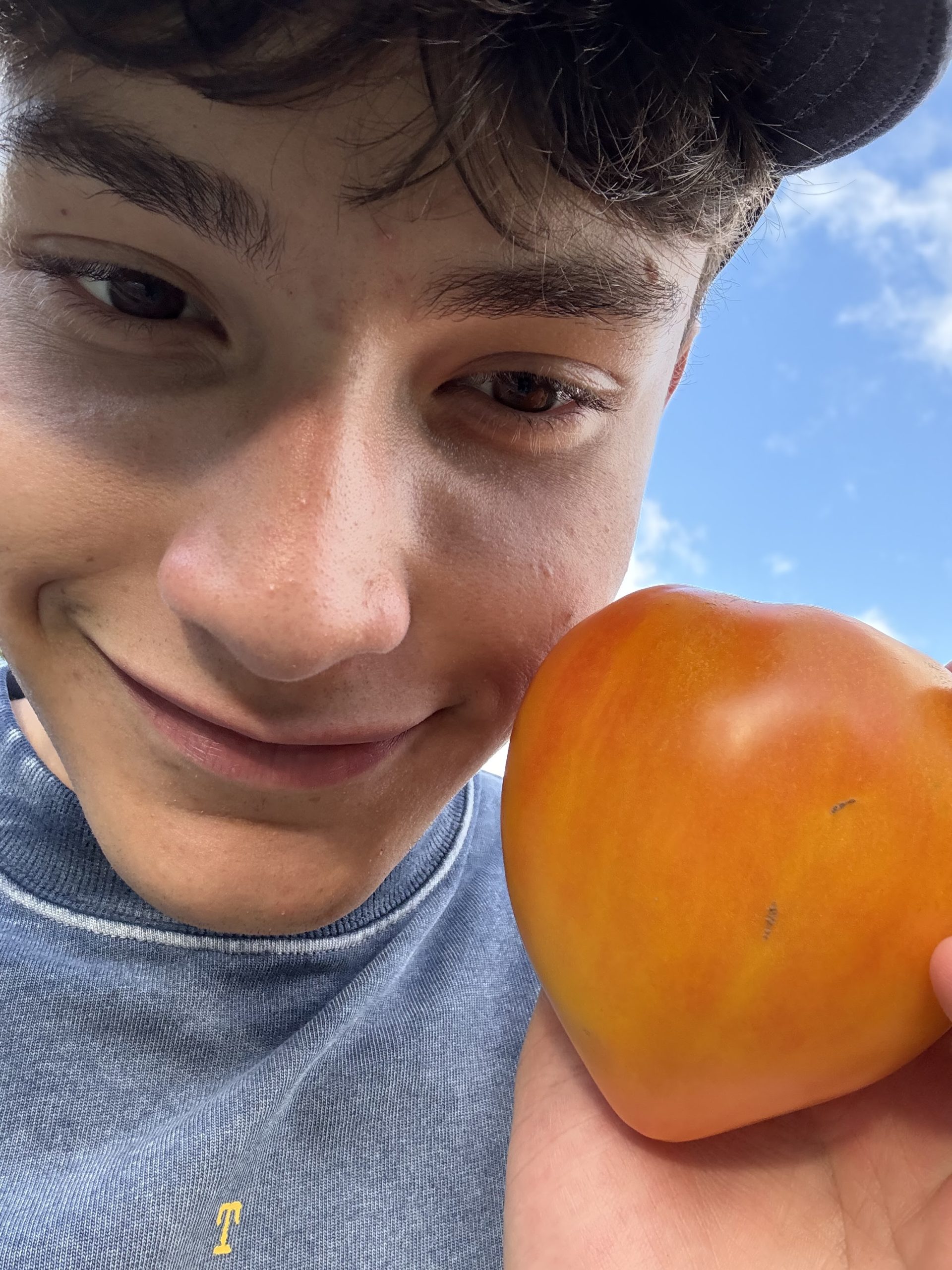
Last year I enjoyed most of all the tomatoes, I hope this year they will be just as juicy and sweet. I became quite the tomato thief, if I must admit it. I found they were best simply sliced, drizzled with olive oil and sprinkled with flakey salt and black pepper. I was speaking to Riyo (a fellow YIP18 participant) about how things are so much more enjoyable to eat when you have seen them grow. She said she had never enjoyed a tomato until she grew one herself. I can’t quite say the same, but the ones we had last year were definitely some of the best I ever had.
Writing by Rafael Fuller
Personal Initiative Week
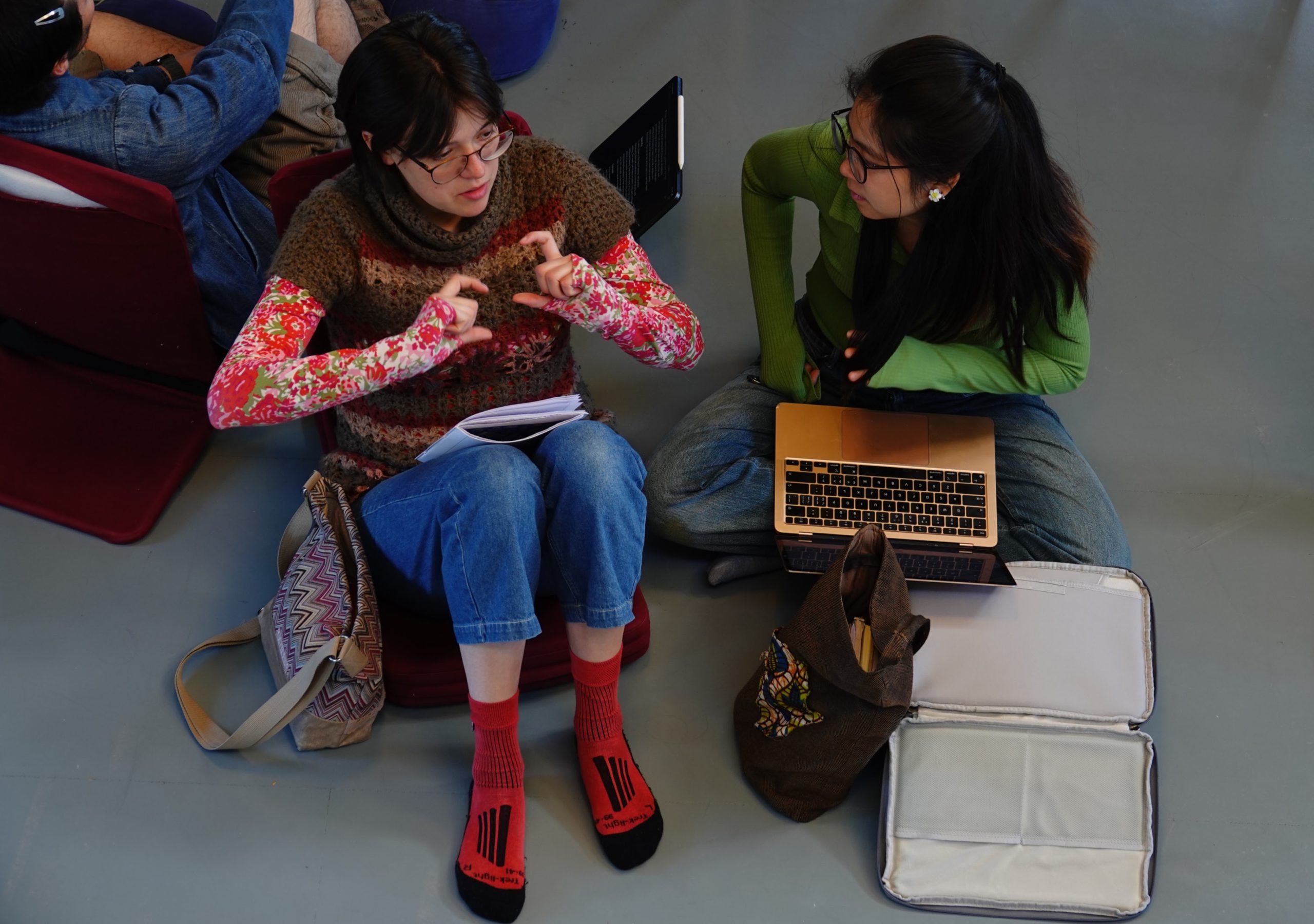
Last week we had our last course with Brenno Kaschner Russo, who guided us in finding our personal initiatives. I was excited for this week to step more into the practical aspect of my project, to make it concrete.
In the beginning of the week I found myself feeling a bit lost in the reflections on the previous weeks. I really wanted to jump right in and start. But as the week moved on, I started appreciating more and more the tools that Brenno offered us. For example, we all wrote down our mission: the “why?” behind our personal initiative, and a plan for what we will be working on in the next three weeks.
Brenno encouraged us to work together in little groups that we called “boats”. We talked about our projects and listened to each other and helped each other with potential walls that could appear during the next weeks of working on our projects. It was nice to be there for each other and to know that eventually, we’re all in the same boat.
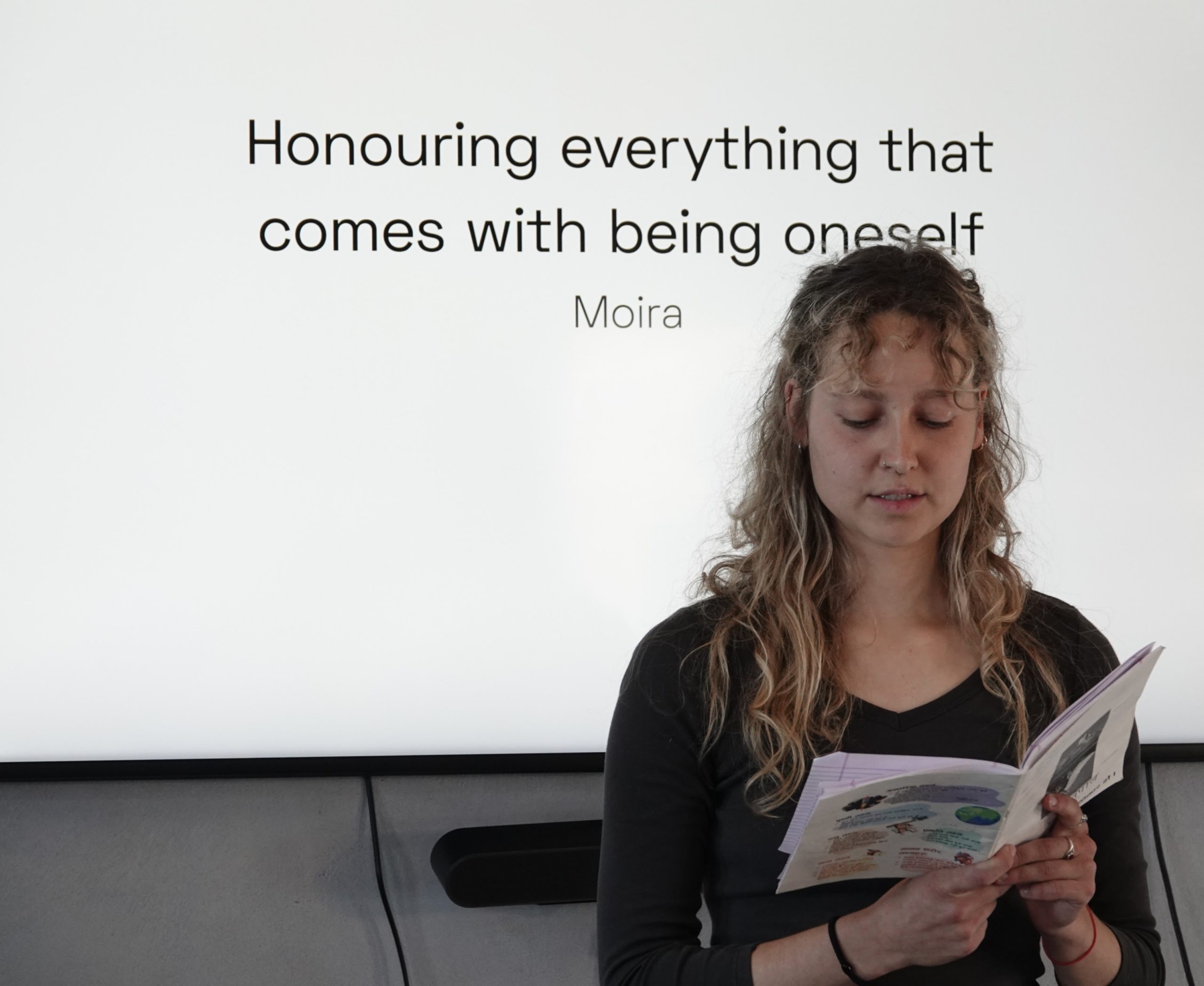
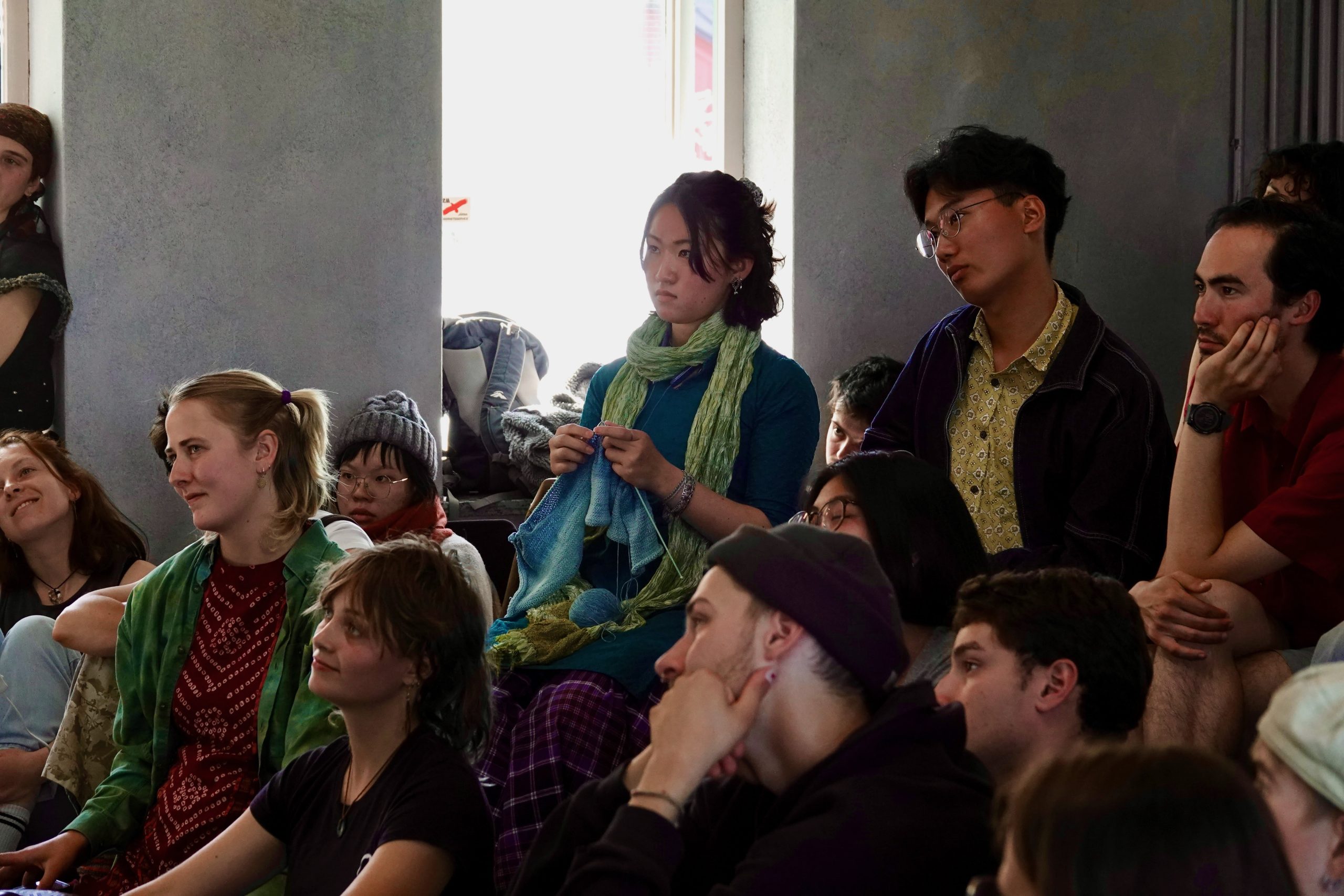
We also all worked on a prototype of our actual project. This was really helpful for me because I didn’t really know where to start, and I ended up making a trailer for the documentary that is going to be my personal initiative. Making a prototype within such a short time taught me that sometimes when you feel stuck, the best thing you can do is to step into action, and then inspiration will start to flow again.
My favorite moment of the week was when we presented our prototypes to each other. It was beautiful to get to look through the eyes of my peers and be taken into their personal worlds of inspirations, ideas and feelings. I’m excited to see more glimpses of what everyone is working on.
I am looking forward to working outside on my project, as spring is fully blooming in Sweden. It is just such a joy to be in nature. I also get to be involved in a few yippies’ personal initiatives and I’m happy to help and work with them in the upcoming weeks.
Writing by Ida Paasen
Witnessing the Prototypes
Creative Reflection:
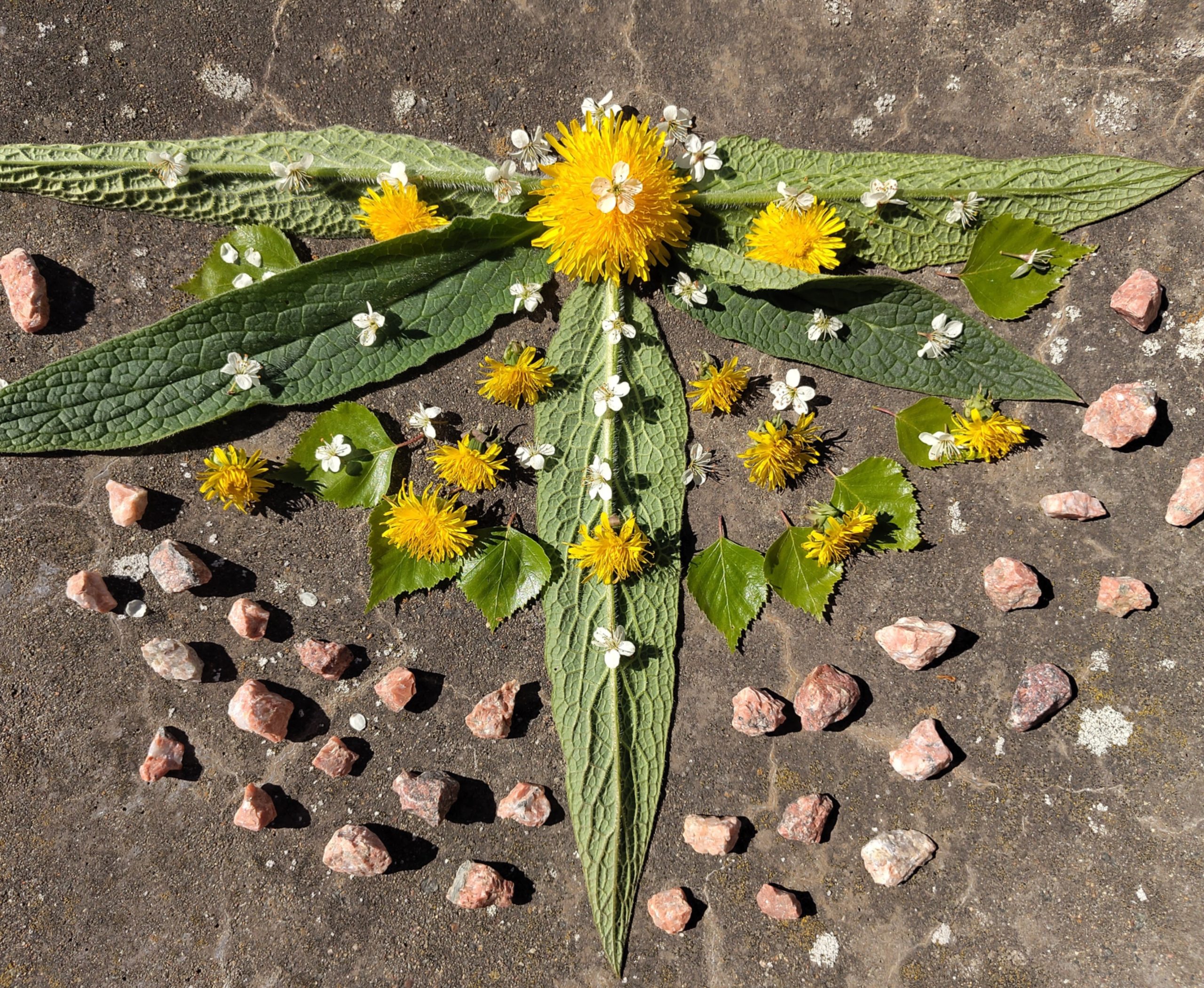
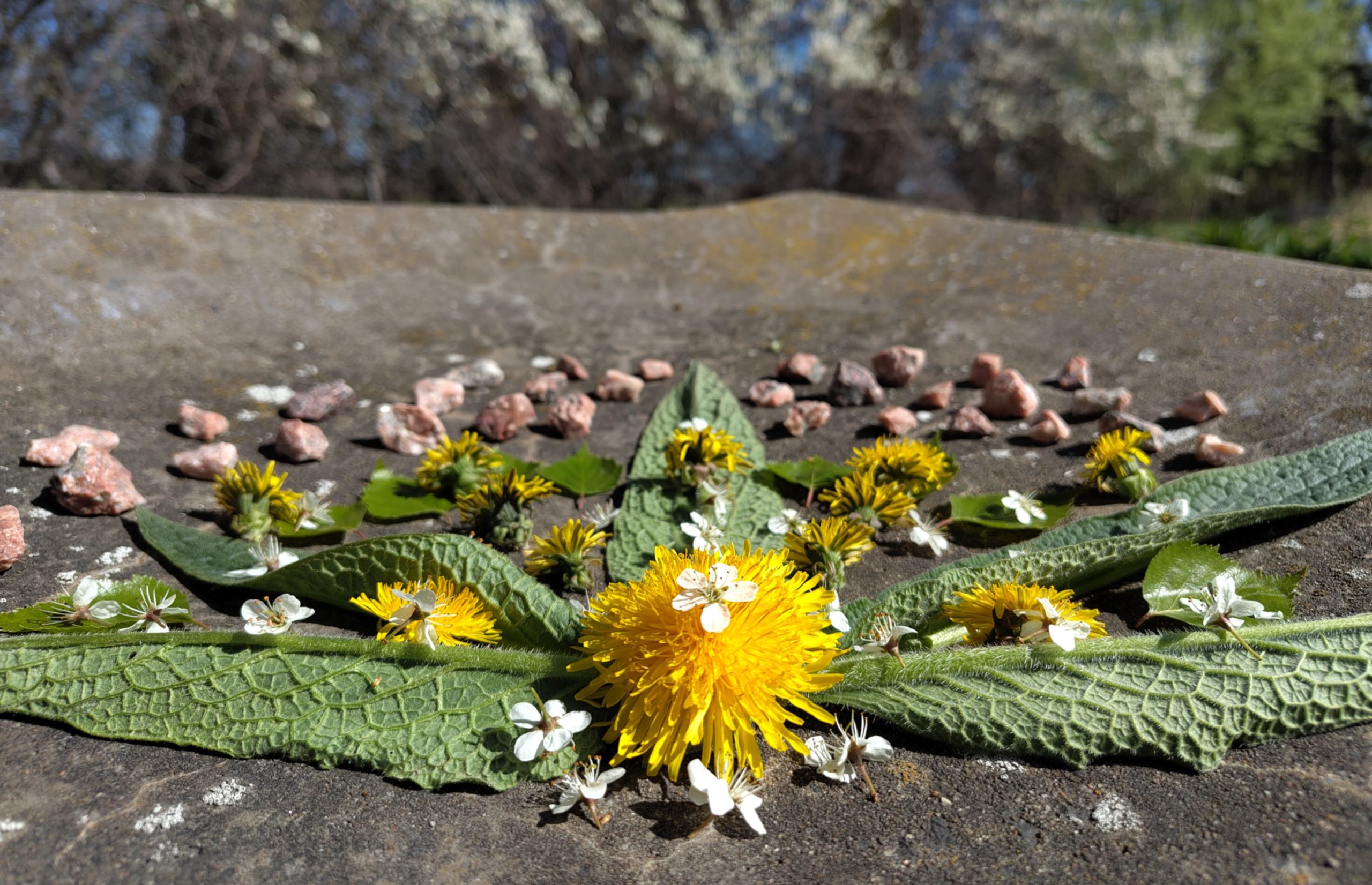
Mandala by Julia Diebold
Leaving Campus
The Collective Wisdom Camp
Personal Initiative
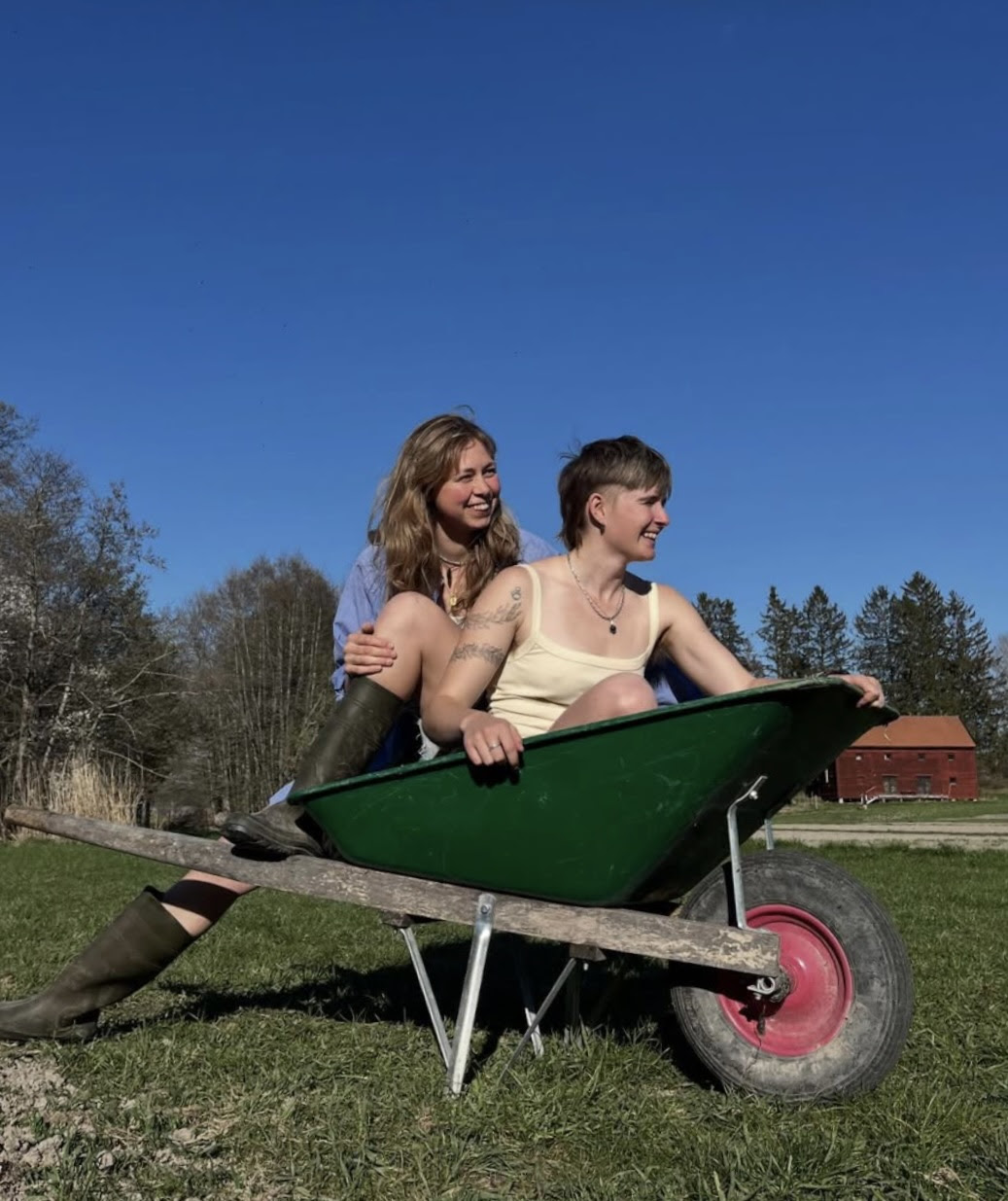
Freya and I are running a personal initiative together called The Collective Wisdom Camp, which is a month-long community learning experience for young people taking place on my ancestral farm in the north of Sweden. For this month we plan on deepening our knowledge in growing and preserving food, local crafts, foraging, building, and other traditional practices that we deem important for our own health as well as that of the planet.
We plan on learning from the participants, people in the local community, and nature. Freya and I will spend one of the three initiative weeks on the farm in the north, preparing the soil for growing, connecting with the community, and preparing the place for our camp. This includes talking with the neighbouring farmer and getting help with plowing a plot of land for growing, sowing potatoes and other crops and talking to my uncle who works with forests.
Having the possibility to go away for part of our initiative weeks is a great opportunity for us to make this type of project possible. Freya and I look forward to the variety of tasks we will get to do during these weeks, and the possibility that this much free time gives us in bringing this type of initiative to life.
Writing by Alice (Atlas) Falkeström
Spring Creatives Sessions:
Felting
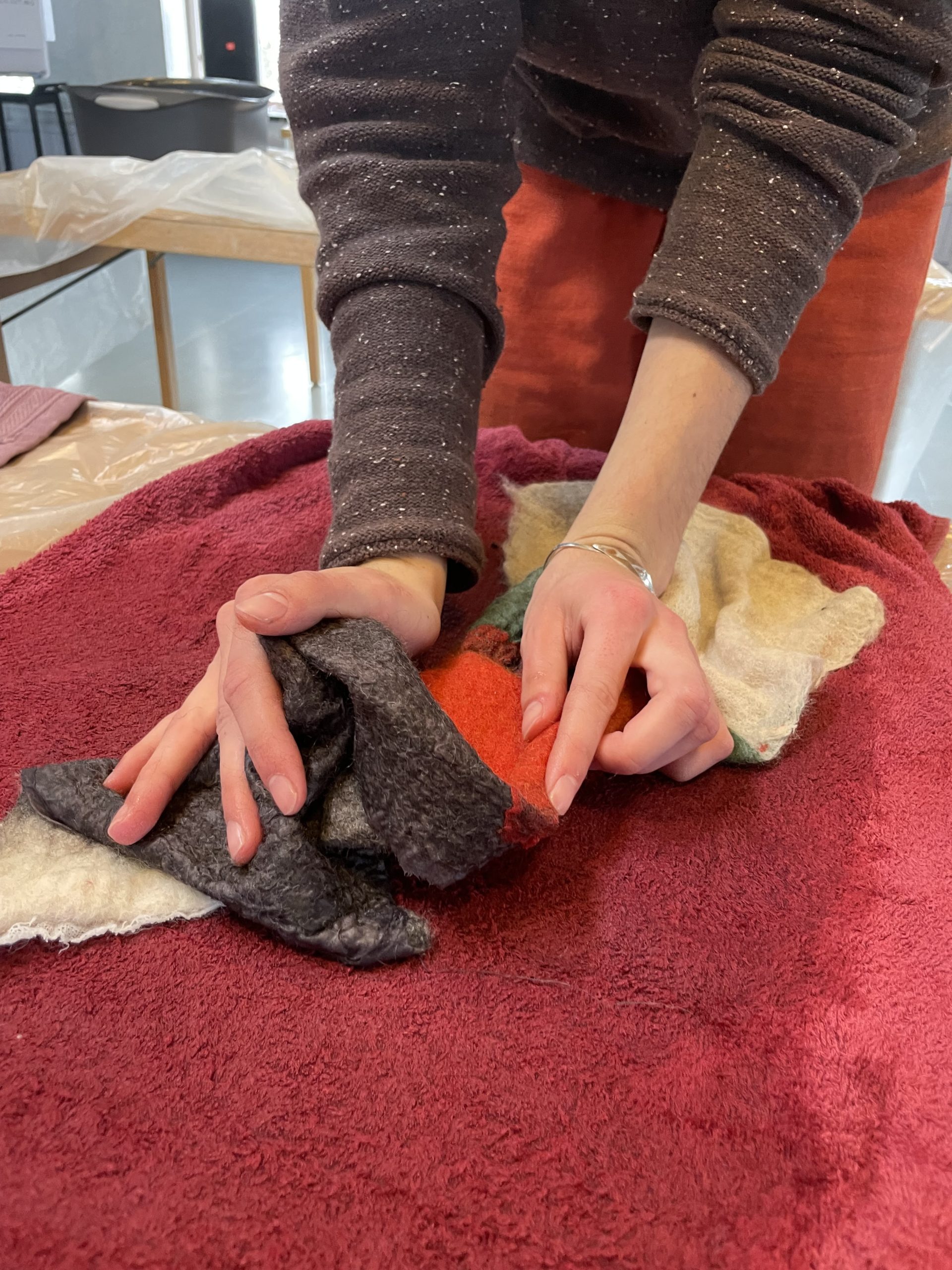
In my ‘Personal Initiative’, which is my chosen project I am working on for the next 3 weeks, I am working with the theme of ‘Becoming’. I am exploring this theme in many ways, but one way is that I am using my hands to create things and being present in the process of emergence. My chosen creative session, which is felting, fits so well with this. We are wet felting, so there is a lot of soap and rolling and folding involved, and you’re never sure what exactly you will uncover when the piece is unfurled and un-bubbled. The process of becoming always has an element of unknown and in that an element of magic. As the fibers knit together simply from rubbing and rolling, it feels very magic. In my current felting project I am making a hollow form, which is when you work your felt around an inner piece of thick plastic and then remove it to reveal a seamless whole. I’m in awe of the fact that I can do this with fleece and water and soap, when it’s impossible to do with spun wool or woven fabric.
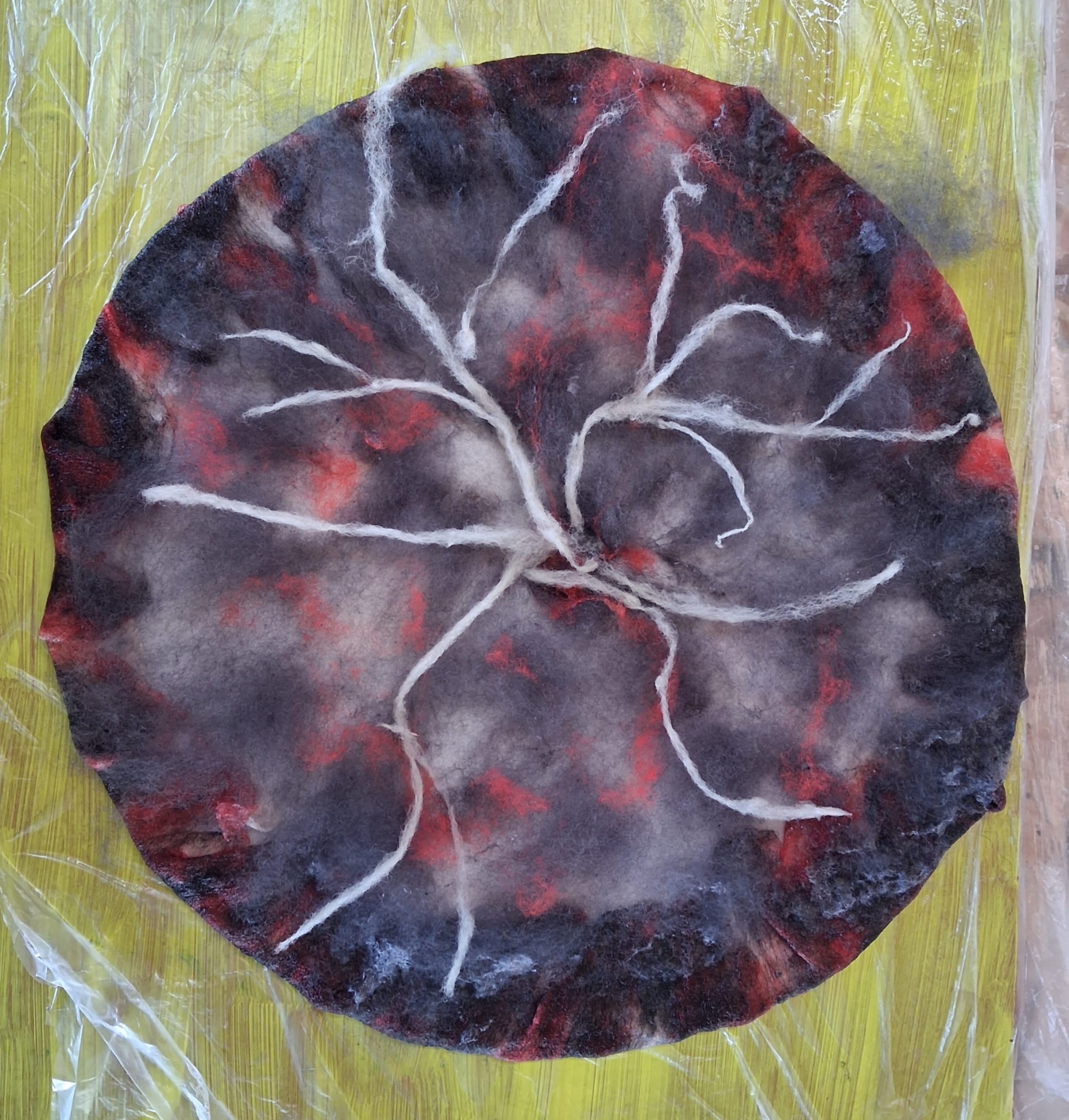
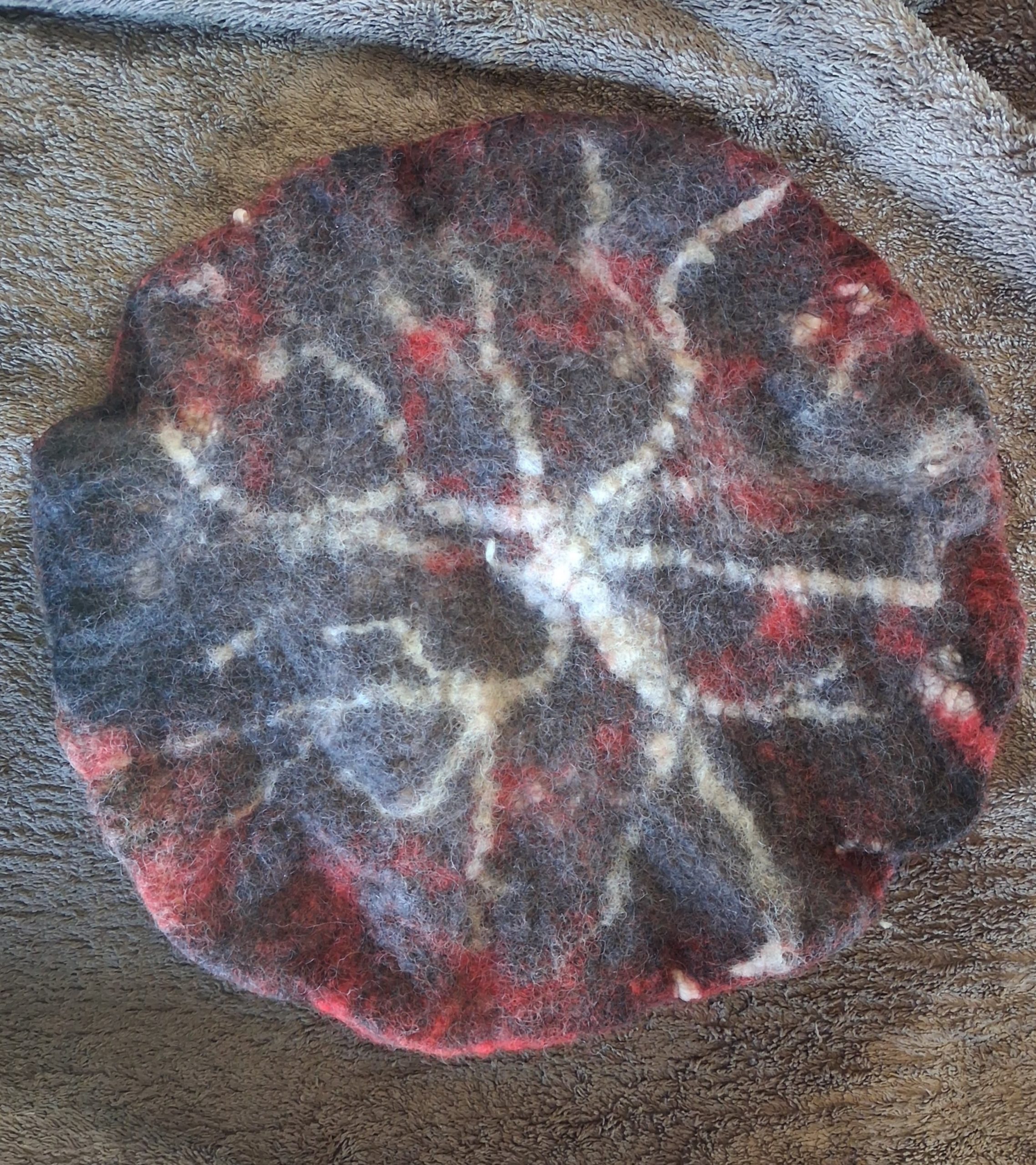
I am hoping my hollow form will become a lamp shade. Since these photographs were taken I have blown up a balloon inside the shape and added glue to freeze it, so that a light bulb can sit within it. In the process so far I have been inspired by the placenta, a vital organ for the beginning of human becoming. It’s so wonderful to have this hands-on creative experience when exploring these wider themes. I can feel a little floaty as I think about Becoming as an abstract context, so it is essential for my process that I am grounded also in doing. I feel the learning in the texture of the wool as it shifts from its cloud-like form into a dense carpet.
Writing by Ruby Botica
Art Therapy
Coming into Susan’s greenhouse feels like being hugged by a physical space. The room is cozy, large enough to feel spacious – even in our group of five – but small enough to feel held. As we sit down we are offered a freshly brewed tea, art supplies are on the table, and Susan has prepared a special task for each of us. She likes to arrange the Gouache by colour, and makes sure they are on my right hand side – it’s the one I hold my brush with. Her kind helper-angel, makes sure our water is replaced as soon as it gets dirty and soon the room is silent, punctured only by Susan’s occasional, pointed, questions and brush strokes.
Susan gives us just the right amount of freedom. She welcomes us with ideas of what we could do, but knows not to overwhelm us with instructions. Her atelier is a space to tune into our needs, and she encourages us to communicate them. Each session is different, sometimes we work with clay, sometimes dry pastel, gouache, or wet-on-wet. But I always leave calm, centered and with a new question about myself.
Afterwards I like to go on walks, down to the fjord to take a dip or to bathe in the slowly arriving Swedish sun. Sometimes up to the rock, to observe the small movements of the waters and the majestic swans.
Before I started Art therapy, everybody told me Susan would know exactly what kind of person I am, simply by looking at my art. But it feels much more than that. She sees me, and sees not just categories, but a person: one with layers, feelings, and moods. She wonderfully creates an atmosphere in which I can feel safe to be whoever I want to be. It is special to be in the company of Yippies, with whom I have spent almost a year now, and who work together to hold the space for each other.
Writing by Maria
Stonework
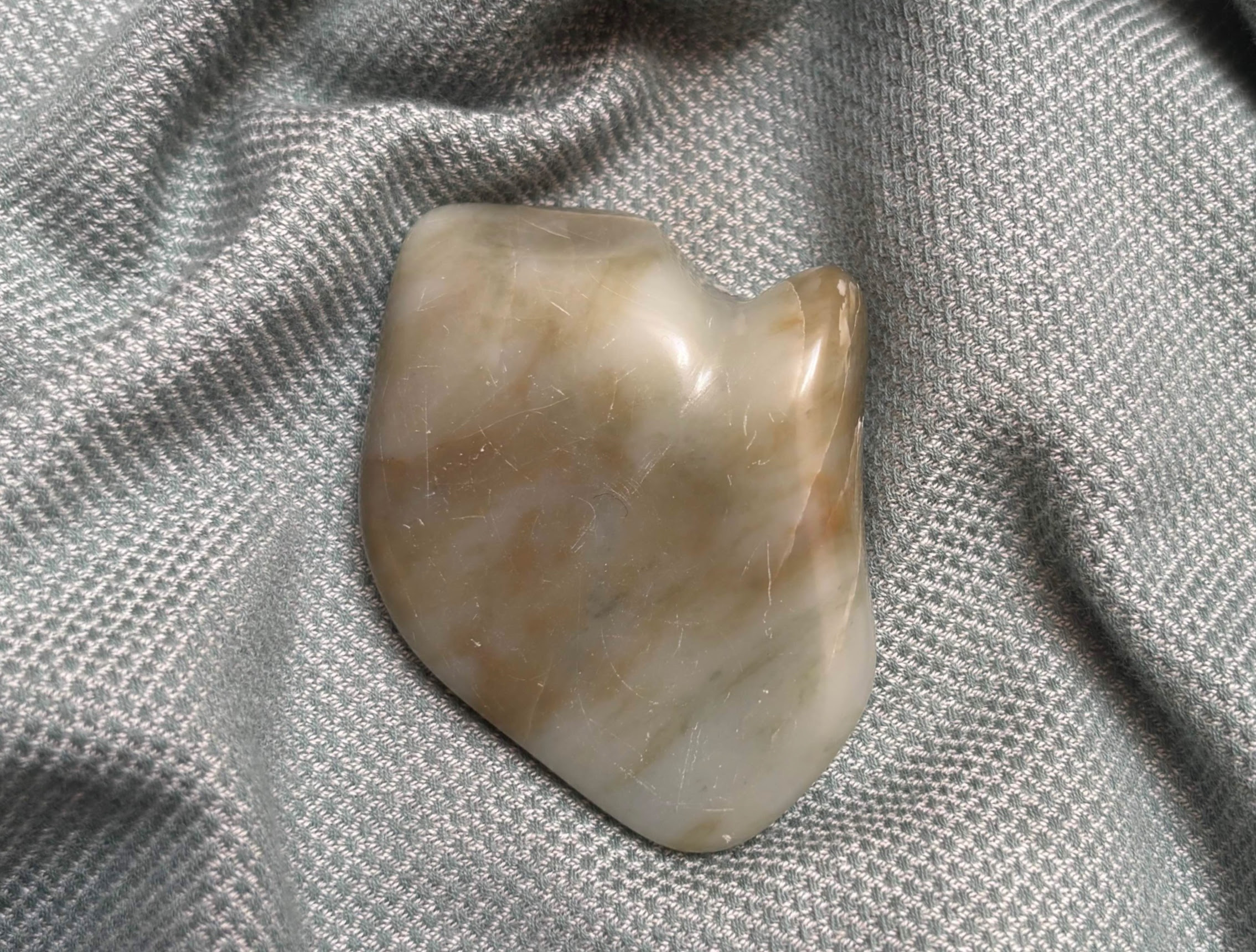
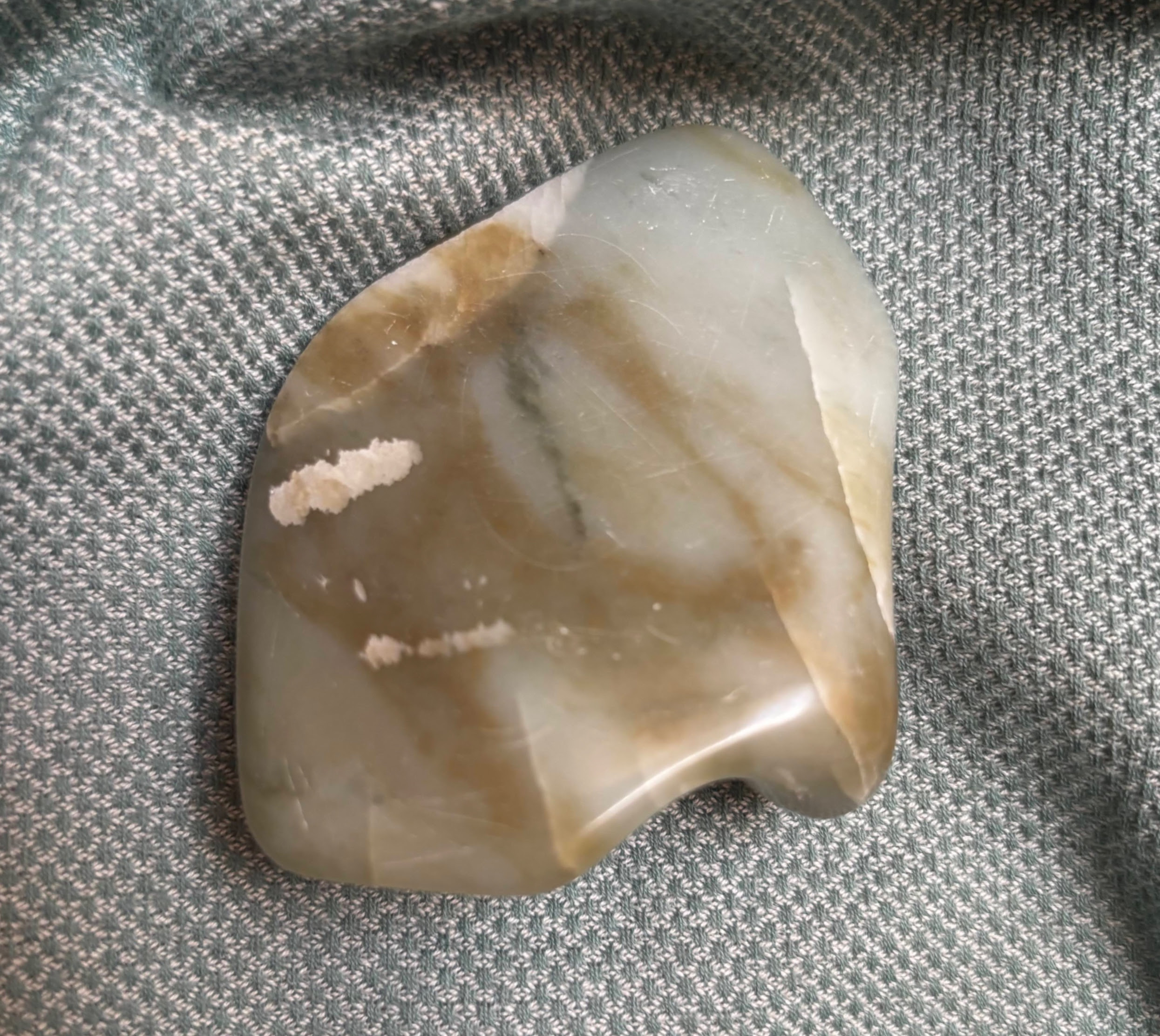
Last year, signing up for stonework felt distant on the horizon. So when that first session finally arrived, on a windy Sunday morning, led by Reinoud’s wonderful father Henk-Jan, excitement among the Yippies was high. The days before, we discussed our ideas, on short walks between the Hive and Almendinen. Making statues of women, or shoes: Yippie creativity set in, in all of its forms.
With our usual excitement, we gathered in a semicircle, ready to chip and chisel. Instead, we talked about what it means to be living. We discussed plants, humans, and mother earth. We reflected on the weight of taking a stone from mother earth. And went on the journey, tracing the life of a stone from mountain to river, tumbled by currents older than memory.
To our surprise, (and the dismay of some) no chisels were handed out. Instead, each of us received a piece of sandpaper and one, slightly intimidating, instruction: move as the water would. And so we began, stone in hand, sitting out front Almandinen, some on the grass, some on our picnic tables, we traced round circles over our respective stones. Slowly sharp edges softened into curves. And as we shaped, we laughed. We talked about our aspirations after YIP, about spirituality and art, about theatre, and apples. Most of all, we asked Henk-Jan about his exciting life and he shared his wisdom and humor with us.
As the process went on, we were encouraged to give up control, and to let our ideas fall away. Slowly control gave way to curiosity. I was challenged by this, a sort of temptation to create exactly what was on my mind, to decide what the stone should become, rather than listening for what the stone wanted to be. Every couple of minutes, we paused our furious hand movements, closed our eyes and ran our fingers across the surface: feeling what is right for the stone. It felt like a practice of intuition, almost perfectly aligning with our recent course “Enabling Life”, in which we practiced nature observations and through that tuned into our intuitions.
Slowly, and for a long time, unnoticed, something emerged. My stone turned from hard edges into soft lines, then curves, and later waves. Soon they began to find each other.
Angular grew into whole and interconnected. What began raw, hard, and pragmatic, turned into soft. We gave the stone “its skin back,” as we were told by Henk-Jan, not by force, but through patience.
Writing by Maria
Woodwork
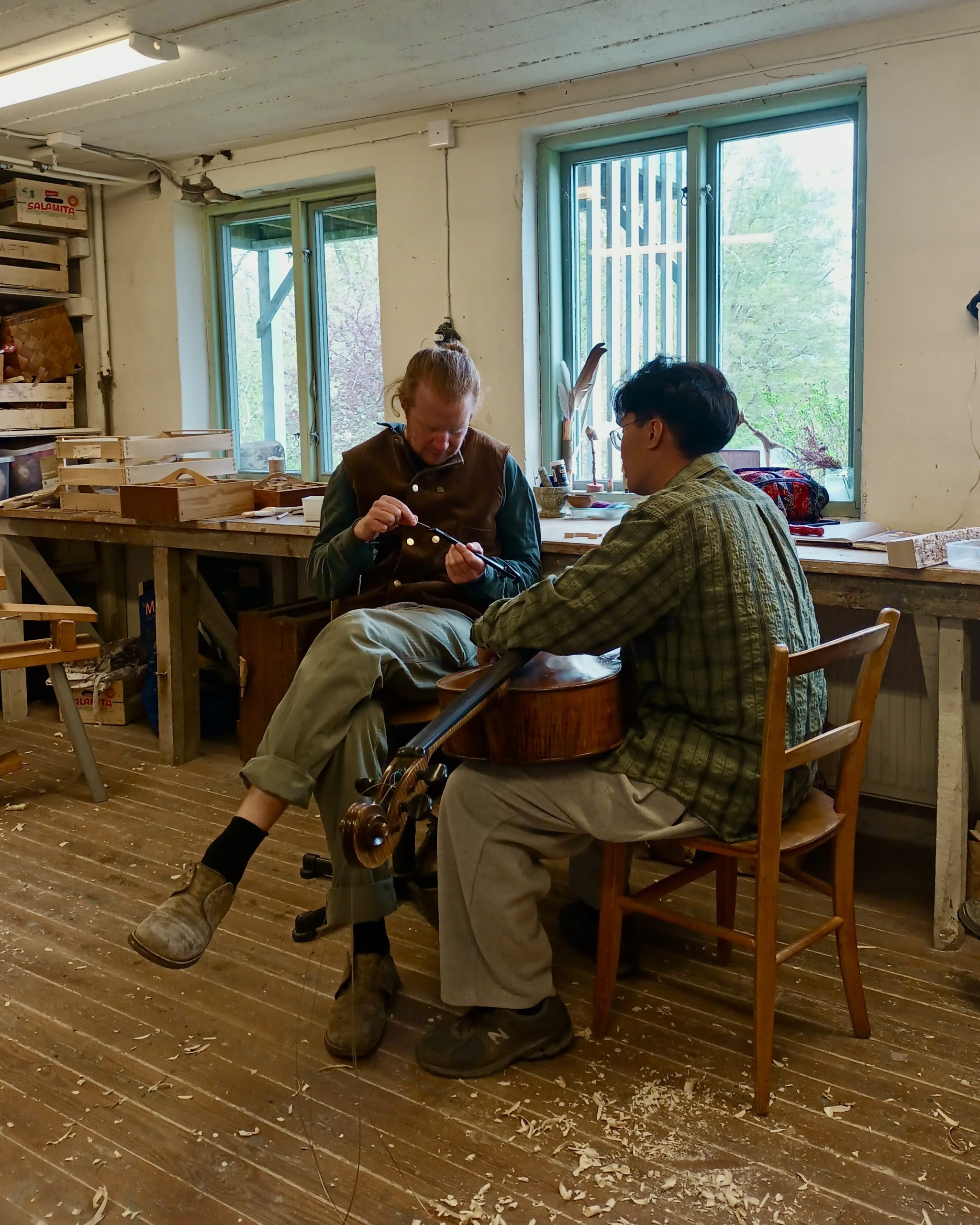
There is something quietly profound about working with wood. It is not just a craft — it is a practice of presence. From the very first lesson, what struck me most was how the material itself seems to have a say in the process. You work with it, feel into it, let it tell you what it needs. The grain, the weight, the resistance of the tool against the surface — all of it asks you to slow down and pay attention.
It was something of a revelation to me that the table I sit at every day, the chair beneath me, the shelf on the wall — these things did not simply appear. Most of them carry no trace of the person who made them. They came flat-packed, ordered online, assembled in an afternoon. Efficient, affordable, and entirely anonymous. The world most of us live in and walk through is filled with objects that no particular human hand shaped with care or intention. Woodwork, for me, was an invitation to notice that — and to ask whether it has to be that way. Not as a grand statement, not as a rejection of modern life, but simply as a quiet beginning. You start with a spatula. You make one small thing, and if you enjoyed that, you make another.
The way Daniel teaches reflects this spirit well. He shows us a technique briefly, checks that we understand, and then steps back to let us try. There are no lengthy instructions, no prolonged demonstrations — just space to do, to make mistakes, to find our own way. Learning by doing, in the most honest sense.
In our first two lessons, each of us made a spatula. The task was the same; the results were entirely different. Every spatula was its own thing — shaped by the particular decisions, hesitations, and instincts of the person who made it. And yet they were all, unmistakably, spatulas. That individuality within a shared form says something important: that we bring ourselves into what we make, whether we intend to or not.
More than any specific skill, what woodwork has taught me is that life does not only live in people.
It lives in things, in materials, in the objects we make and use and pass on. And it has brought me back to something that is easy to forget: the importance of being conscious in what we do — not just thinking about it or feeling something toward it, but actually doing it, with care and full attention. That threefold of thinking, feeling and willing, brought into balance, is perhaps the quietest and most lasting lesson of all.
Writing by Quinn Rahmann
Philosophy of Freedom
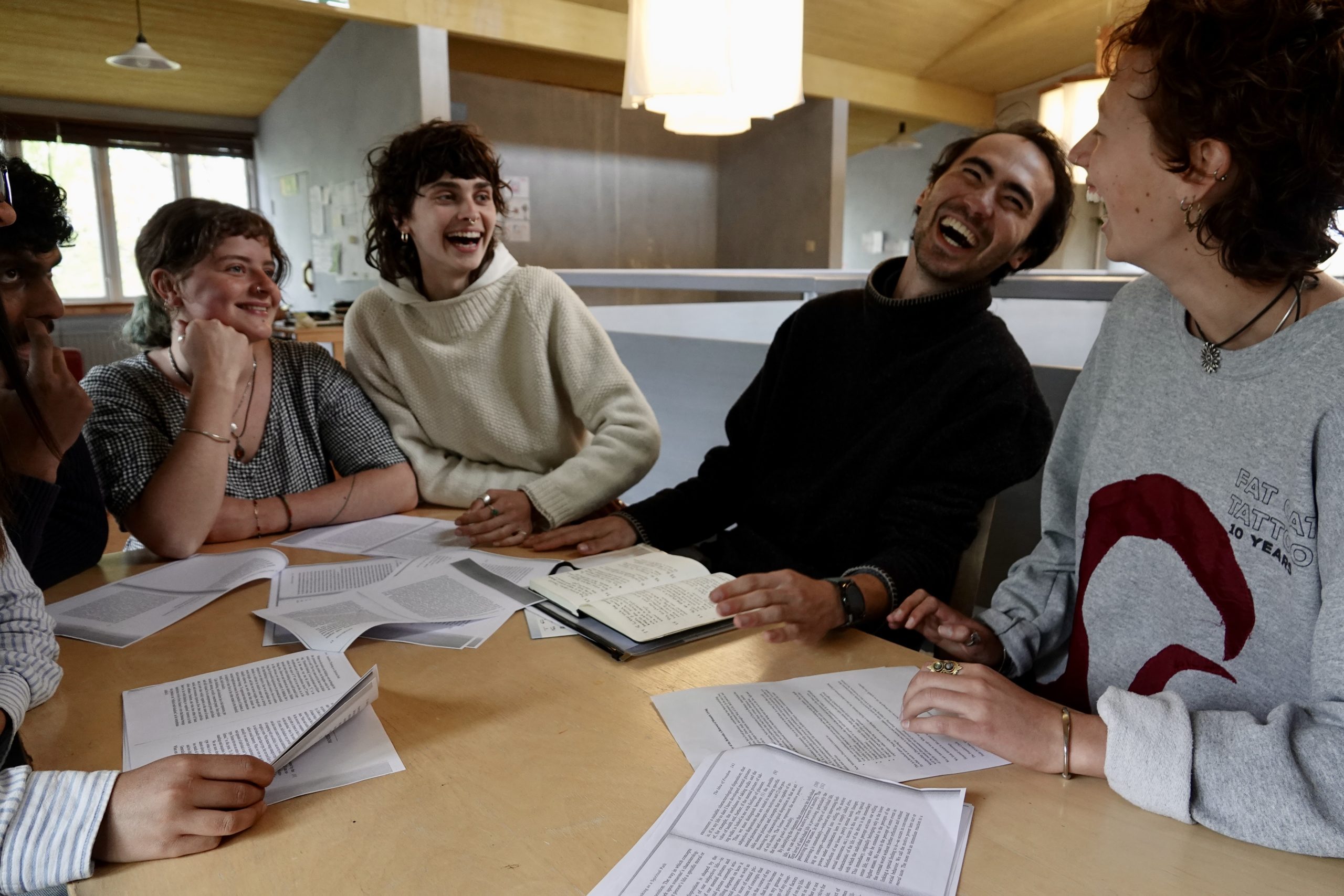
Over the last month, I have been leading a study of Rudolf Steiner’s core philosophical work, The Philosophy of Freedom. We write summaries of our assigned paragraphs for homework and come together on Thursdays after dinner to discuss and practice freedom in thinking.
In India, two Yippies independently came to me to express interest in studying the book together. Although I started the group when we returned to Sweden, it somewhat felt as though it wasn’t even my initiative. It was simply time for another study. This is my fourth time studying this book with a group, and it’s the third time I’ve led it following someone else’s initial impulse. As fate would have it, it’s become the book I’ve studied the most.
When I first started looking into Steiner as a teenager, it baffled me how many fields this one person could penetrate — agriculture, medicine, education, architecture… I was both impressed and suspicious. I wanted to find out if his insights were trustworthy. But instead of learning to trust or distrust what he said, I found his philosophy helped me trust myself.
I had the chance to study The Philosophy of Freedom for the first time with a high school mentor. I heard that Steiner said if his later spiritual work was lost, it could all be recovered through this one book. If Steiner really found a key that opened every door, this book supposedly held that key. That key’s name was “intuition.”
The translation we’re reading retitles the work, Intuitive Thinking as a Spiritual Path, which emphasizes what Steiner says in the preface — that the book isn’t meant to give a theoretical description but rather to point to a “soul region” in which riddles unfold. Specifically, the book is interested in the riddles of “What am I?” and “Can I be considered free?” This soul region is found by entering intuitively into the activity of “living thinking,” which is contrasted with our ordinary “remembered” thoughts.
Through intuition, we can be completely intimate with our own activity. Because we observe our own activity with our own activity, there is nothing external or hidden. This allows us to find our first complete understanding of an activity. And this serves as a basis for all understanding, because we discover that intuition is a genuine experience of the inner nature of an activity — very different from the thoughts we recall about that activity. We find that this “living thinking” is not a subjective experience. It is like a “region” within the soul where we and the world are not separate.
This kind of thinking creates a possibility for moral freedom, because we are able to intuit ethical motives in any situation for ourselves. We understand why we do what we do, without conforming to doctrines, norms, or habits.
At least, that’s what I’ve gathered so far. I’ll learn more on Thursday.
Writing by Harrison Tan
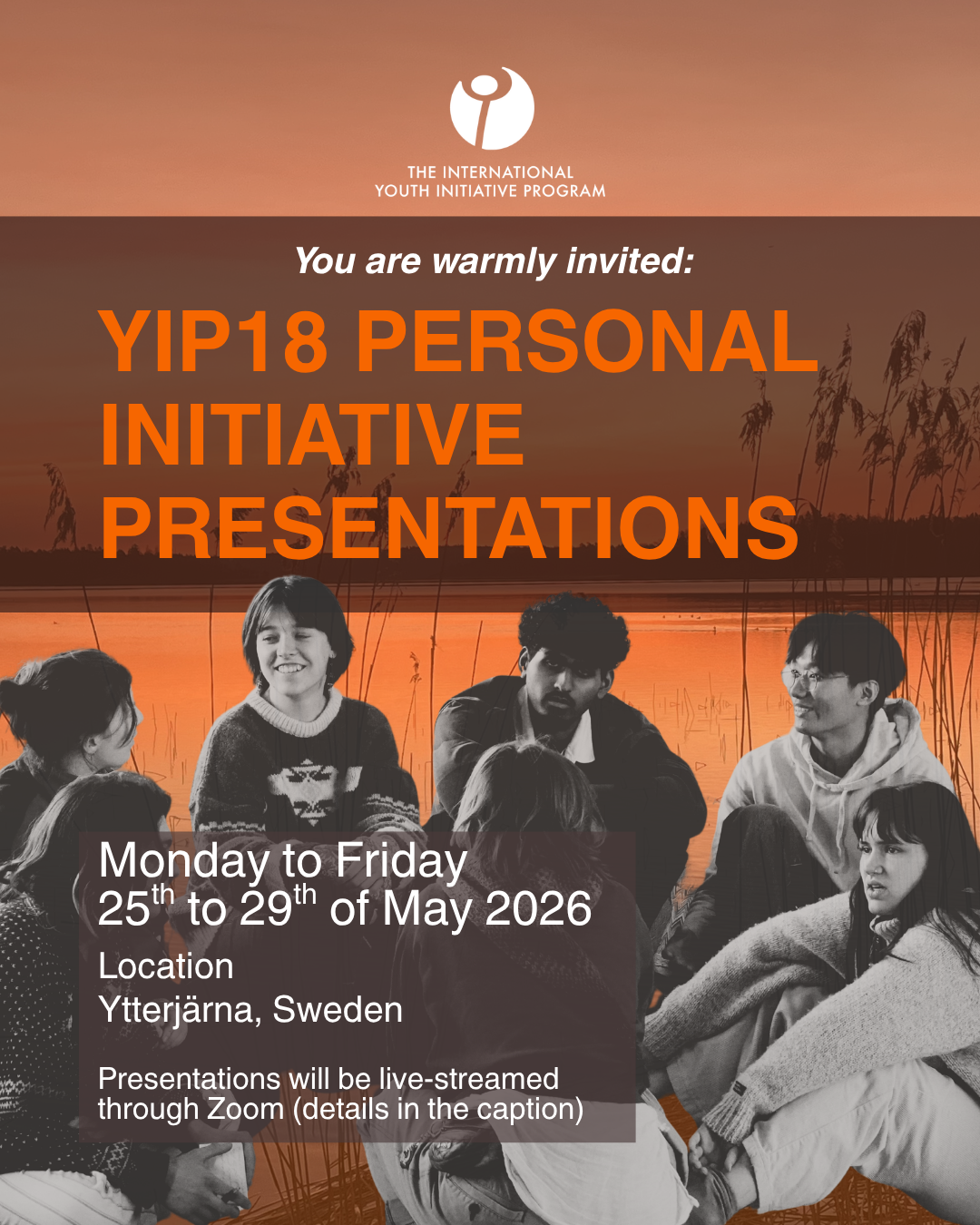
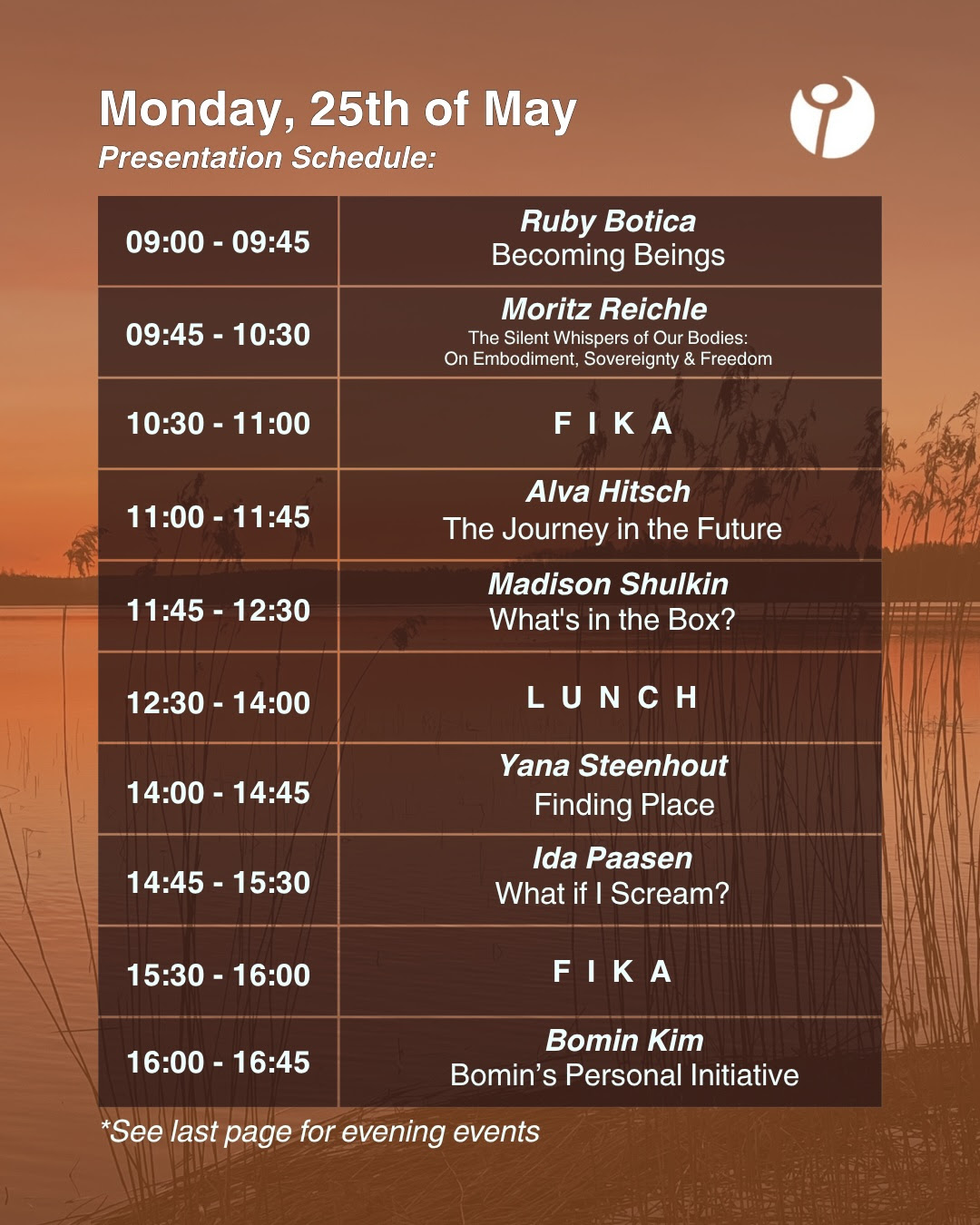
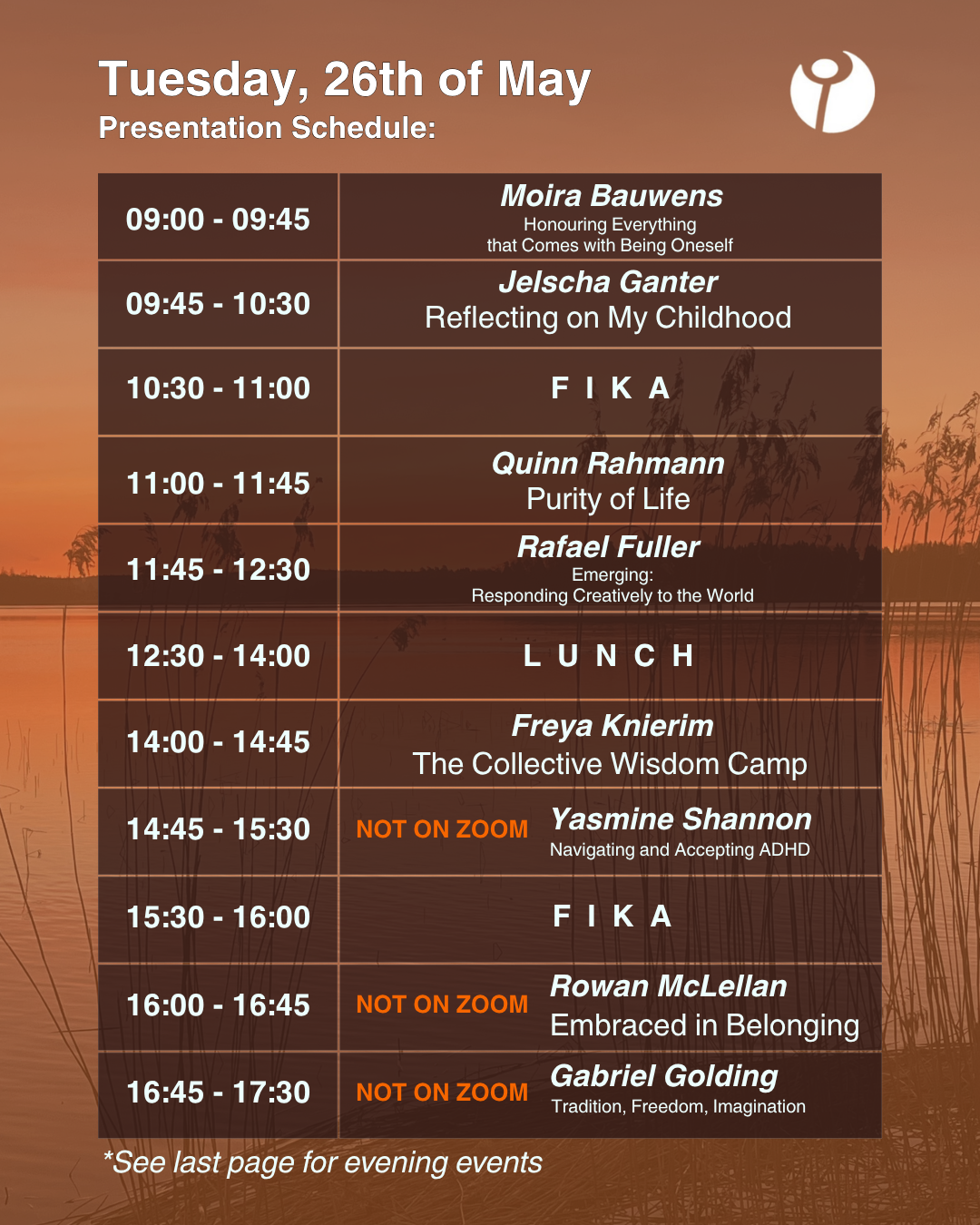
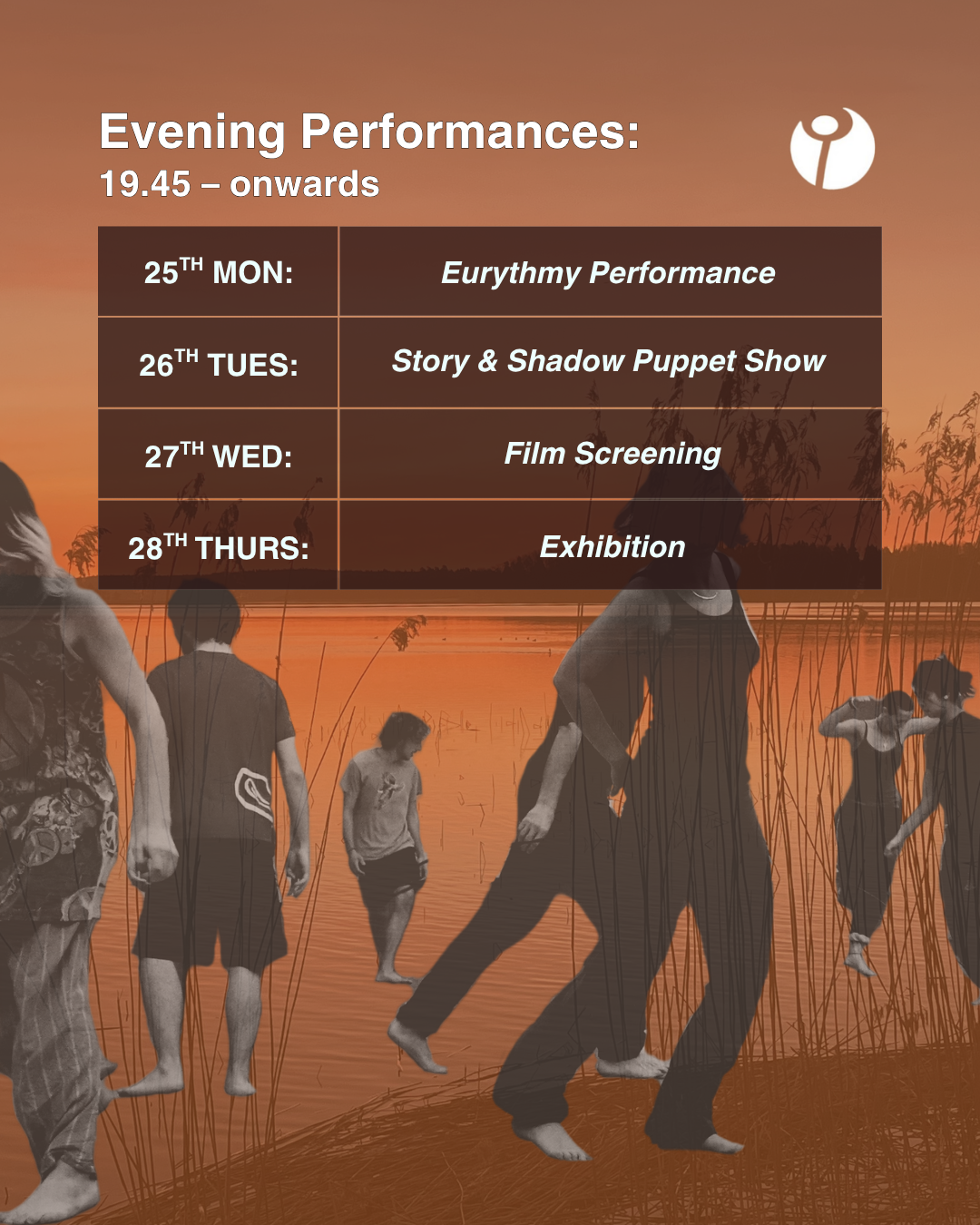
We are looking forward to the YIP18 Personal Initiative Presentations, and we hope to see you in Ytterjärna on the 25th to the 29th of May as a warm audience, or as a friendly face on our Zoom livestream. For those who are interested in joining our livestream, please send us an email at: [email protected]
Presentation Schedule
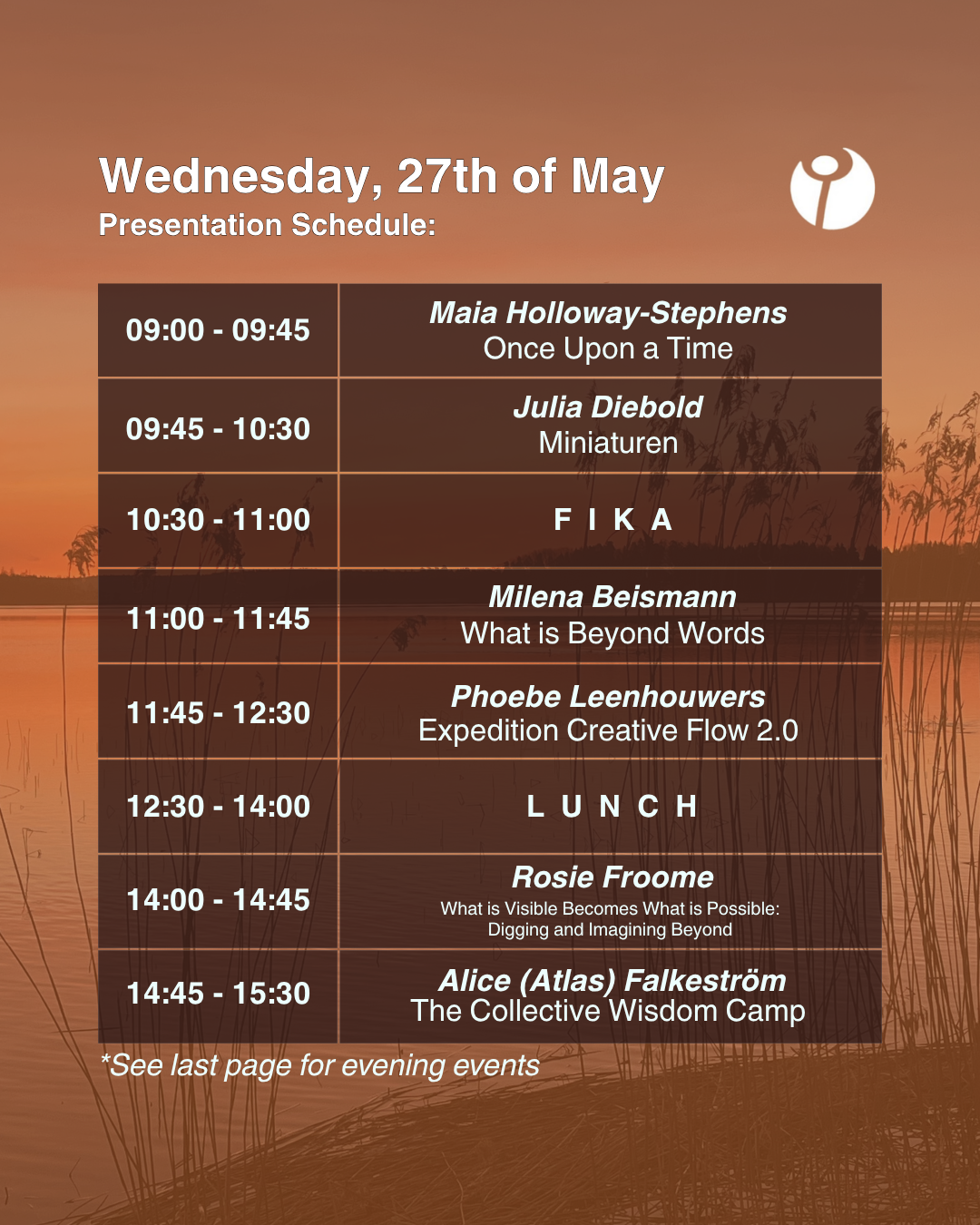
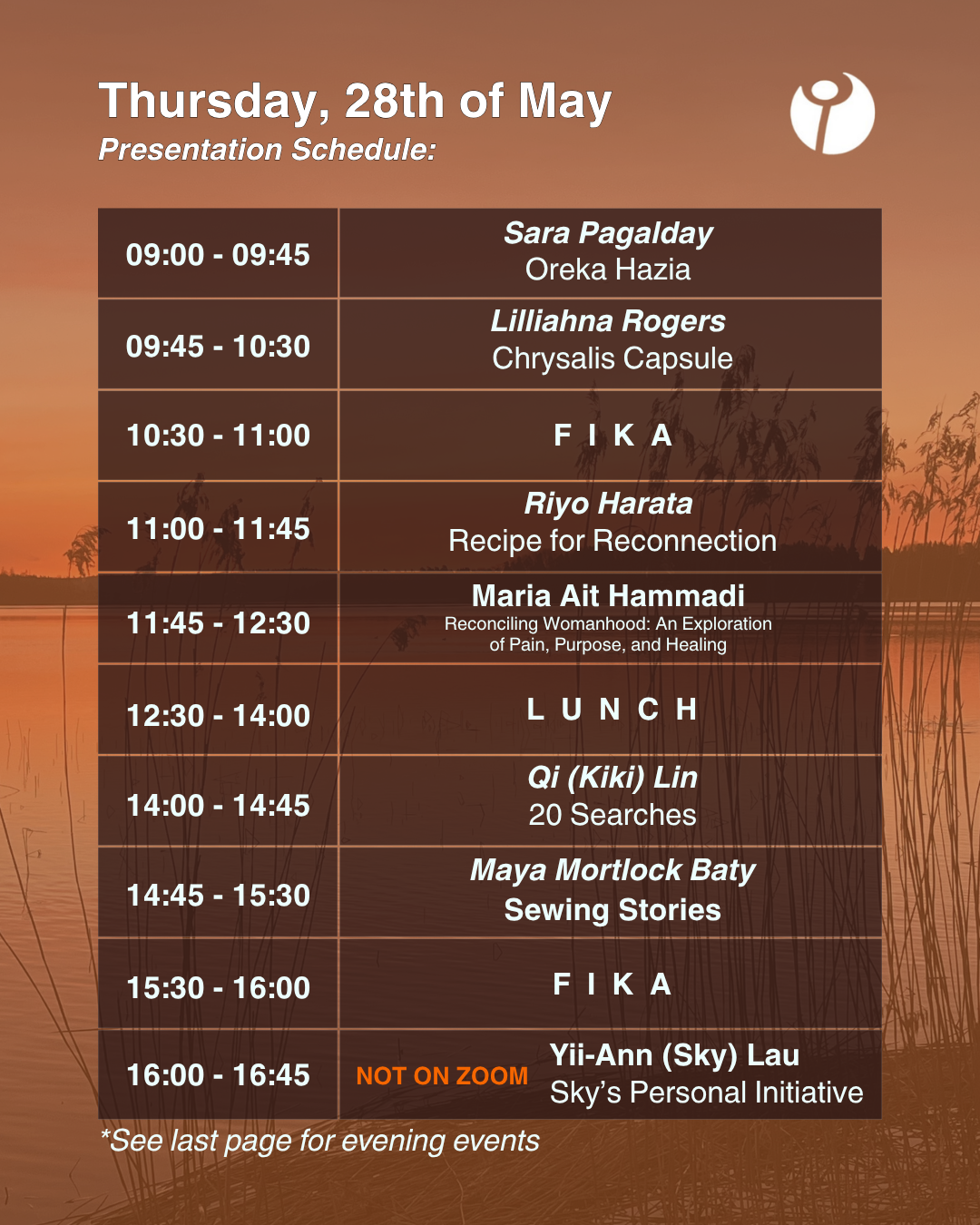
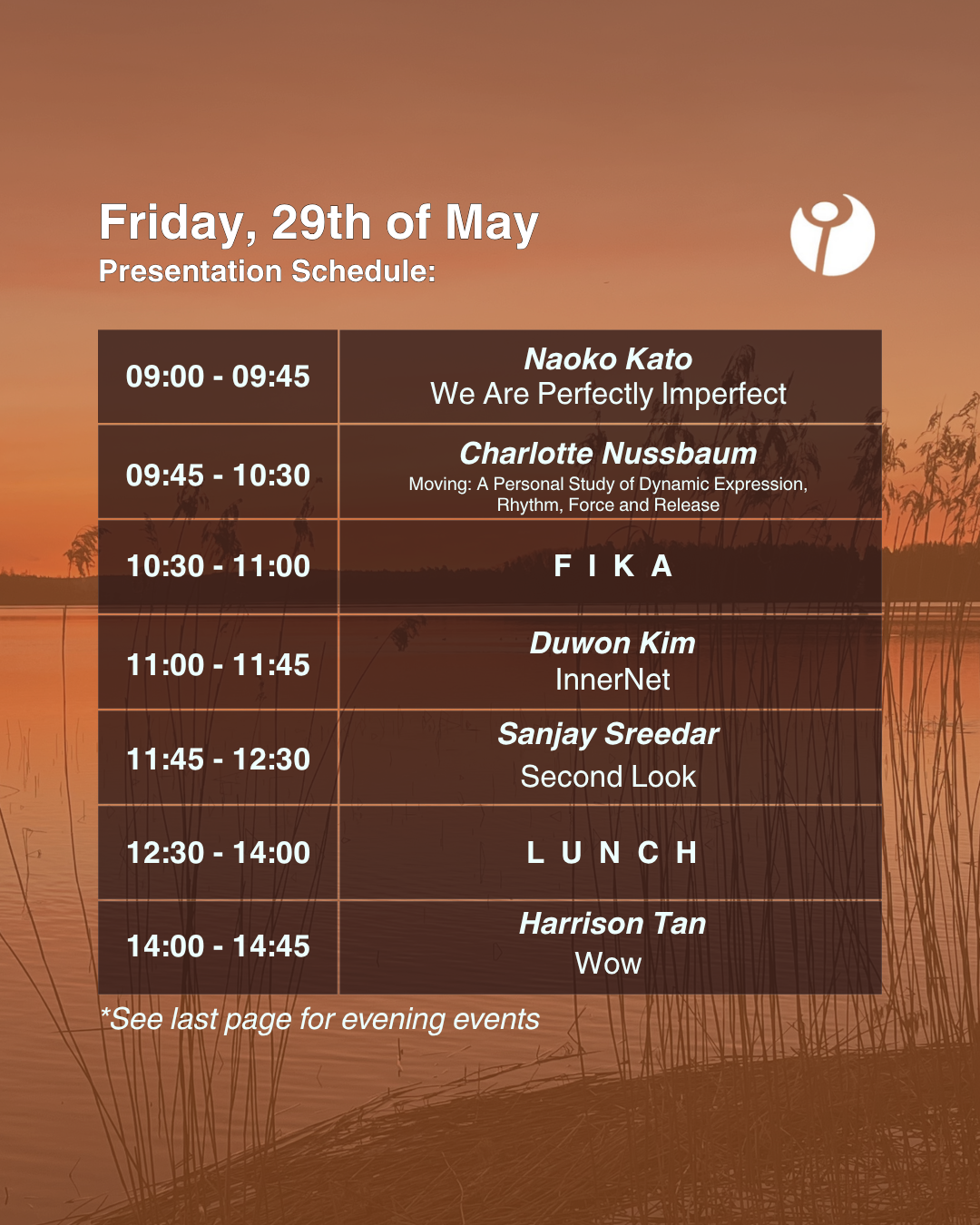
Evening Events
Alumni Update:
Camphill Village Copake Invitation
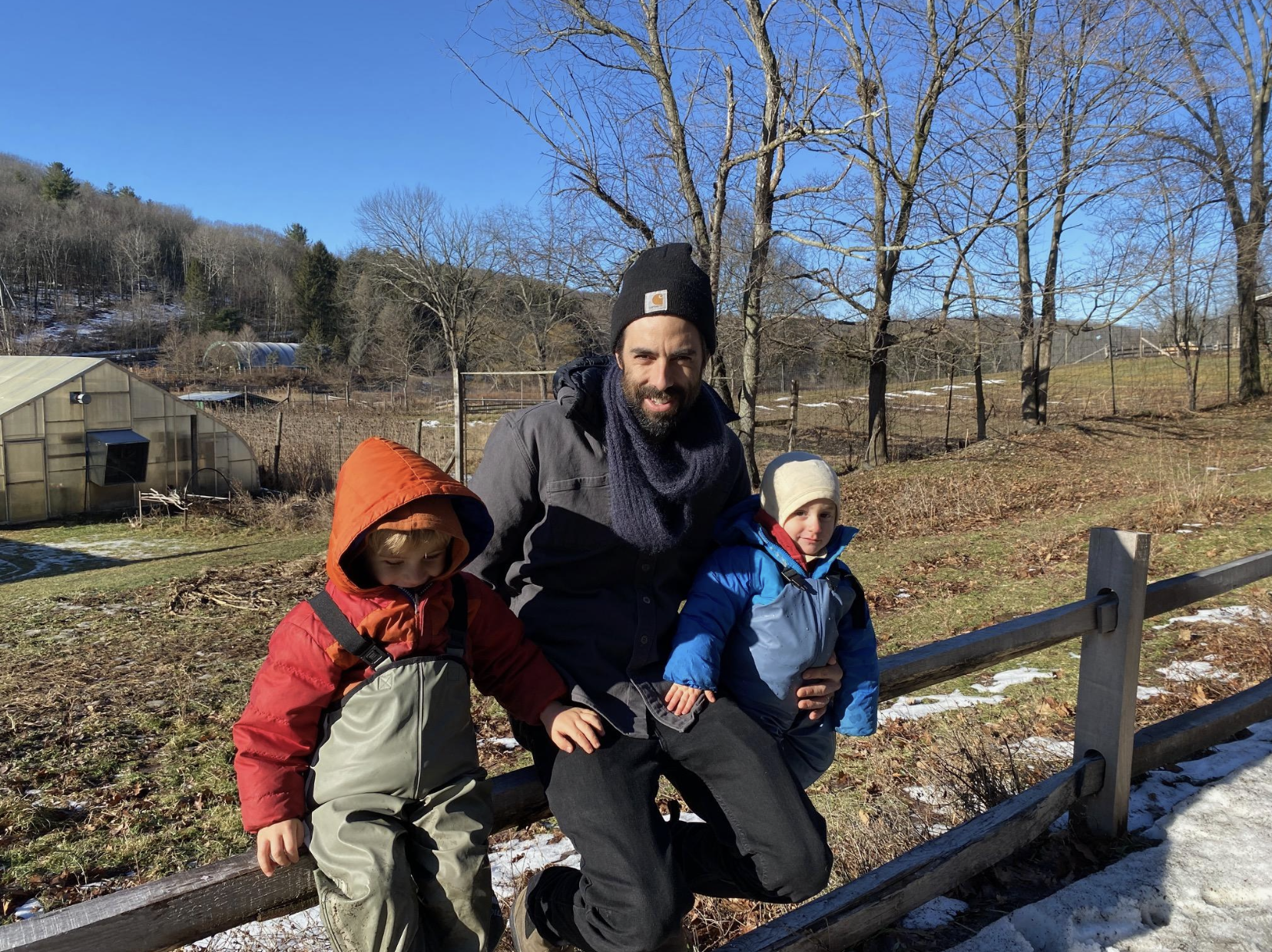
My name is Sam Mirkin. I was a participant in Yip 2 (2009-2010). 16 years later I am working as a Biodynamic dairy farmer in Camphill Village Copake, NY, USA where I have been for the past 11 years. I am not one of the more extraordinary entrepreneurial Yippies who is beautifully and courageously pioneering a new initiative but rather found myself aligning with the already well established Camphill and Biodynamic movements and try from my corner of the planet to support and further these impulses.
Yip came strongly to mind in recent weeks for me as the community I live in is faced with an anticipated shortage of short term volunteers this coming summer, who are essential to the functioning and wellbeing of our community. Of course I regularly see the “news from yip” emails and newsletter and occasionally see the heartwarming updates from dear friends in our Yip 2 whatsapp group. But of course life as a father of 2 young boys and as a farmer can keep one’s consciousness well occupied with the day to day and here and now. As I processed this sobering reality my community here in Camphill is now facing, Yip came to mind strongly in a new way. As though I had forgotten, I remembered, there is this beautiful and powerful network that has grown out of all the many years of Yip. Could there be close to 500 young people now who can call themselves Yippies? Young people who have been drawn to Yttejarna to explore their questions living in community with each other. I realised what a privilege it is to call myself a Yippie and to know that I am part of this ever growing and evolving network of searching and engaged young people from all over the world who, each in their own humble way, are asking questions and looking for ways develop themselves and engage with the world in meaningful ways.
So…. dare I tell you a little more about Camphill in the hopes that there may be even just one of you out there who is looking for just what can be found here in our little valley? It is strange to reach out to you all with the motive to promote and recruit. I am not the sales type of person. And yet I find myself moved, albeit uncomfortably, to do so as I feel the strong brotherhood/sisterhood that exists between what Yip (you all) stand for and what Camphill and our community here in NY state humbly tries to live out.
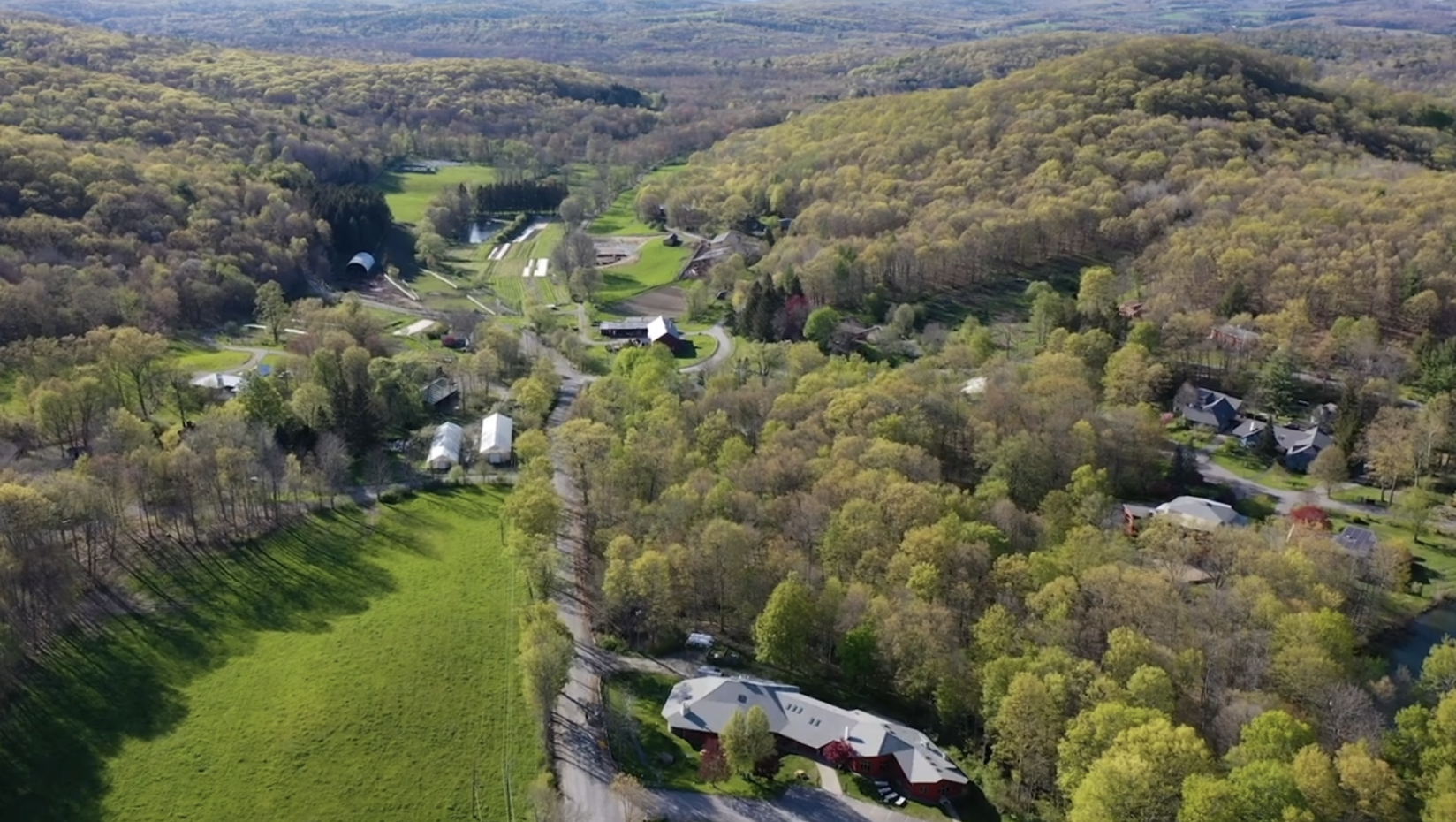
Camphill is a worldwide movement with villages and schools all over the globe that seek to build community around the needs of people with special needs in a variety of ways. This often takes the form of village communities in which people of varying abilities live and work together caring for each other and the land. The guiding star of this movement is the conviction that people with special needs are not simply to be taken care of but come with a unique social task that if given the right environment they can unfold and offer to the world. One might say part of this task is to offer in the common life of these communities the opportunity in small and humble ways to develop new social capacities and forms that our world so desperately needs. Camphill Copake is one such community where over 200 people live, 95 of whom have so-called “special needs”. We have many areas of work including a biodynamic dairy farm, vegetable, medicinal and seed gardens, candleshop, weavery, woodworkshop, Bakery and many more. We are inspired and strive to put into practice the principles of the threefold social order Rudolf Steiner pointed to and celebrate and are carried strongly by a rich cultural and festival life.
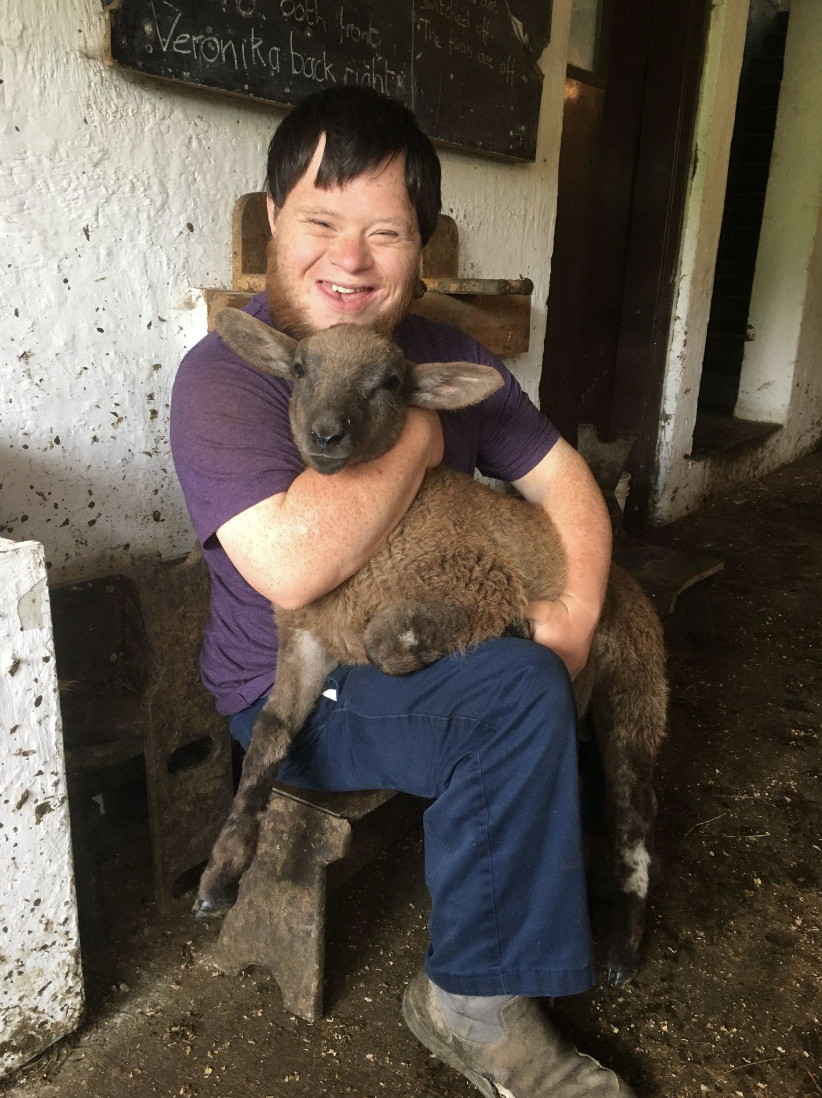
Our life here relies on some 40 short term volunteers who come for 6 months to a year and beyond and share in the work and life of our life sharing houses and help to run our many workshops. Some join our 4 year accredited social therapy training and others just come for the experience of living, working and learning in village life. The current political situation of the world and in particular the image many now justifiably carry of the United States under the Trump administration has put off a lot of prospective volunteers from abroad.
I am originally from South Africa and also spent many years in Europe, but have fallen in love with America during my time here. There are of course many “Americas”. The imperial, global bully and birthplace of many a dark force in the modern world. However, America is also a place of incredible multiculturalism, abundant will forces and a tangible longing and striving for human freedom. Camphill is one of many pockets in this country where some of this side of America can assert itself and ray out its influence however homeopathic that may be.
Perhaps much like Yip, life here is intense and full and it is rich and deeply rewarding and for many of us has been and continues to offer endless opportunities for growth and inner development.
Thank you for making it this far. Please feel free to contact me if you wish to hear more at [email protected] or simply visit our website at https://camphillvillage.org.
Photos and Writing by Sam Mirkin
A Message from Our Gardener:
Dear readers,
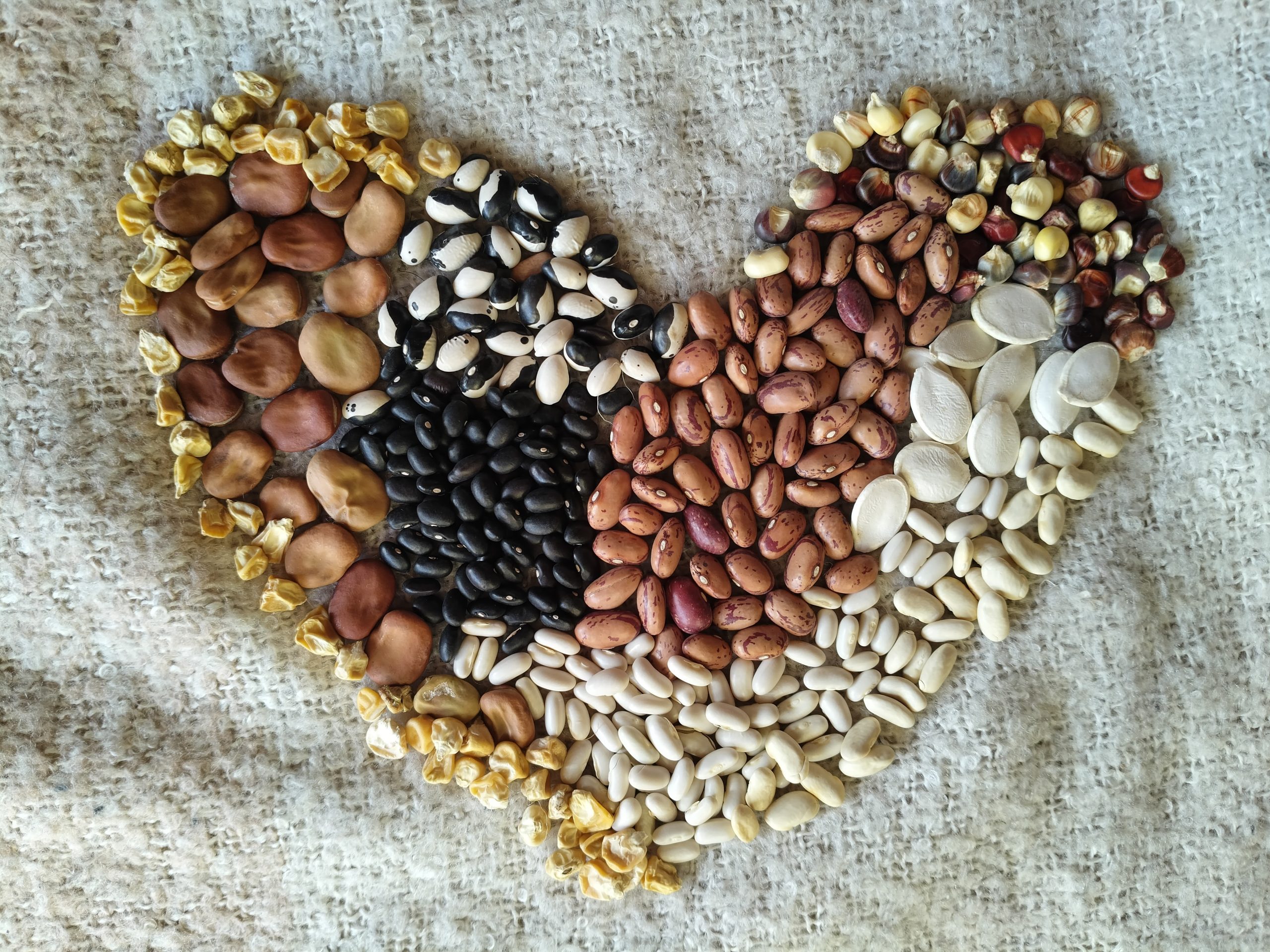
Some of you may be aware that we are facing big changes on the GMO stage in Europe. The EU is preparing new regulations on genetically modified organisms, focusing on New Genomic Techniques (NGTs). These technologies enable targeted changes to plant DNA and they are a form of genetic modification.
The agreement reached in December 2025 is a masterpiece of legislative hypocrisy, creating two categories and the one called NGT1, the most numerous (90 to 95% of cases), will be EXEMPT from any risk assessment. That means that all NGT products could be approved WITHOUT safety checks, labelling or full traceability. The ENVI Committee approved it at the end of January. The final vote in the European Parliament is expected in early June 2026. More information is available here.
That means that we as consumers will lose our basic right to know what we are eating. We believe consumers, breeders and farmers must retain the right to make informed choices. This could allow genetically modified plants and foods to enter our fields and plates without transparency.
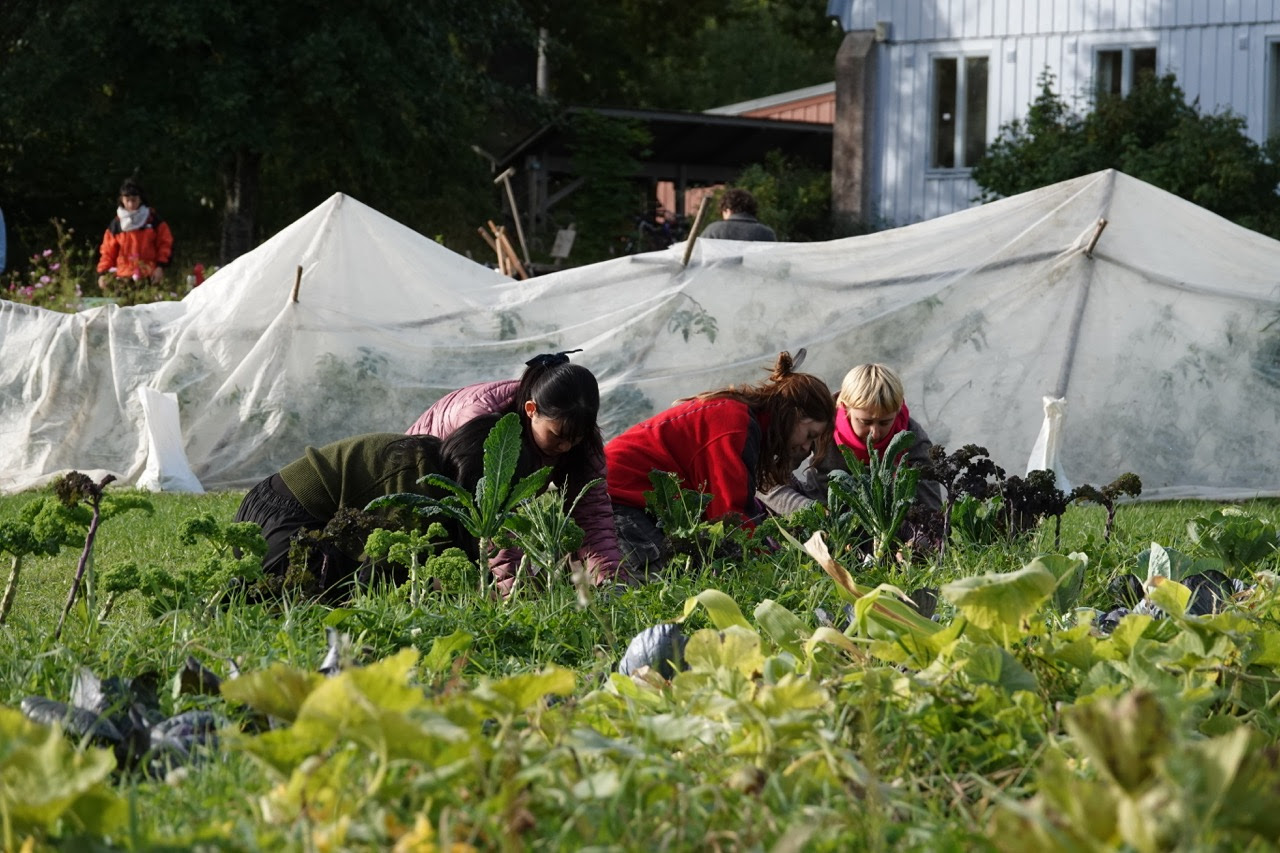
Holding so much love of nature, and working previously for one of the big companies, I am using this possibility to reach a wider network and ask for action. As the media remains silent, we need to reach out to politicians and call for strict regulation, mandatory labelling and safety tasting. We cannot talk about a healthy food system without seeds. As once again seeds are used as a very powerful tool, we need to come together to protect our biodiversity and future of farming.
And we need to take action NOW sending emails to the MEP’s of our countries by using this mailing tool. It takes less than 2 minutes and it can have a huge impact on our future.
Bringing this message further. From human to human. From village to city. From country to country. So we can reach the EU Parliament. And make a change.
Because after June it will be too late…
With deep love to the soil,
Aleksandra Domanska

Dear YIP alumni, friends and family
This is your invitation to the 20 years of YIP gathering!
In the summer of 2028, YIP will complete its 20th year running! This is an occasion we would love to celebrate with you and everyone else that has been part of these first years of YIP.
Even though this celebration is still some time in the future, we have been encouraged by many alumni to put the word out so people can save the date. So this is a timely heads-up so you can block the week of July 24th to 28th 2028.
We invite all alumni, contributors and OT’s as well as partners, children and friends to gather in Ytterjärna to connect, re-connect and celebrate YIP’s past and future together.
Some practicalities to already consider:
- The event will be free of charge.
We hope that by taking on the fundraising for the program, food, venue and basic accommodation, everyone else can focus on helping to ensure all who wish to join to be able to afford the trip. - As we expect more then 500 guests, we will primarily offer camping possibilities, classrooms and the YIP buildings for accommodation as part of the invitation.
Hostel and hotel rooms will need to be booked individually. - A travel fund is being prepared in order to enable as many as wish to join to be able to afford the travel. We imagine this fund and the filling thereof to be taken on by alumni and friends ideally including the processing of applications made towards it.
- We plan accommodation and camping facilities to be available for three weeks. 1 week before the gathering, during the gathering itself and 1 week after. This was requested, so individual year groups would have the option to connect before or after the week, without missing out on the main event (alternatively some are planning their own outdoor experience with their year group…).
The program is still to be designed, but we imagine the mornings to be spent all together, whilst afternoons are filled with activities, workshops, initiatives, exchange and fjord dips. So far Orland Bishopand Dr. Lakshmi Prasanna have accepted the invitation to contribute to our gathering and others are considering the invitation. The evenings will be long, musical, cosy and entertaining.
Things you could do:
Let us know if you would enjoy having a role in the lead up to this event. This can be as a coordinator for your YIP year or other more general aspects of the preparations. In good old Initiative Forum style, there will be teams forming for each aspect of the gathering like food, accommodation, program, harvest etc.
Let us know if you would be up for volunteering during the immediate preparations for the event. We will need to build a campsite, showers, circus tents etc. And following the event we’ll need help taking things down again. So many hands will be welcome!
Let us know if you would like to contribute during the gathering. This could be in the form of organising the children’s program, hosting activities, workshops, performances etc. It would be amazing to experience the artistic talents that are part of our network…
So much for now. We hope you get excited by this idea and we look forwards to staying in touch over the coming months.
Hoping to see you here in Ytterjärna in July 2028!
Best wishes from the YIP Organising Team and Board
Ps: Please use [email protected] for any communication regarding the 20 years gathering. Thanks!


YIP19 Applications
will close on the 15th of June
